November 2026
The Thanksgiving Edition
“I Hella ❤️ Singletrack” Night
EBRPD Board Meeting on Tuesday, December 1, at 5:00 PM

The EBRPD will hold its most accessible board meeting of the year on Tuesday, December 1, at 5:00 PM at the East Bay Regional Parks Headquarters Board Room, 2950 Peralta Oaks Court. Let’s build some community and exercise those advocacy muscles a little bit. BTCEB Member Kevin Smallman has been exercising his advocacy muscles and skills this year and would like to have your company to let the board and staff know You Hella ❤️ Singletrack. There will be I Hella ❤️Singletrack t-shirts for the first 30 folks that participate. We’d love to have you come have some fun and make a short public comment about how singletrack is important to you, what you’d like the park district to do to improve singletrack trail opportunities, and how more accessible meeting times make this part of government more accessible to you.
Public speaking can feel daunting, but we’ve got your back! Arrive a bit early to grab a slice of pizza, meet up with friendly faces, and shake off any pre-comment nerves. Your contribution doesn’t have to be long or fancy to make a real difference: in-person, live feedback carries the biggest impact. Join us outside the park headquarters between 3:30 PM and 4:30 PM to pick up your shirt and enjoy some pizza. Just spot the pizza ovens and the welcoming crowd!
5:00 PM is better than 1:00 PM for most of us to make a meeting, but getting to EBRPD park headquarters by 5:00 PM on a work day might be rough. So if you can’t make that we still encourage you to join the meeting online and make a comment, and let them know you appreciate a more friendly meeting time. Last but not least they do offer two public comment periods during their meeting: one at the beginning and the other one near the very end. The beginning public comment period is usually about 10 – 15 minutes after the meeting starts. The second comment period is harder to predict, but this meeting will be even more practical for folks with a typical daytime work schedule. For either comment period you can make a remote comment by raising your virtual hand at the beginning of the comment period and the clerk will call on you when it’s your turn. You’ll typically have up to 3 minutes to speak. Let them know your name, where you live, and your message. If there is something you want them to do, it can be more clear if you use the word “ask” when making that point: “I ask the board to ____________”. You can find more guidance on making a public comment on our advocacy page.
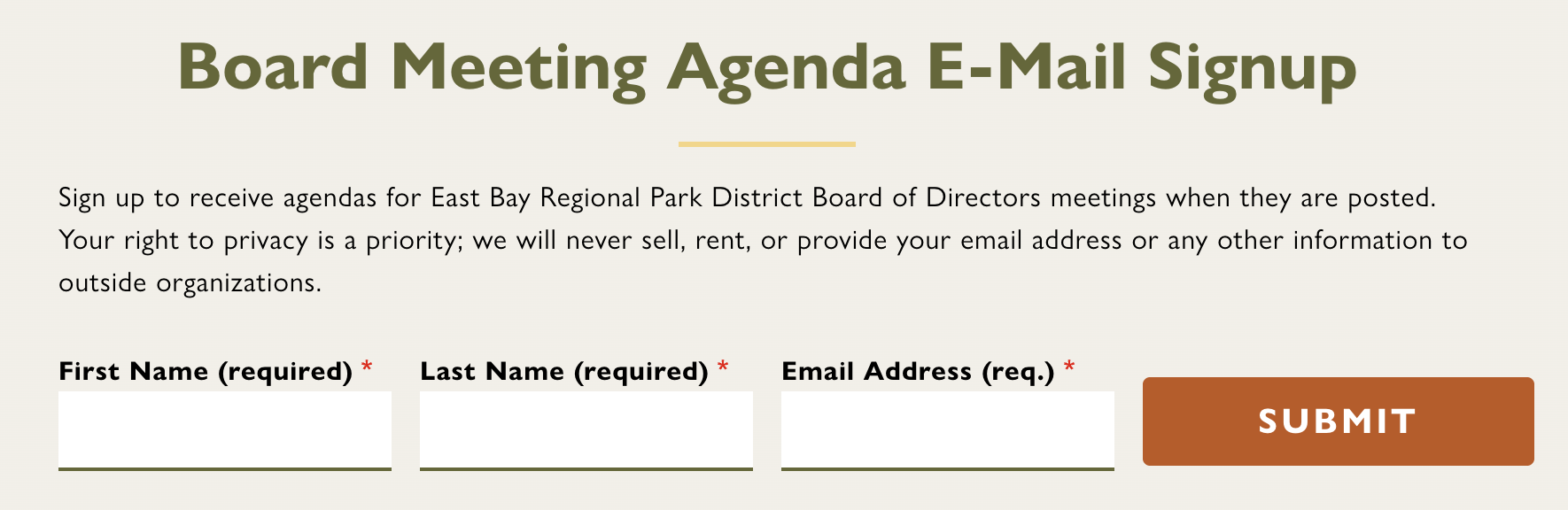
Zoom meeting information will be posted the week before the meeting in the agenda which you can find at https://www.ebparks.org/public-meetings. If you don’t want to have to check that link, you can sign up to have the agenda emailed to you: fill in these fields toward the bottom of that same page and click on the SUBMIT button.
Scott Bartlebaugh, Advocacy Director
Preliminary 2026 Land Manager Director Election Results

Preliminary November governmental election results show the incumbent candidates very likely returning in both the EBRPD and EBMUD directors races. We wouldn’t expect final vote counts to change these outcomes. EBRPD Ward 3 was the only race without an incumbent on the ballot, and we’re thrilled to see BTCEB Ride Like a Girl leader and board member Rebecca Lewington win her race! We look forward to working with all the directors towards more and better trails. Thank you to all that participated in the election process and exercised your right to vote.
East Bay Regional Park District
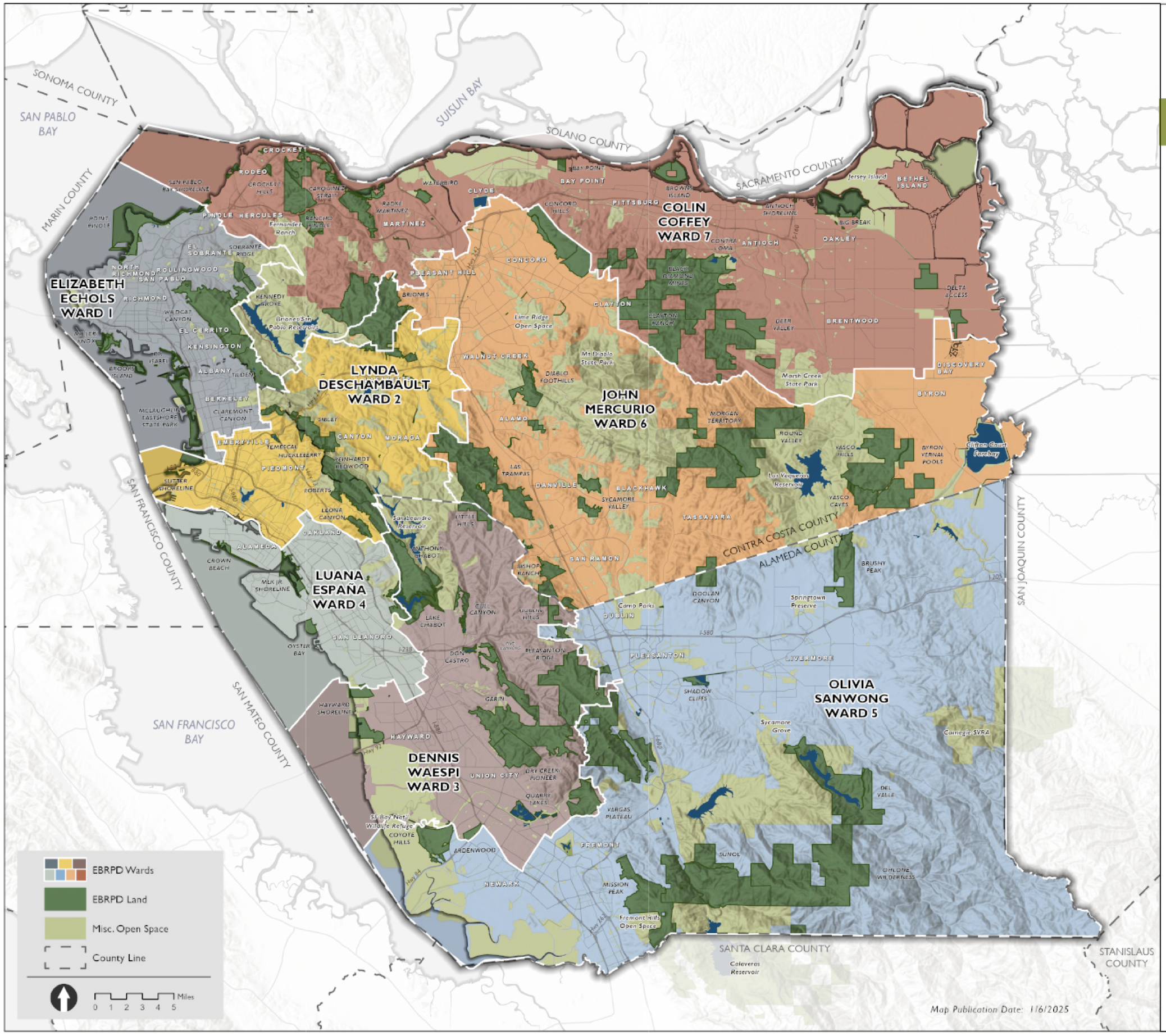
EBRPD Ward 3
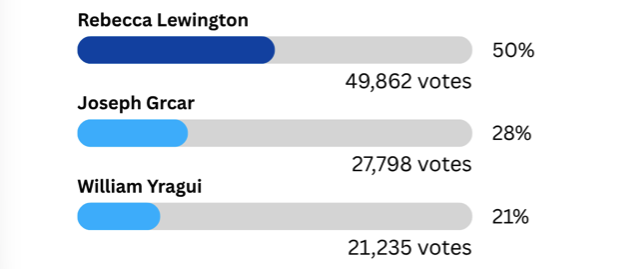
Ward 3 includes Castro Valley, Fairview, portions of Fremont/Hayward/San Lorenzo, and Union City.
EBRPD Ward 5
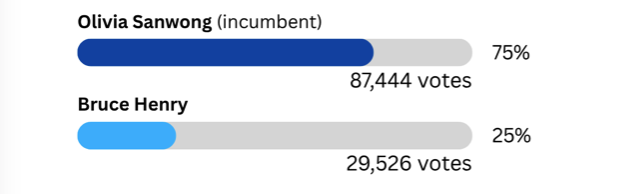
Ward 5 includes Dublin, Fremont (portion), Livermore, Newark, Pleasanton, and Sunol.
EBRPD Ward 6

Ward 6 includes Alamo, Alhambra Valley (portion), Blackhawk, Byron, Camino Tassajara, Castle Hill, Clayton, Concord, Contra Costa Centre, Danville, Discovery Bay, Norris Canyon, North Gate, Pleasant Hill, San Miguel, San Ramon, Shell Ridge, and a portion of Walnut Creek.
EBRPD Ward 7
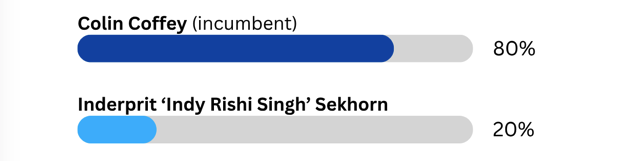
Ward 7 includes a portion of Alhambra Valley, Antioch, Bay Point, Bethel Island, Brentwood, Clyde, Crockett, Hercules, Knightsen, Martinez, Mountain View, Oakley, Pacheco, Pittsburg, Port Costa, Rodeo, and Vine Hill.
East Bay Municipal Utility District
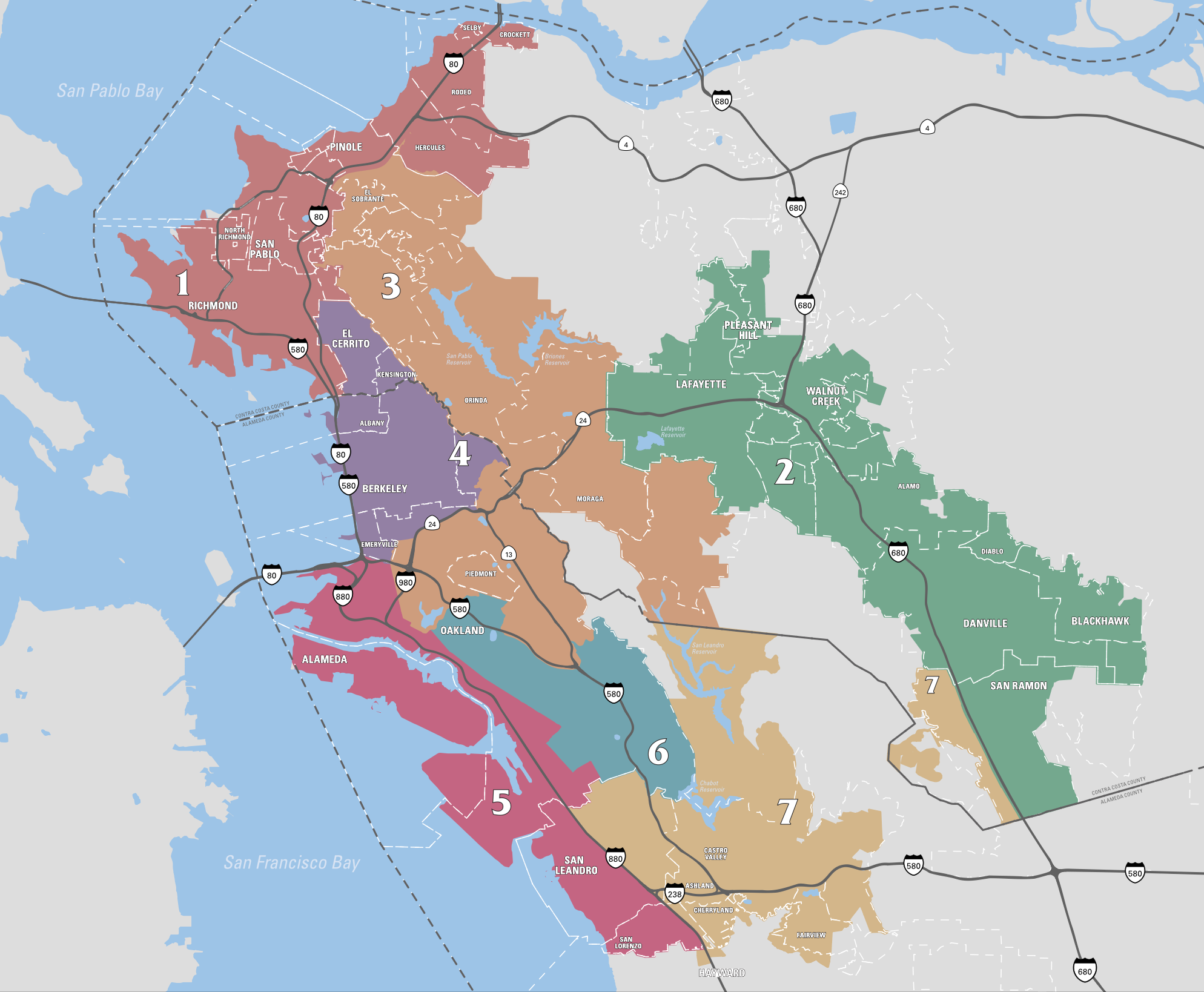
EBMUD Ward 3 Candidates
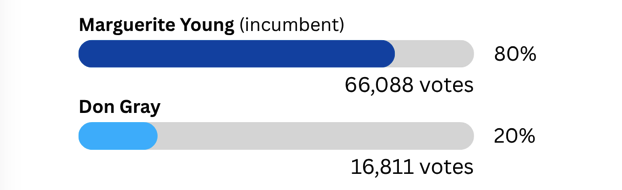
Ward 3 includes the City of Piedmont and a substantial portion of Oakland in Alameda County, and the City of Orinda, portions of Pinole and Richmond, and the communities of El Sobrante and the Town of Moraga in Contra Costa County.
EBMUD Ward 7 Candidates
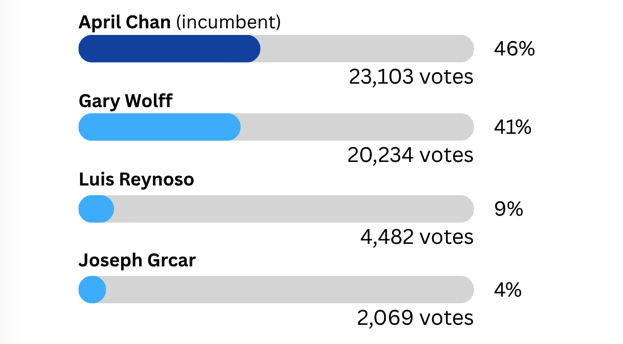
Ward 7 includes portions of Hayward, San Leandro, and San Lorenzo, and communities of Castro Valley, Cherryland, and Fairview in Alameda County, and a portion of San Ramon and the community of Norris Canyon in Contra Costa County.
Scott Bartlebaugh, Advocacy Director
EBRPD Successfully Defends Against SPRAWLDEF Briones Trail Adoption Lawsuit

Shortly after the East Bay Regional Park District concluded the Briones Pilot Project and formally adopted the non-system trails into the formal trail system permanently in December 2024, SPRAWLDEF — the Sustainability, Parks, Recycling, and Wildlife Legal Defense Fund led by Norman LaForce — filed a suit against the park district challenging the adoption of the trails. After about a year and a half defending their case, the park district won the case on all counts. The appeal period has passed since the July 2026 ruling, and the case is now over.
Here are the opening paragraphs where the judge makes her ruling:
ORDER DENYING PETITION FOR WRIT OF MANDATE The East Bay Regional Park District (the District) holds Briones Regional Park (Briones) in trust for a varied public — hikers, equestrians, cyclists, and those who come simply for the quiet company of the park’s plants and wildlife — whose preferred uses do not always sit easily together, and whose collective enthusiasm, if left unmanaged, can wear on the very resources that draw people to the park in the first place. This case sits squarely at that intersection.
Petitioner, SPRAWLDEF, challenges the District’s December 17, 2024 adoption of Ordinance No. 2024-12-283, which made bike use permanent on 5.75 miles of trails in Briones that previously had been created by bikers without authorization (i.e., bootleg trails) and that were then authorized during a temporary pilot project. Petitioner seeks a writ of mandate under the California Environmental Quality Act (CEQA) and Code of Civil Procedure section 1085, contending that the District was required to perform environmental review before authorizing the trails and to proceed through its Master Plan’s land-use-planning process rather than by ordinance.
However, the Ordinance is categorically exempt from CEQA as the continued operation of existing facilities involving no expansion of use, measured against the physical conditions that existed when the District approved it; petitioner did not raise its claimed exceptions to that exemption before the District and has forfeited them and, in any event, they fail on their merits; and the Master Plan imposes no ministerial duty enforceable by traditional mandamus. Petitioner’s underlying concerns — about the effect of intensive bicycle use, and of electric bicycles, on the park’s sensitive soils, habitat, and species — appear supported, but are not the question this petition presents and do not control its outcome. Accordingly, the petition is DENIED.
While the park district prevailed in this case as the judge adhered to the law in her ruling she did express concerns with the overall situation of unsanctioned trails and their impact. Her concerns are reflected in this paragraph from her ruling:
The Court does not reach this result lightly, and it does not dismiss the concerns that animate the petition. The long-term health of Briones — its soils, its streams, and the species that depend on them — is a legitimate public interest, and the intensification of trail use, including by electric bicycles, is a matter the District undoubtedly will need to continue to monitor as it discharges its stewardship obligations. But the questions the petition presents are narrower: whether the Ordinance qualified for a categorical exemption measured against the correct baseline; whether petitioner preserved and established an exception; and whether the Master Plan compelled a different procedure. On each, the law and the record require the answer stated above.
In the park district’s argument, they describe the pilot project and adoption of trails as follows:
This case concerns an environmental success that Petitioner SPRAWLDEF seeks to undo. For years, mountain bikers illegally constructed damaging “bootleg” trails throughout Briones Regional Park in Contra Costa County, causing erosion, habitat fragmentation, and other environmental impacts. Respondent East Bay Regional Park District lacked resources to stop this unauthorized activity. Park District staff would close these harmful trails, only to have cyclists reconstruct them.
The Park District responded with a pragmatic solution grounded in environmental stewardship and informed by stakeholder input. It launched a twenty-month Pilot Project, which closed and restored to natural conditions five miles of the most damaging bootleg trails in Briones Regional Park, but retained approximately seven miles of other trails in less sensitive areas, improving their safety and designating them for hiking, cycling, and equestrian uses.
This approach recognized that providing cyclists with approved recreational opportunities would prevent them from creating new harmful trails. The Pilot Project was an overwhelming success: not a single new bootleg trail was constructed in the pilot area; habitat was restored; and trail users complied with the new rules.
The determinations in this case will likely have an impact on how the learnings from the Briones Pilot are applied to other EBRPD parks and how they are opposed. The land use plan interpretation by the court removes some of the objections made by opponents to the Wildcat Flow Trail project as a means to delay or halt that project and upholds the park district position that they are non-binding guidance.
If you wanted to dig deeper into the court documents, this is the specific case information you’d search under at the Alameda County courts website: SPRAWLDEF v. EBRPD Alameda County Superior Court Case No. 25CV107760. You’d have to pay for court docs. We’ve provided links to a few downloaded court documents below if you’d like to get into more of the wonky details.
We appreciate that the park district stood behind their good work and defended against another SPRAWLDEF lawsuit despite the cost to taxpayers. Had SPRAWLDEF won, our understanding is that the plaintiff, SPRAWLDEF, could have recouped a portion of their legal fees from the district. The system doesn’t allow the defendant, EBRPD, to recoup its legal fees when the ruling goes against the plaintiff. There’s something that doesn’t seem just, and perhaps that’s part of the reason we’re seeing so much CEQA reform these days. The district appears committed to defending against these types of challenges on other projects. The Wildcat Flow trail project is viewed by many as not needing a full Environmental Impact Report (EIR) but rather a Mitigated Negative Declaration determination. The EIR level of CEQA work prepares the district to defend against potential or anticipated legal challenges. It also provides a more complex body of CEQA work with more process details for potential challenge. It is unclear what direction park district management and their board would take should the district lose any of these cases.
SPRAWLDEF has a long history of suing EBRPD over alleged ecological insult, including the Albany Bulb beach, where the supposed issue was damage caused by dogs. Such lawsuits require additional work by the District and result in significant delay to projects. Often their lawsuits or the threat of lawsuits are weaponizing CEQA and challenging a project on grounds of process rather than material environmental issues. Many view their challenges coming from a NIMBY perspective of those looking to limit access by others while they continue to enjoy their current access.
Below is a summary of the final ruling document in more detail that was created with some help from AI.
Court Ruling Overview
The court denied the petition challenging the East Bay Regional Park District’s approval of the trail ordinance, affirming its categorical exemption under CEQA and dismissing claims of procedural errors related to environmental review and land-use procedures.
Case Background and Key Disputes
The case involved SPRAWLDEF challenging the District’s December 17, 2024, ordinance authorizing bicycle use on specific trails within Briones Regional Park, arguing environmental impacts, procedural deficiencies, and the misuse of exemptions.
- The District manages Briones Regional Park, which covers approximately 6,000 acres and hosts sensitive wildlife species, including the Alameda whipsnake and California red-legged frog.
- Unauthorized “bootleg” trails had developed over years and efforts were made to close and restore them through a pilot project lasting 20 months (April 2023 – December 2024).
- During the pilot, trails were restored and designated, with 5.75 miles authorized for cycling, and electric bicycles (Class I e-bikes) were authorized district-wide in September 2023.
- The December 2024 ordinance formalized trail designations, involving 3.5 miles of bike-only trails, 2.25 miles shared-use, and 1.25 miles hiker-only, with nearly five miles of bootleg trails decommissioned.
Environmental and Legal Basis of the Court’s Decision
The court examined whether CEQA’s categorical exemption applied and whether the District adhered to proper legal procedures.
- The Ordinance was found categorically exempt under Class 1, which covers existing facilities with negligible or no expansion of use, based on the current physical conditions.
- The baseline for environmental review was established as the actual ground conditions at the time of approval, including the trails constructed and used during the pilot.
- The court supported the District’s conclusion that cycling on these trails was an existing use, regardless of how they originated.
- The court determined that reauthorizing the same trails did not constitute a significant expansion of use, and the authorization of electric bicycles prior to the ordinance was already incorporated into the baseline.
Resolutions on Procedural and Exemption Challenges
The court found the petitioner failed to exhaust administrative remedies regarding exception claims and that the exceptions argued—location and cumulative impacts—did not meet legal standards.
- Petitioner did not raise specific exception arguments during the public comment periods, thus forfeiting those claims.
- The exceptions for unusual circumstances and cumulative impacts did not apply because the project’s effects were within the normal scope of existing activities, and the hazardous effects predicted did not significantly differ from baseline conditions.
- The district’s decision to proceed via ordinance rather than a land-use plan amendment was a discretionary, quasi-legislative act, not a ministerial duty, and thus not subject to mandamus.
Final Court Disposition and Next Steps
The petition for a writ of mandate was denied in its entirety.
- The court emphasized that the petition did not contest the long-term health impacts of trail use but focused narrowly on CEQA compliance and procedural issues.
- The court acknowledged ongoing environmental concerns but determined the legal criteria for the exemption and procedural compliance had been met.
Summary of Key Legal Principles Discussed
The case clarified the application of CEQA’s categorical exemptions, especially Class 1, emphasizing that:
- The proper baseline considers actual physical ground conditions at approval time.
- Existing, authorized, or user-built trails constitute existing facilities with negligible expansion of use.
- The process for establishing exemptions requires proper exhaustion of administrative remedies by public comment.
- Land-use decisions are generally discretionary unless explicitly ministerial, and mandamus (a court order) cannot compel discretionary actions.
If you’d like to make a deeper dive into some of the court documents, here are links to a few that we’ve downloaded as we stayed abreast of this case:
Initial suit filing (Petition for Writ of Mandate)
Petitioner’s Opening Brief (SPRAWLDEF’s case)
Scott Bartlebaugh, Advocacy Director
Ridge Trail Day of Service Succeeds Again
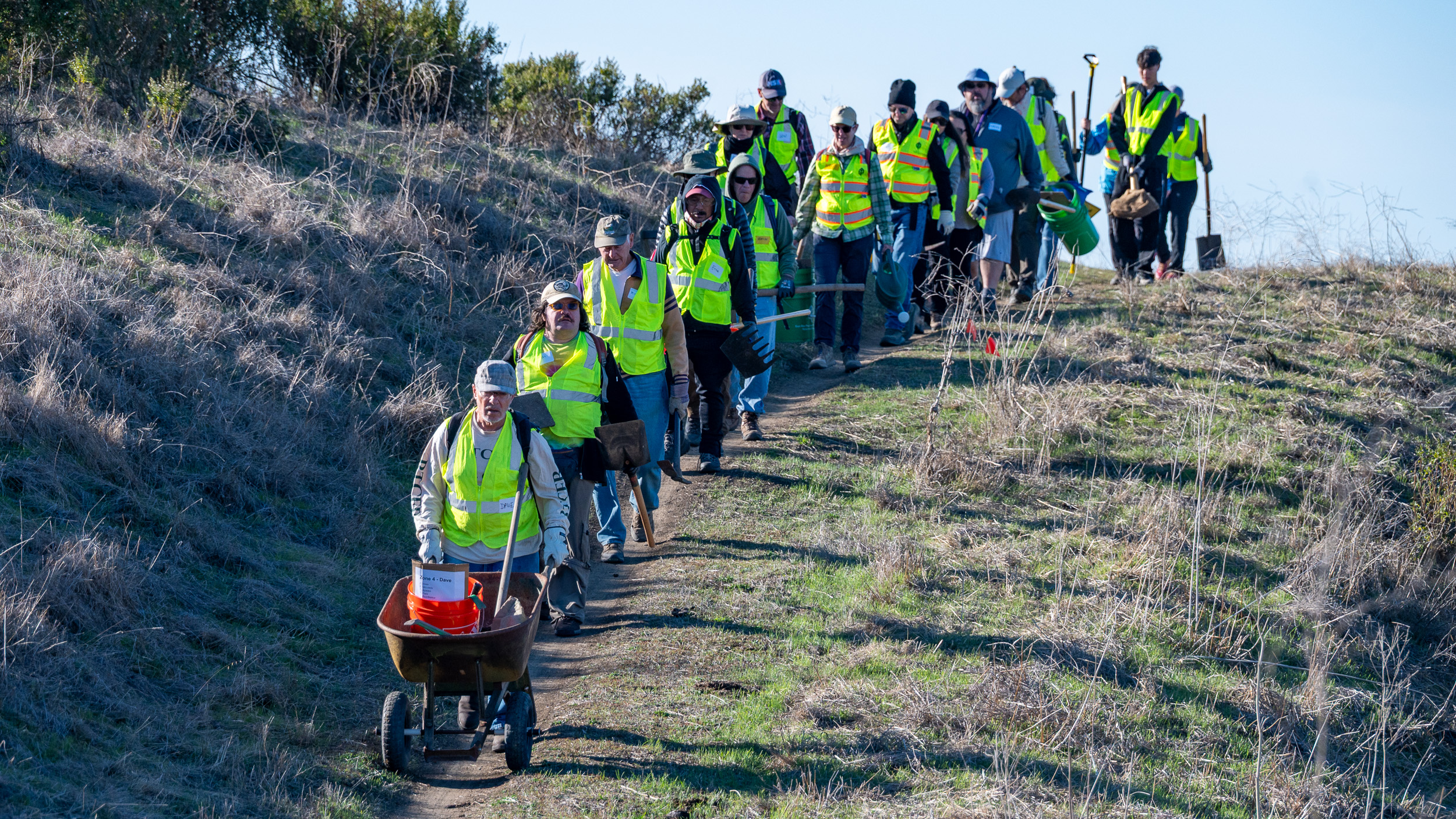
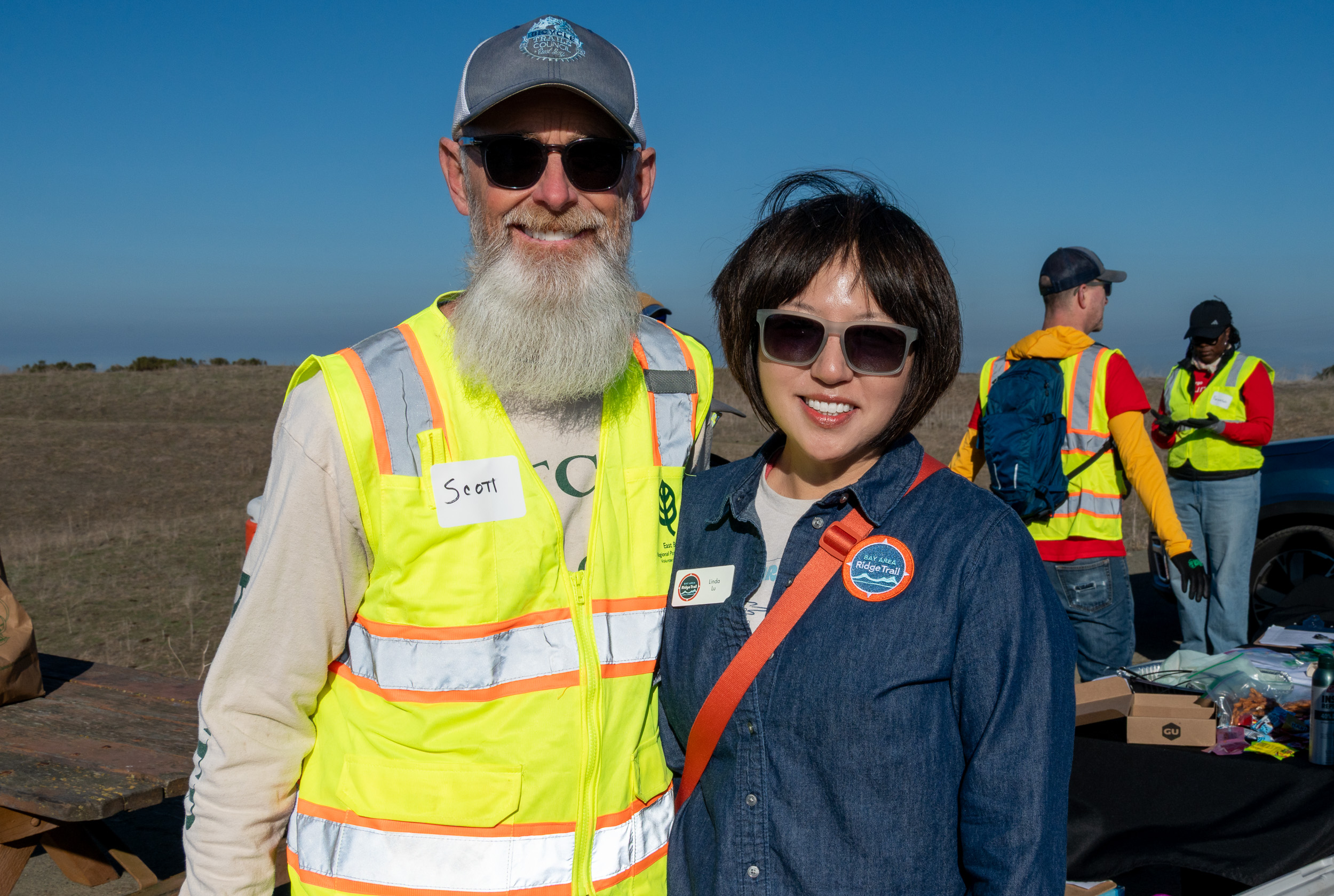
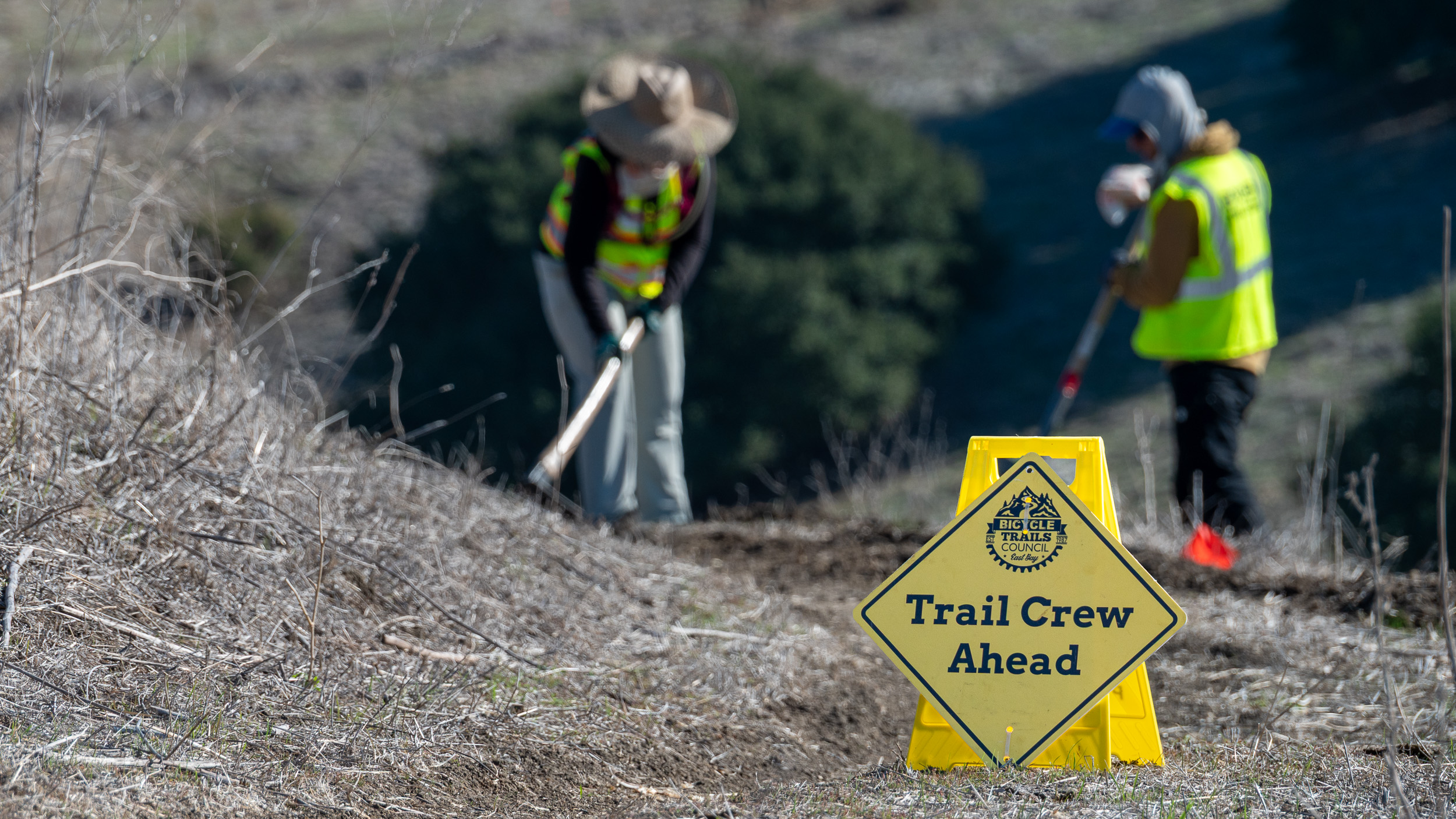
BTCEB partnered with the East Bay Regional Park District and the Bay Area Ridge Trail for the second year in a row for the annual Bay Area Ridge Trail Day of Service. The Bay Area Ridge Trail Day of Service had 10 different project sites this year. We continued work on Soaring Eagle Trail improving drainage and flow. This drainage work builds on last year’s efforts and comes in time for a record El Niño season. 50 volunteers and about 5 park district and Ridge Trail staff participated.
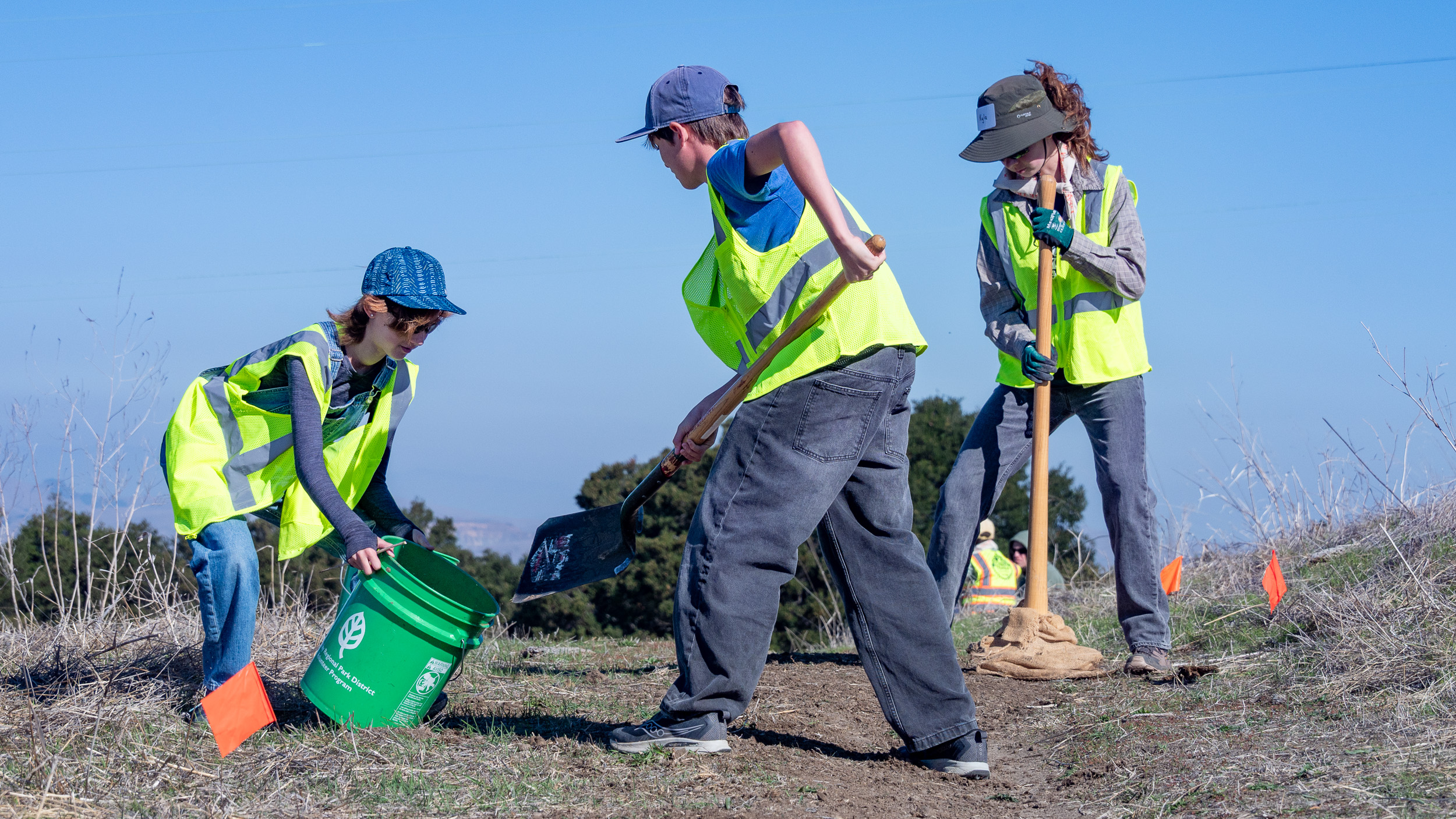
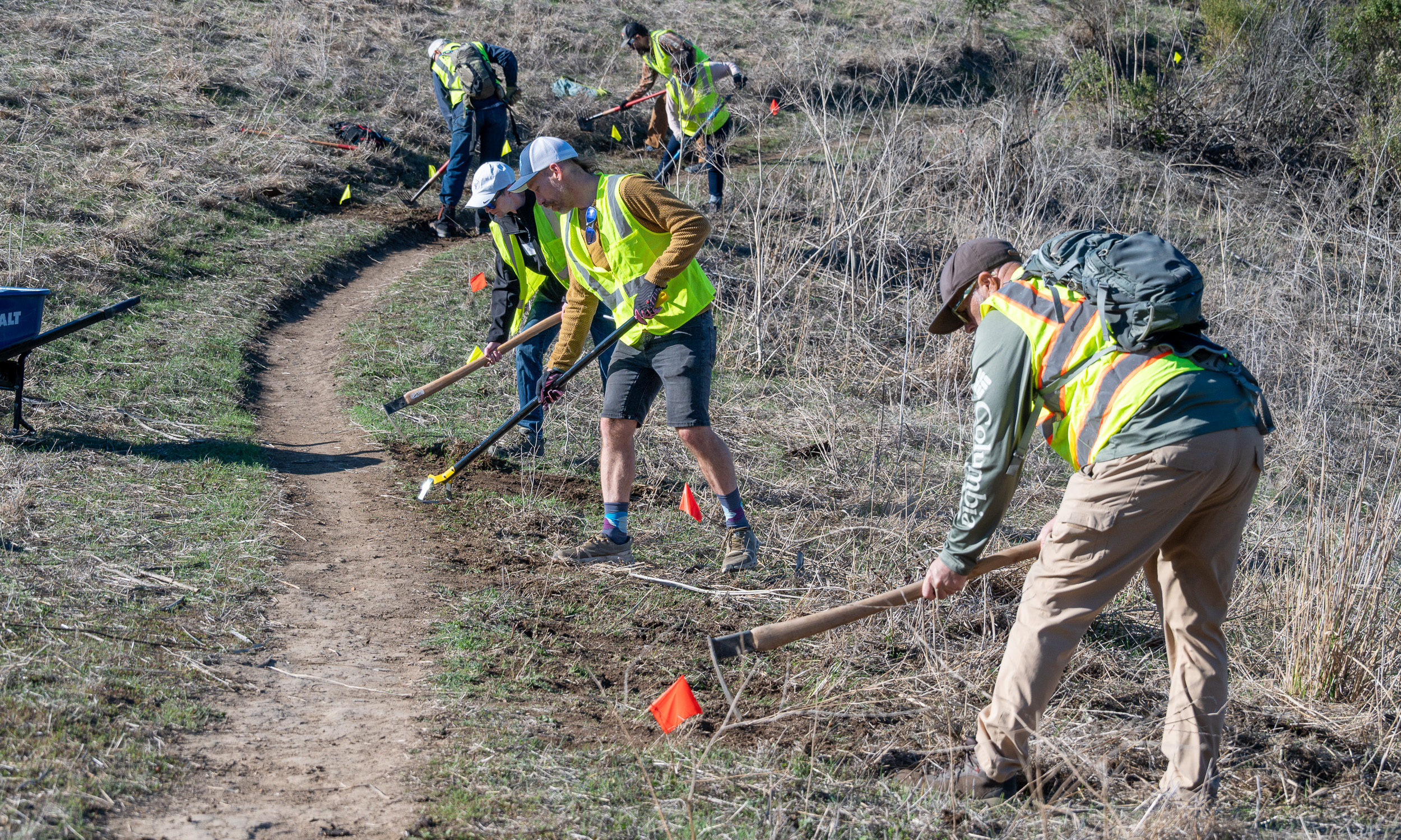
The Bay Area Ridge Trail Day of Service is the first Saturday in November. Mark your calendar for 2027 and come out to one of the projects. This trail stewardship event puts BTCEB volunteers over 650 hours for 2026 at Crockett Hills.
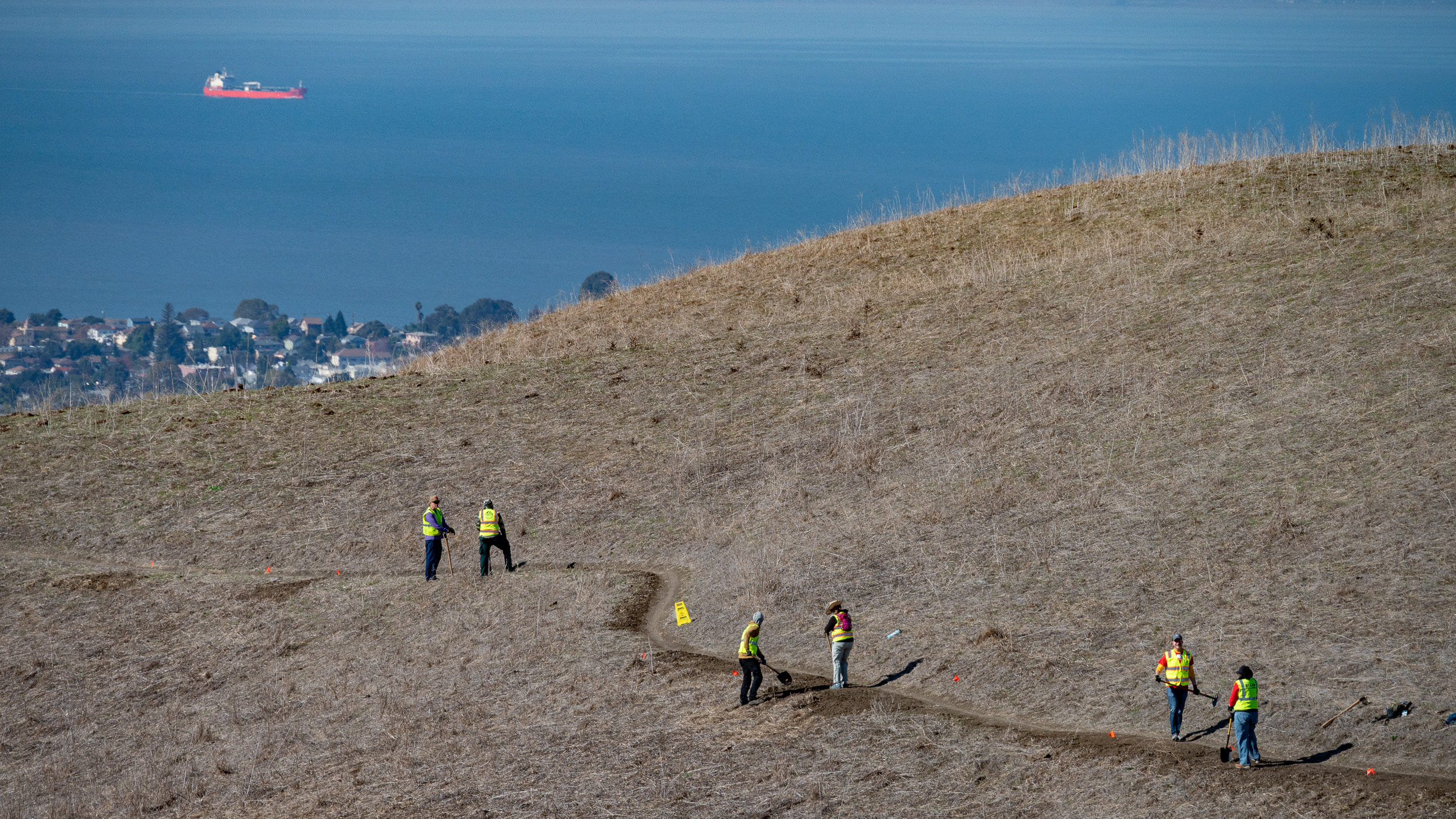
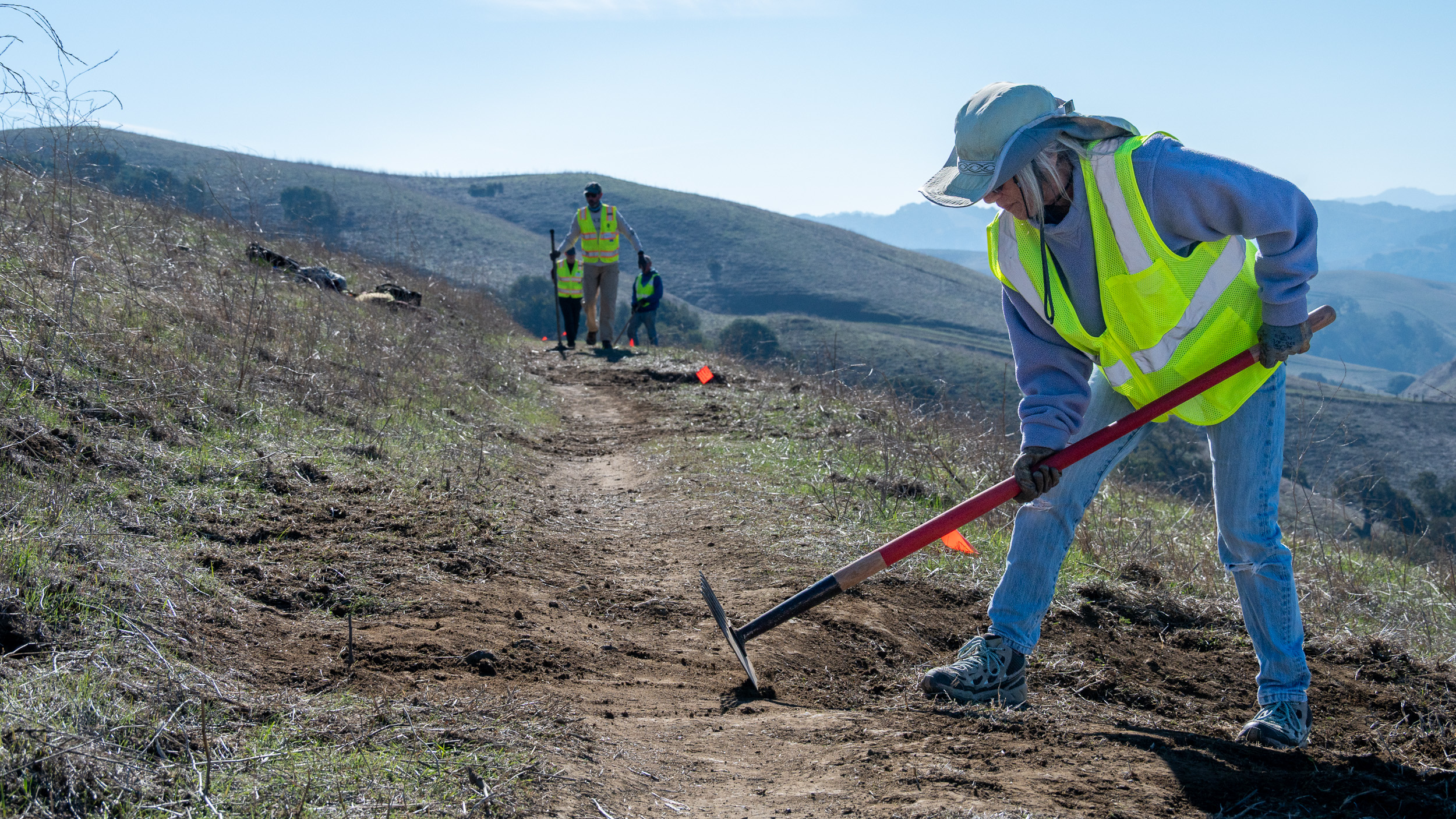
The Crockett Hills park staff showed up with their Toro Dingo and provided some mechanized support along with staging some aggregate ahead of time. Trails Program Staff led the park planning effort and supplied extra tools. The park district also provided sandwiches from Lucia’s in Crockett for lunch. Bay Area Ridge Trail provided drinks and snacks.
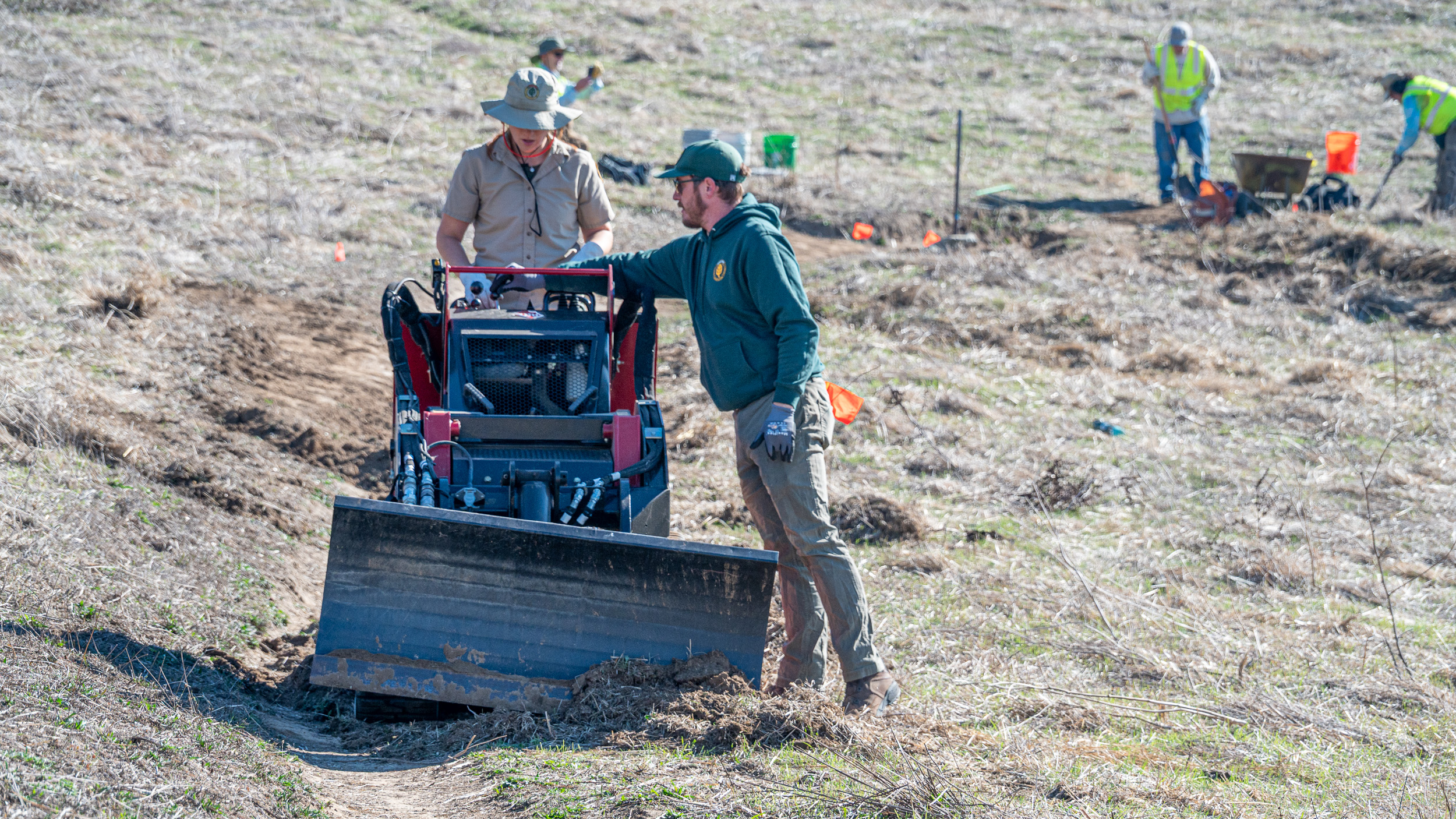
Special thanks to our 8 crew leaders for the day: without them we would not be able to host such a large event. Thank you to Rebecca Lewington for the spectacular photos.
Follow us to see future trail stewardship events. That page has a button on it that you can use to subscribe to get trail stewardship notices by email.
Scott Bartlebaugh, Advocacy Director
Photos by Rebecca Lewington
Happy (mostly) Trails!
Cattle move completed at Crockett Hills
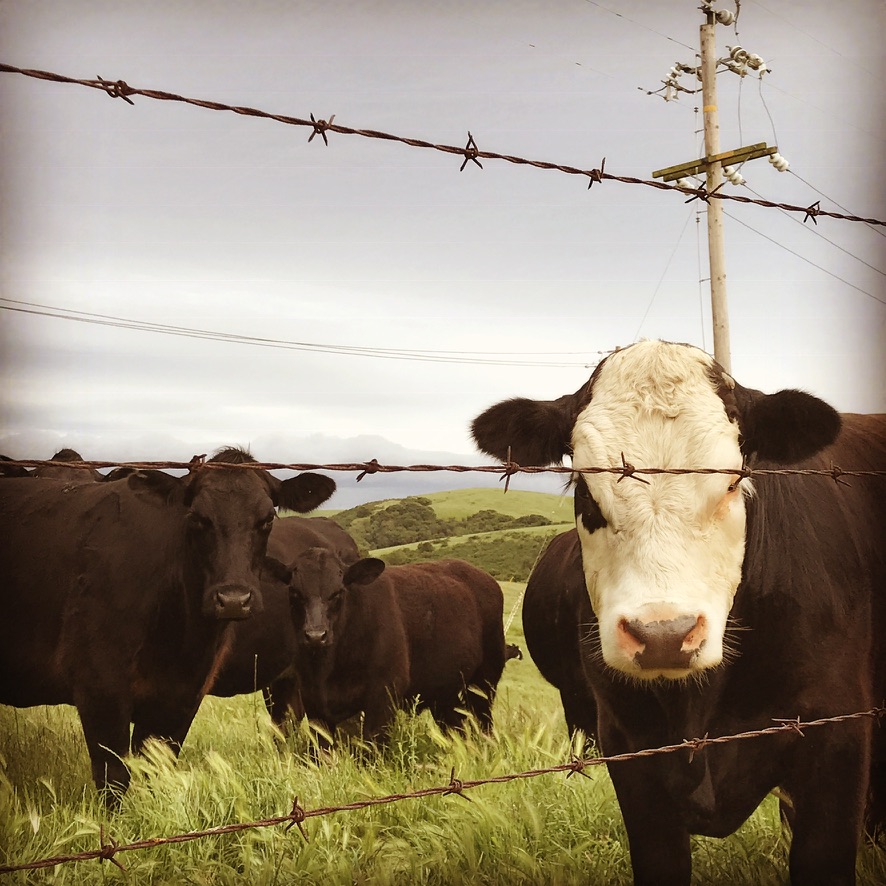
The cattle at Crockett Hills have been moved to the southernmost pasture near Highway 4 before the 2026–2027 wet season began in earnest with a week of rain beginning on November 13. Advocating for cattle management that protects the trails at Crockett Hills Regional park is our top priority to maintain ride quality and protect the work of thousands of volunteer hours. It’s a challenging issue.
We had two relatively minor rains in October. The first rain exceeded the forecast by nearly double and resulted in 3/4″ over very light rain over almost 24 hours. It was the first rain of any significance and fell on very dry trail conditions. Normally you wouldn’t expect much impact by the first inch or two even when they are spread over just a few hours. As such, the typical grazing plan is to move the cattle prior to the first significant rain event or after a few smaller ones that allow some new growth in the pasture they’ll be moved to. The extremely dry soil actually repels the first rains until the pores absorb some moisture. This first rain was more of a constant mist and was able to achieve that initial rewetting and then begin to soak in. As a result, a small section toward the bottom of Sugar City sustained some hoof print damage. The good news is that the rest of the trail system did not sustain any significant damage. The main cattle move was scheduled for Saturday, November 14. As it got closer to that Saturday, the moving forecast firmed up with significant rain coming by Friday, November 13. The grazier made alternate plans and was able to move all but one pregnant cow on Wednesday, November 11. The pregnant cow was in hiding — probably in a tree-covered ravine — but was located on November 12 and, after birthing, the two of them also moved to the southernmost pasture.

Scott Bartlebaugh, Advocacy Director
So that’s what “Backslope” is all about …
Passed along from Backslope Tools
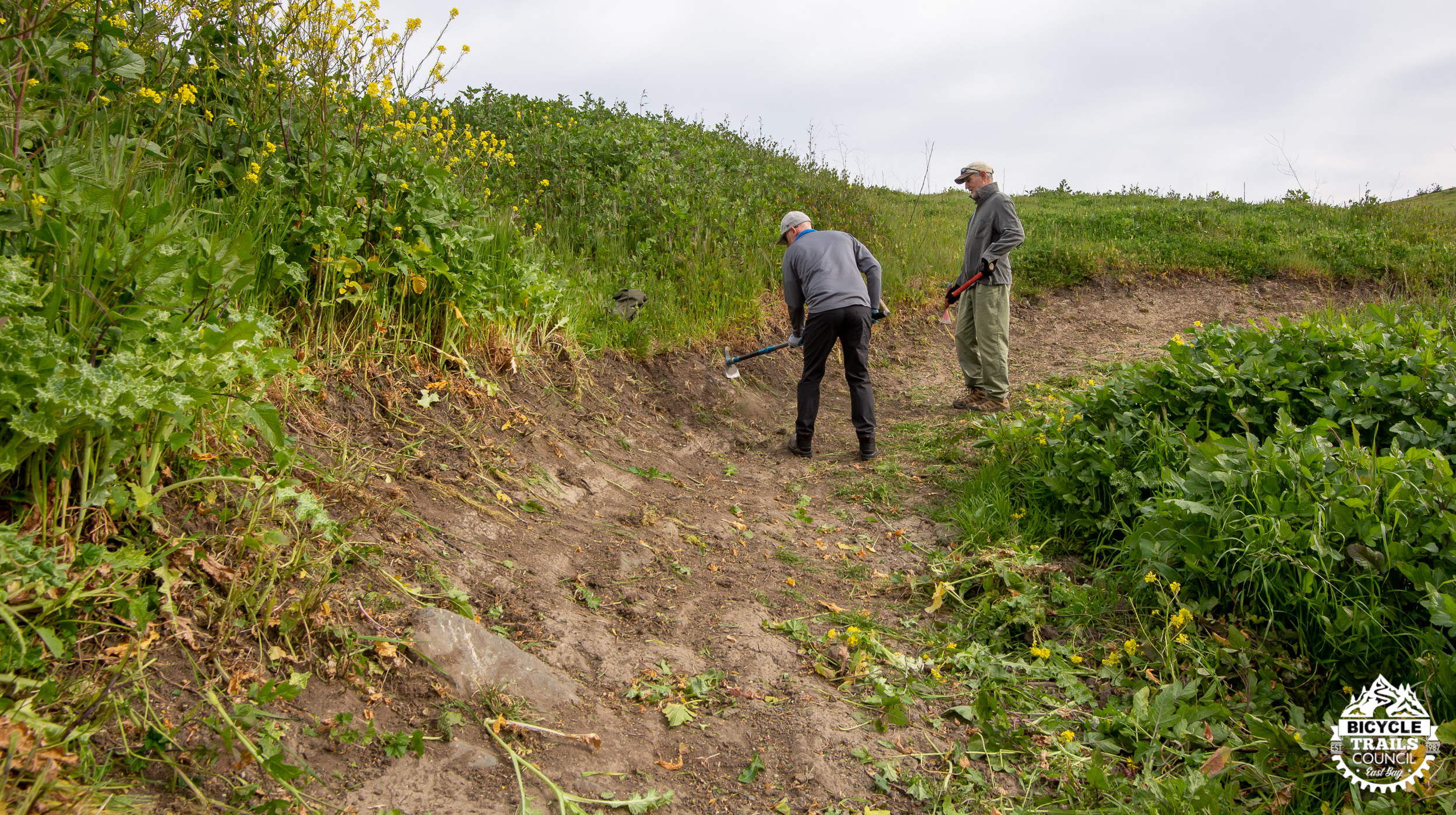
You may have heard the term “backslope” at one of our workdays and might not have figured out what specific part of the trail it refers to. Backslope Tools does a good job of explaining not only what it is, but also what makes for a lasting backslope. In our region, backslopes are often on the steep side for our expansive clay soil, and come July, August, and September — when it’s bone dry — they’ve contracted, fractured, and chunks tumble down onto the tread. On top of that we often have cattle taking the direct route to the water trough knocking down even a good backslope onto the tread.
Here’s how Backslope Tools describes it:
It’s the part of the trail nobody looks at. It decides whether everything else lasts.
Hey there,
People ask about the name a lot. Backslope. It sounds like a ski run or a bad day on a bike. It’s neither.
When you build trail across a hillside, you cut into the slope to make a flat place to walk or ride. Picture the cross section. On the downhill side, you’ve got the tread and whatever fill you pushed out. On the uphill side, you’ve got the wall of dirt you just cut. That wall is the backslope.
Nobody photographs it. Nobody rides it. But it decides whether the tread in front of it lasts five years or five storms.
Here’s what goes wrong. When a backslope is cut too steep, or left with an overhanging lip at the top, it doesn’t stay put. Rain, roots, and gravity all work on it. Dirt sloughs off the face and lands on the inside edge of the tread. The tread gets narrower. The inside edge starts holding water instead of shedding it. Riders and hikers drift toward the outside edge to avoid the mess, and the outside edge starts to crumble. Now you’ve got a trail getting squeezed from both sides.
Getting it right isn’t complicated. It’s just work most people skip.
Lay it back. Cut the backslope at an angle the soil can actually hold. Loose, sandy soil needs a gentler angle. Hard, rocky soil can stand steeper. If the face is already slumping, that’s the soil telling you the angle it wants.
Round the top. Where the backslope meets the natural ground above it, shape it into a soft curve instead of a sharp edge. A sharp lip undercuts itself and collapses. A rounded one sheds water and holds.
Clear the slough. On existing trail, check the inside edge of the tread. If there’s a wedge of dirt and rock piling up against the backslope, pull it off and scatter it downhill, well away from the tread. Then reshape the backslope above it so the problem doesn’t come right back.
Build on mineral soil. If you dig through the dark organic layer and you’re still not on solid mineral soil, keep going. Duff and roots compress and rot, and the tread you build on them won’t last.
We like the name because the backslope is the honest part of a trail. You can’t fake it. It’s either cut right or it starts coming down. That’s how we think about tools, too.
If you’ve got a section where the backslope keeps coming down no matter what you do, reply and send us a photo. We’d like to see it.
Team Backslope Tools
Scott Bartlebaugh, Advocacy Director
Photos by Rebecca Lewington
Tuesday’s for the Trails
Give Back to the Places We Ride
This Giving Tuesday, help support the advocacy, trail stewardship, and community that helps keep East Bay mountain biking moving forward. The trails we ride don’t take care of themselves. The trails we want to ride won’t magically appear. We need your help.
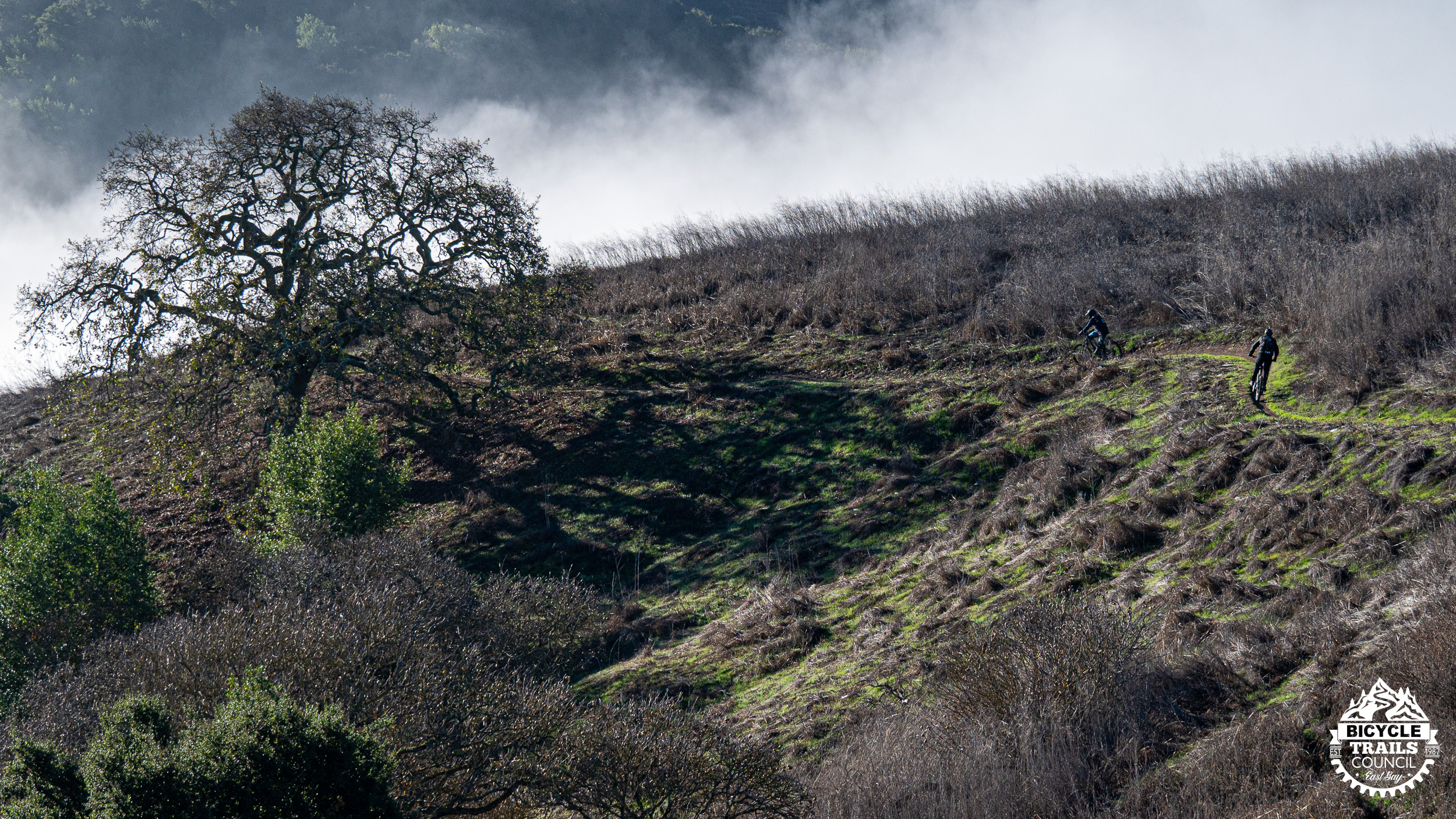
We all have our favorite trails. Maybe it’s that stretch of singletrack through the oaks, that spot loaded with poison oak but the tech is just too good to pass it up, or a familiar climb that never gets easier, or a descent that makes you forget about that climb you just did.
For many of us, riding in the East Bay is more than a recreational activity. It’s part of what makes living here special. But the trails we ride don’t take care of themselves. The opportunities we have today aren’t guaranteed tomorrow. Bicycle Trails Council of the East Bay is here for all of us.
This Giving Tuesday, December 1, we’re asking the East Bay mountain biking community to give back to the places we ride by supporting the organization working year-round to protect, improve, and strengthen our local trail networks. We call it Tuesday for the Trails.
Three pillars. One community. A lot of work to do.
Since 1987, BTCEB has worked to ensure that mountain bikers have a voice in decisions affecting East Bay trails. What began as a grassroots effort to prevent widespread trail closures has grown into an organization built around three interconnected pillars: advocacy, trail stewardship, and community.
ADVOCACY: Protecting and expanding access
Access doesn’t happen by accident. It takes persistence, relationships, participation, and a willingness to sit down with land managers and other trail users to find workable solutions.
BTCEB represents the interests of East Bay mountain bikers, advocates for sustainable bicycle access to public lands, and works to build constructive relationships with the agencies and communities responsible for managing them. The strength of that voice depends on the strength of our membership and the engagement of the broader riding community.
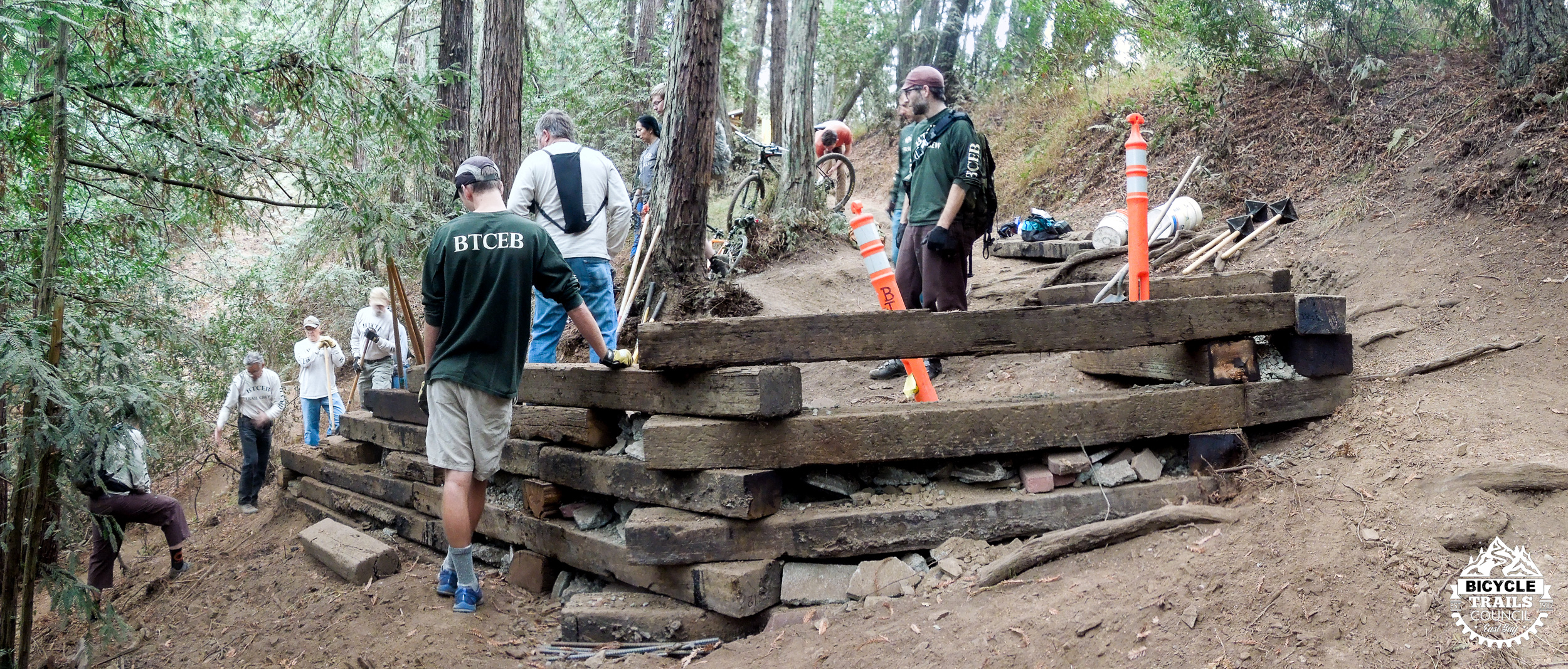
TRAIL STEWARDSHIP: Giving back, one workday at a time
We believe that if we enjoy riding these trails, we should also help take care of them.
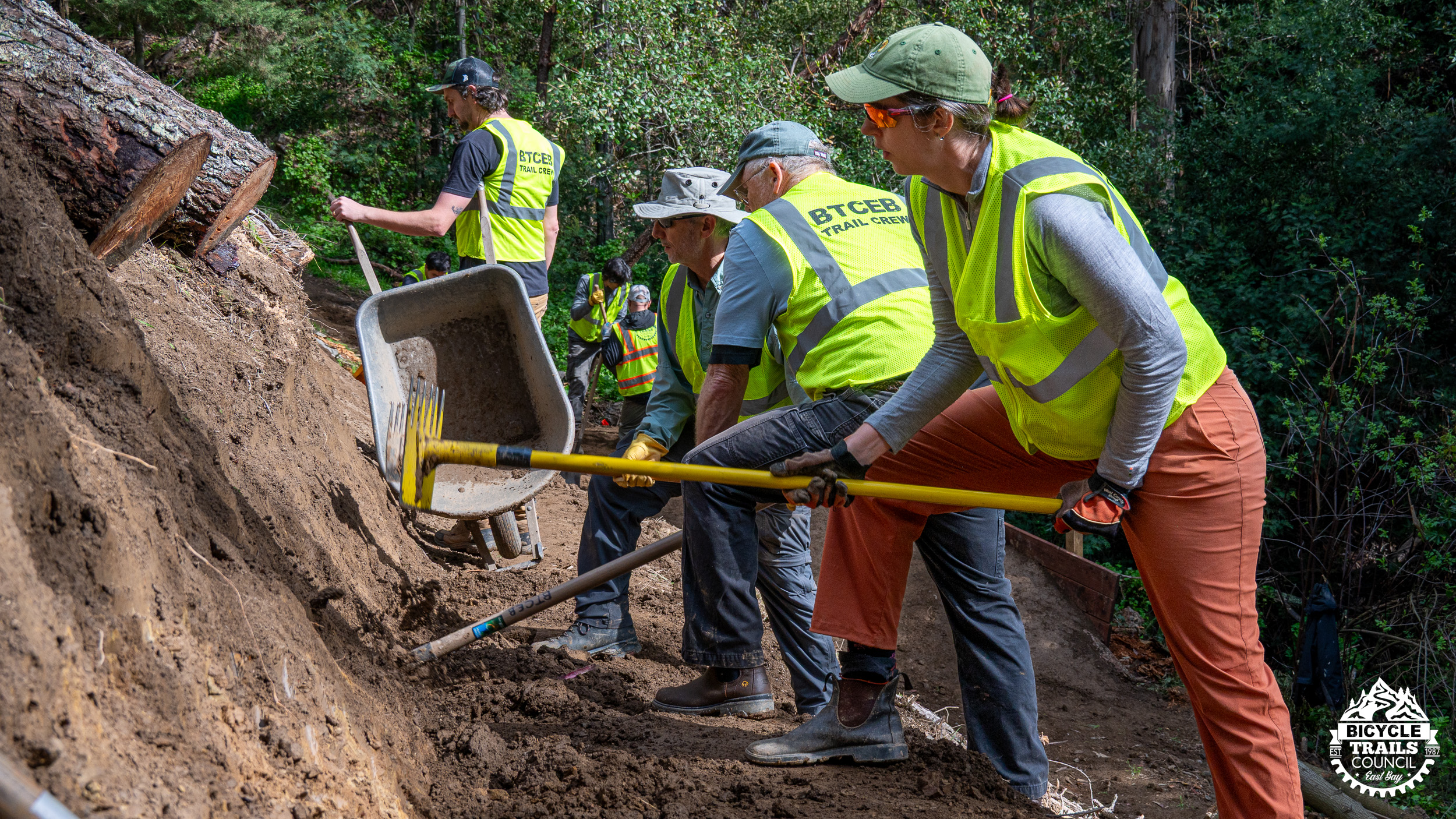
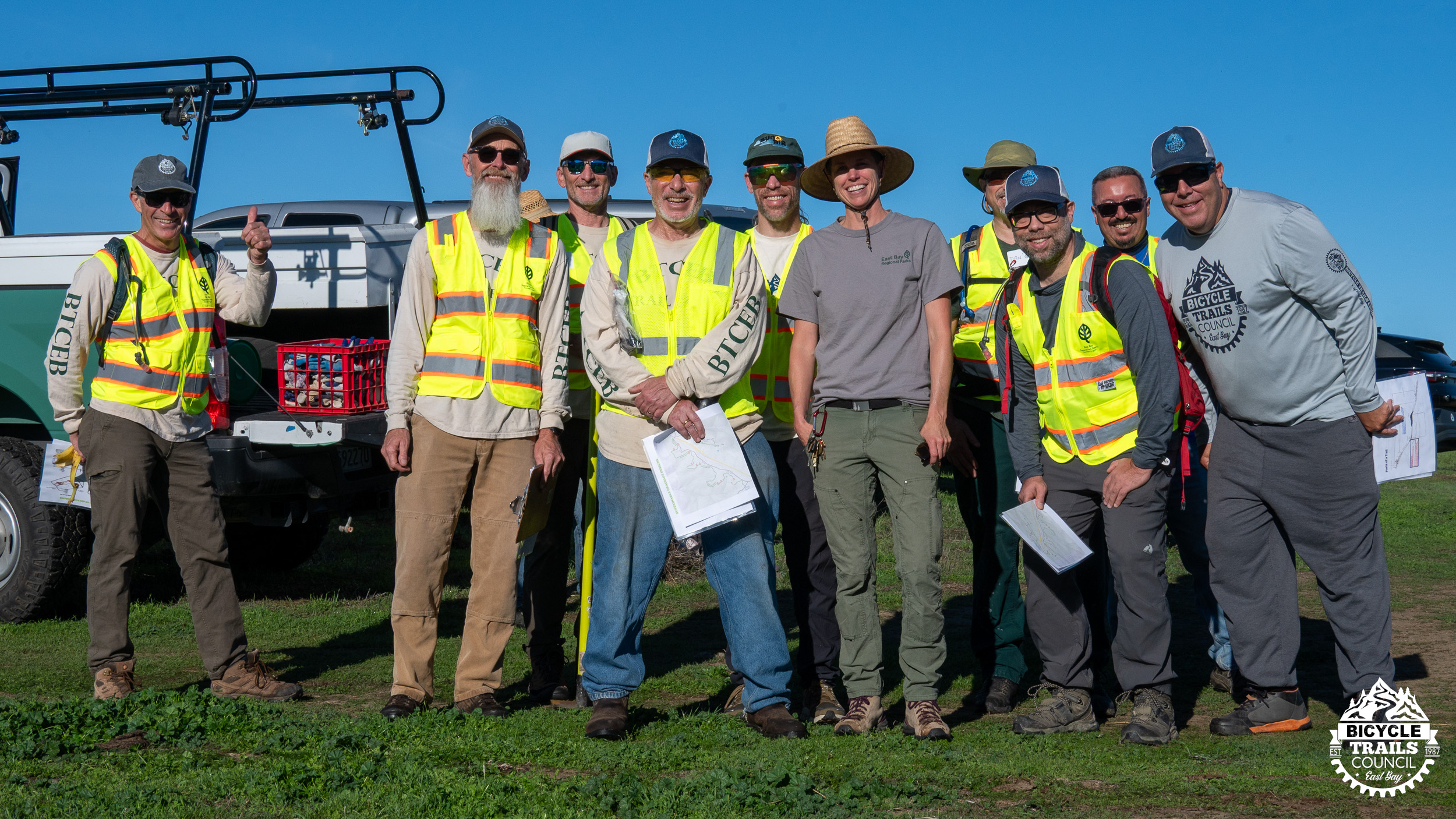
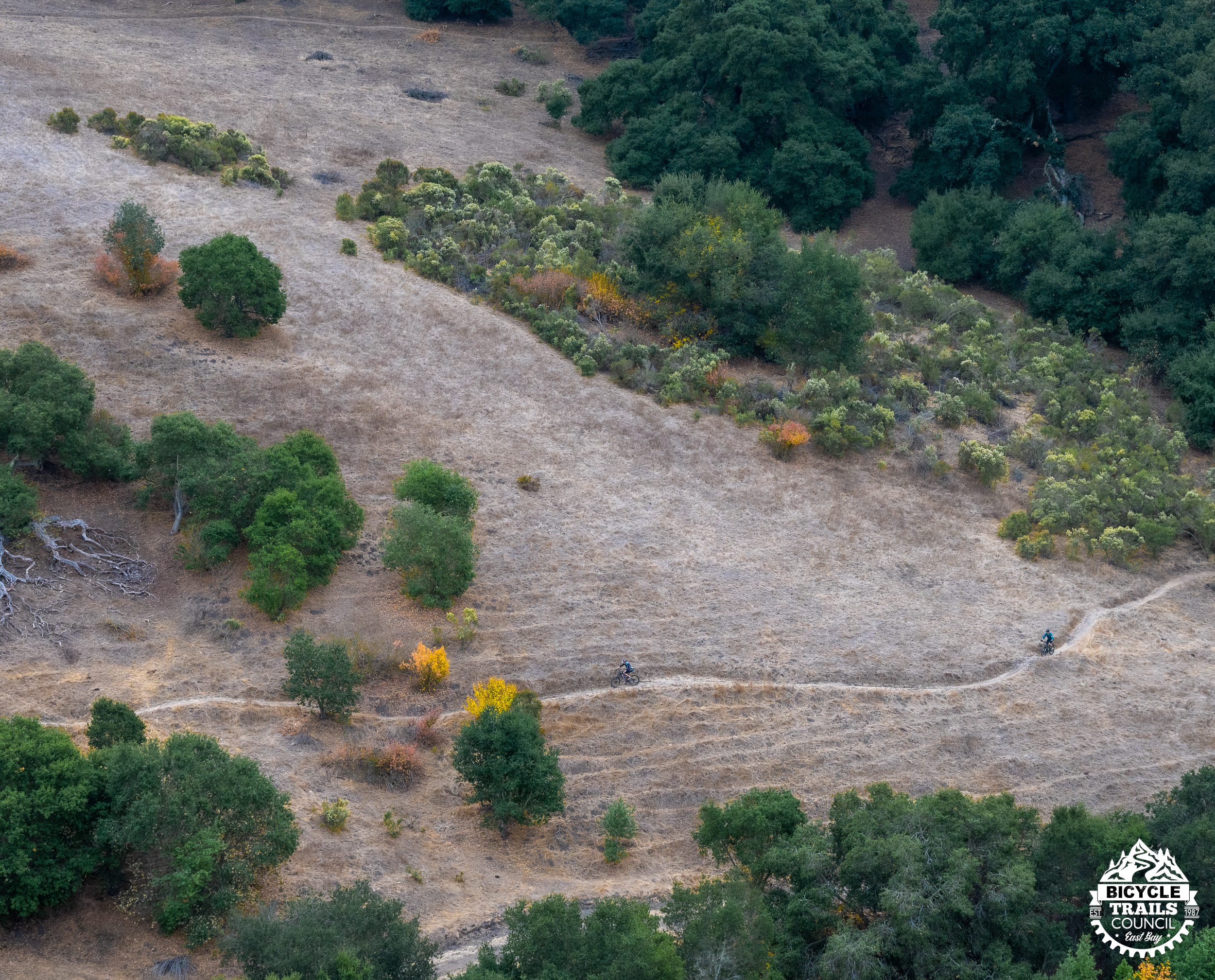
BTCEB organizes and supports volunteer trail work throughout the East Bay, from Joaquin Miller Park and Crockett Hills to other regional parks and open spaces. Our volunteers help maintain existing trails, improve drainage, address erosion, and make the places we ride better for everyone.
We’re also looking to expand opportunities for riders to learn more about sustainable trail construction and maintenance. Developing more knowledgeable volunteers and trail stewards means building the skills and capacity to care for our trails well into the future.

COMMUNITY: Stronger together
Mountain biking is better when we share it.
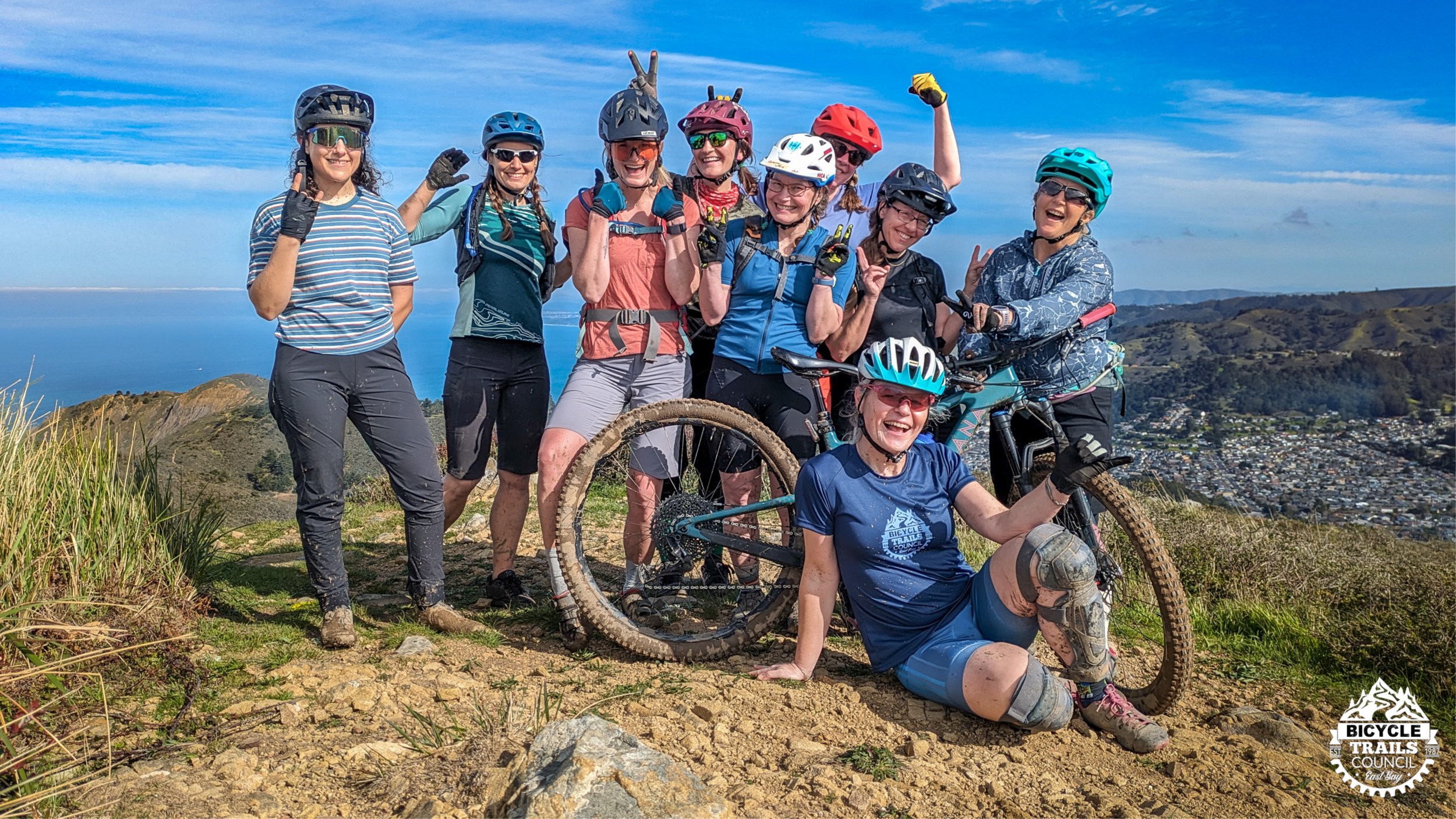
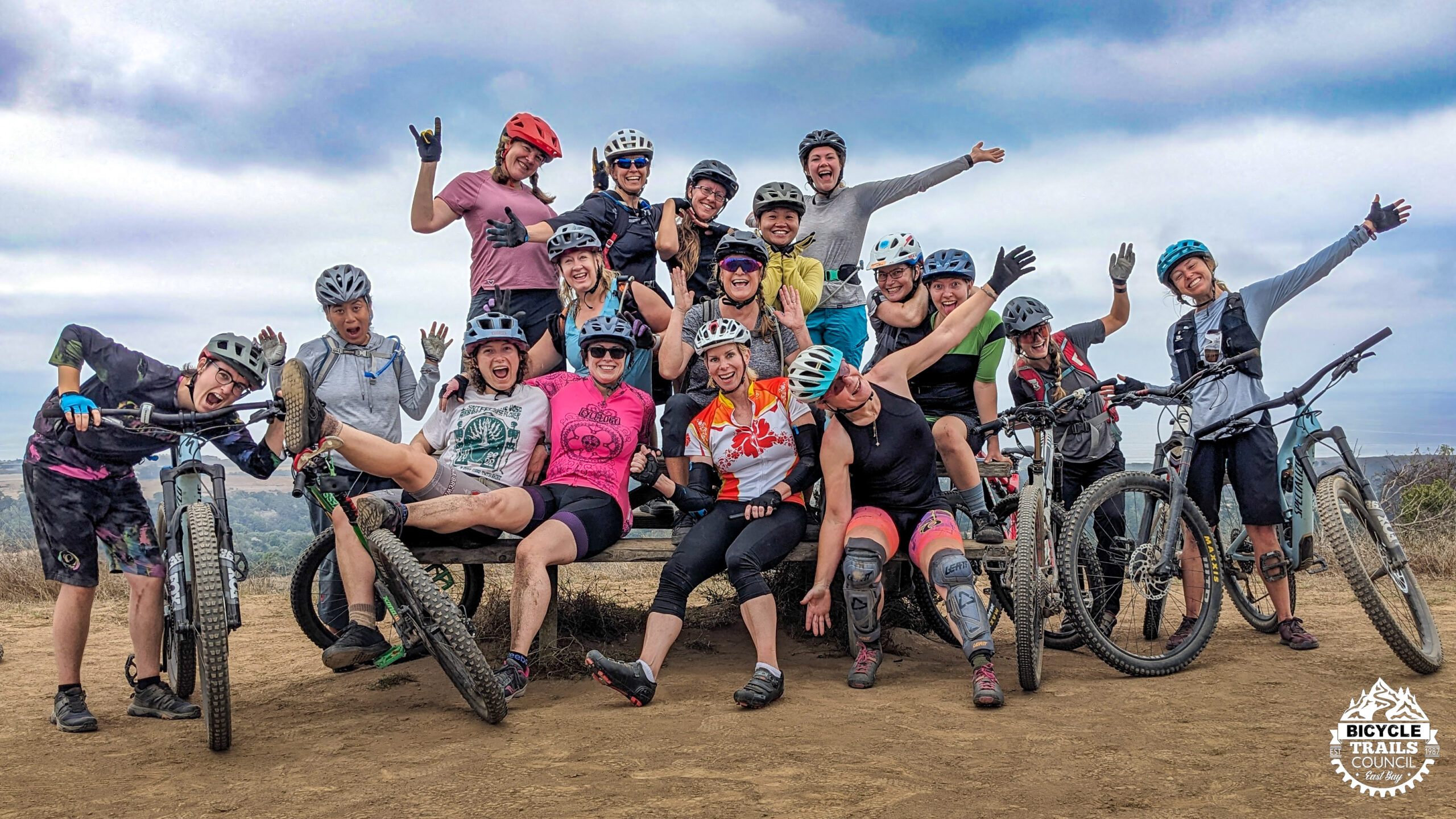
From our signature Gala Rides and Ride Like a Girl events to pop-up rides and volunteer gatherings like our movie nights, BTCEB creates opportunities for riders to connect, discover new trails, and become part of something bigger than their next ride.
A connected, engaged mountain biking community is also a stronger advocacy community. Every new member, volunteer, and participant helps build that collective voice.
Your support keeps us moving forward
BTCEB is an all volunteer-driven 501(c)(3) nonprofit. Our programs, advocacy efforts, trail stewardship, and community development all depend on the financial support and participation of people who care about East Bay mountain biking.
Your contribution on Giving Tuesday helps us:
- Continue advocating for responsible and equitable mountain bike access.
- Support trail maintenance, stewardship projects, and volunteer workdays.
- Expand trail maintenance education and training opportunities.
- Keep community rides and events accessible to riders throughout the East Bay.
- Build the organizational capacity needed to take on the challenges and opportunities ahead.
Whether you’re a longtime BTCEB member or someone who simply enjoys East Bay trails, this is an opportunity to give something back.
You don’t have to swing a McLeod, attend a public hearing, or lead a group ride to make a difference. (But we’d love it if you did!) Financial support helps make all of those things possible. Would you consider a making a donation to support our effort?
This Tuesday, give back to the trails.
On December 1, join us in making Giving Tuesday a day for the places we love to ride.
Make a contribution. Become a member. Encourage a riding buddy to get involved. Every bit of support helps BTCEB continue its work on behalf of East Bay mountain bikers.
The trails we ride don’t take care of themselves. Let’s all do our part.
Give back to the trails. Support BTCEB this Giving Tuesday.
Jamuel Starkey, President
Photos by Rebecca Lewington
About BTCEB
Bicycle Trails Council is a 501(c)(3) non-profit organization that was founded in 1987 by a dedicated group of volunteers who fought the impending closure of almost all bike trails in the East Bay. Today we are active with programs that educate trail stewards, promote responsible riding, and advocate for equitable trail access. We work to improve and maintain trails in our local parks, and our members and partners have volunteered countless hours to build new trails and improve existing ones. Our marquee group rides are the monthly Gala Ride and our women-specific Ride Like A Girl. Both are led by experienced local riders who know the trails and offer groups for all skill and fitness levels.
Join BTCEB today to support your local trails and MTB community and help free the singletrack!
Contact Us
Do you have a good ride story, trail work report, or other bike trail news? Tell us about it. Please send a paragraph or two, ideally with 150 words or less with a pic (under 10MB please) and/or link telling us about trail work, rides, events, or any good mountain bike effort to bring our community together, etc. Please send via email to our editor Brian Glueck (with pictures if possible) to buzz@btceb.org
To reach the entire board, email: board@btceb.org
BTCEB Board Members
- Jamuel Starkey, President, jamuel@btceb.org
- Jeff Royal, Vice President
- Jon Adams, Trails Director, trails@btceb.org
- Scott Bartlebaugh, Advocacy Director, advocacy@btceb.org
- KC Chaudry, Secretary, info@btceb.org
- Alan Enrici, Treasurer, treasurer@btceb.org
- Brian Glueck, Communications Director, buzz@btceb.org
- David Wilcox, Events and Promotions Director
- MTB Rider (vacant), Membership Director, membership@btceb.org
- Gordon Bloom, Director-at-Large
- Kyla Bush-King, Director-at-Large
- Armando Chavez, Director-at-Large
- Tom Gandesbery, Director-at-Large
- Rebecca Lewington, Director-at-Large
- Nuri Lewis-Pichler, Director-at-Large
Thanks To Our Partners