October 2025
The just-after Halloween Edition . . .
10 Years of Sugar City!
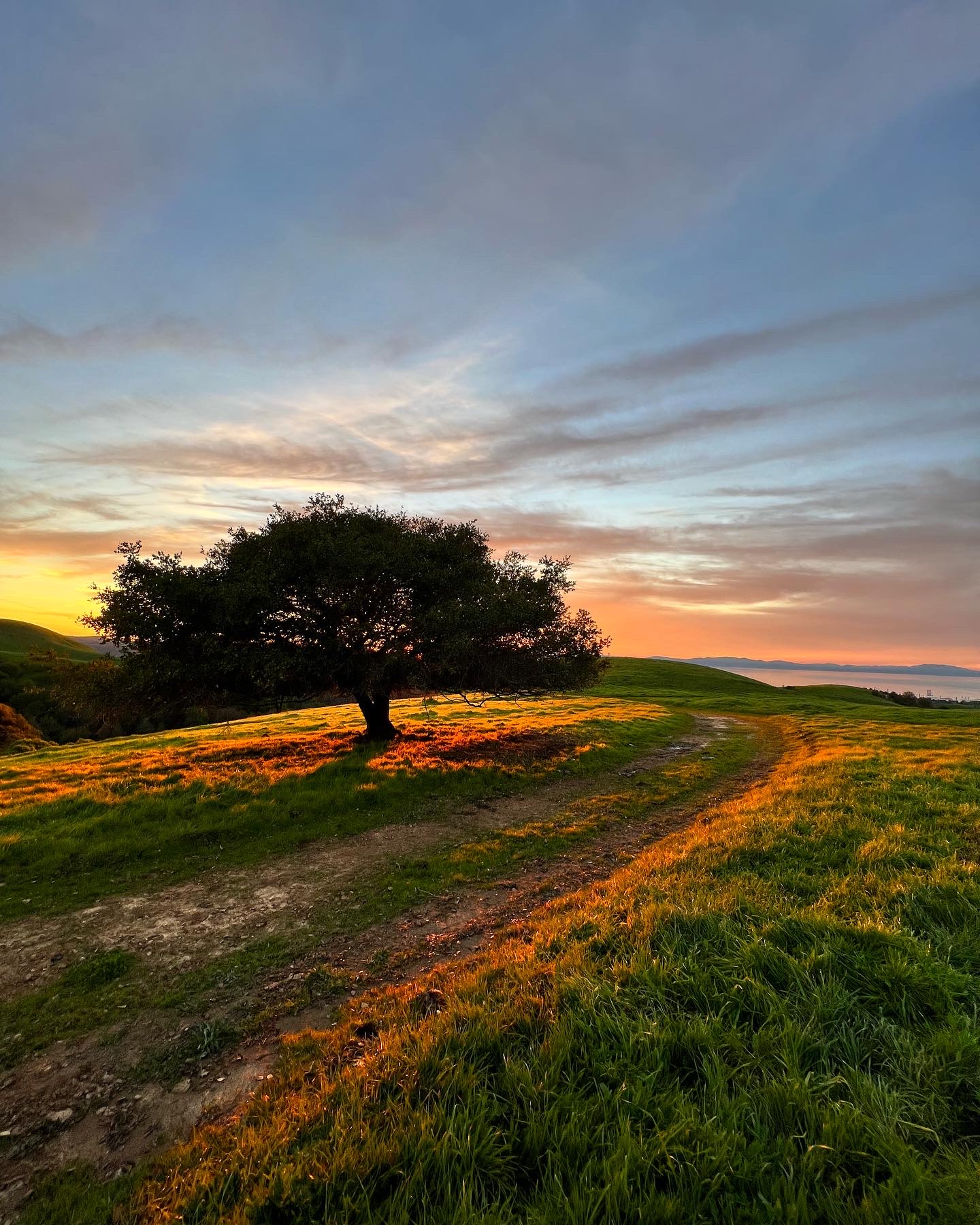
It’s been 10 years since the last phase of trails was built at Crockett Hills, including Sugar City, Tree Frog, Warep, and Goldfinch. It’s nearly 10 miles of singletrack, and it’s the largest legal access singletrack system in the East Bay.
Through that time it’s suffered from grazing cattle damage due to limited water supply and fencing and prioritizing cattle grazing over protecting the quality of the trails. The grazing infrastructure has steadily improved via rehabilitation of a cattle pond, the drilling of several wells until a productive well was achieved in the top pasture, and plumbing the water supply in the southern front field to multiple locations in three pastures. This along with a committed approach to reducing trail damage by cattle during the wetter months by cattle rotation has resulted in several consecutive years of low trail damage due to grazing.
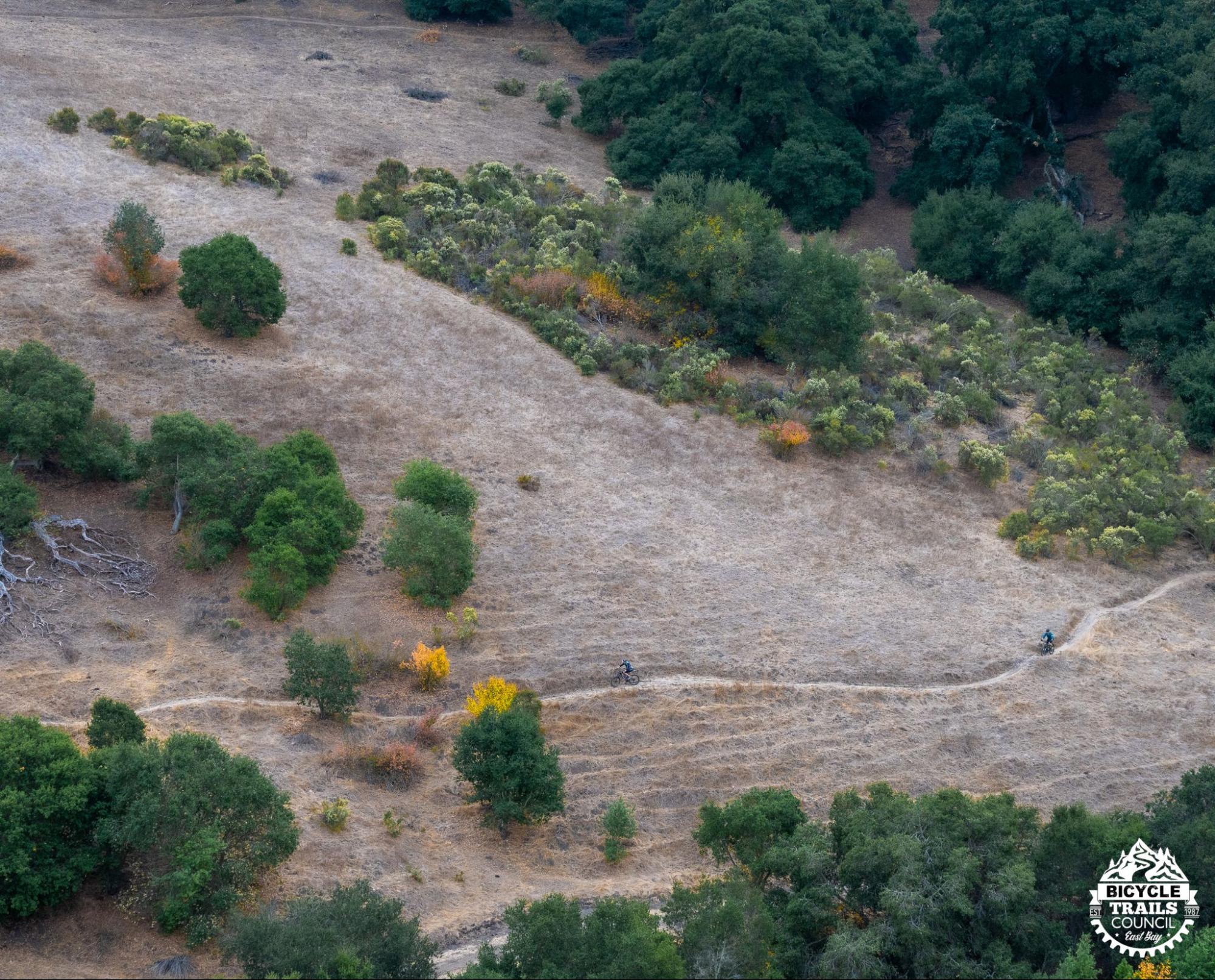
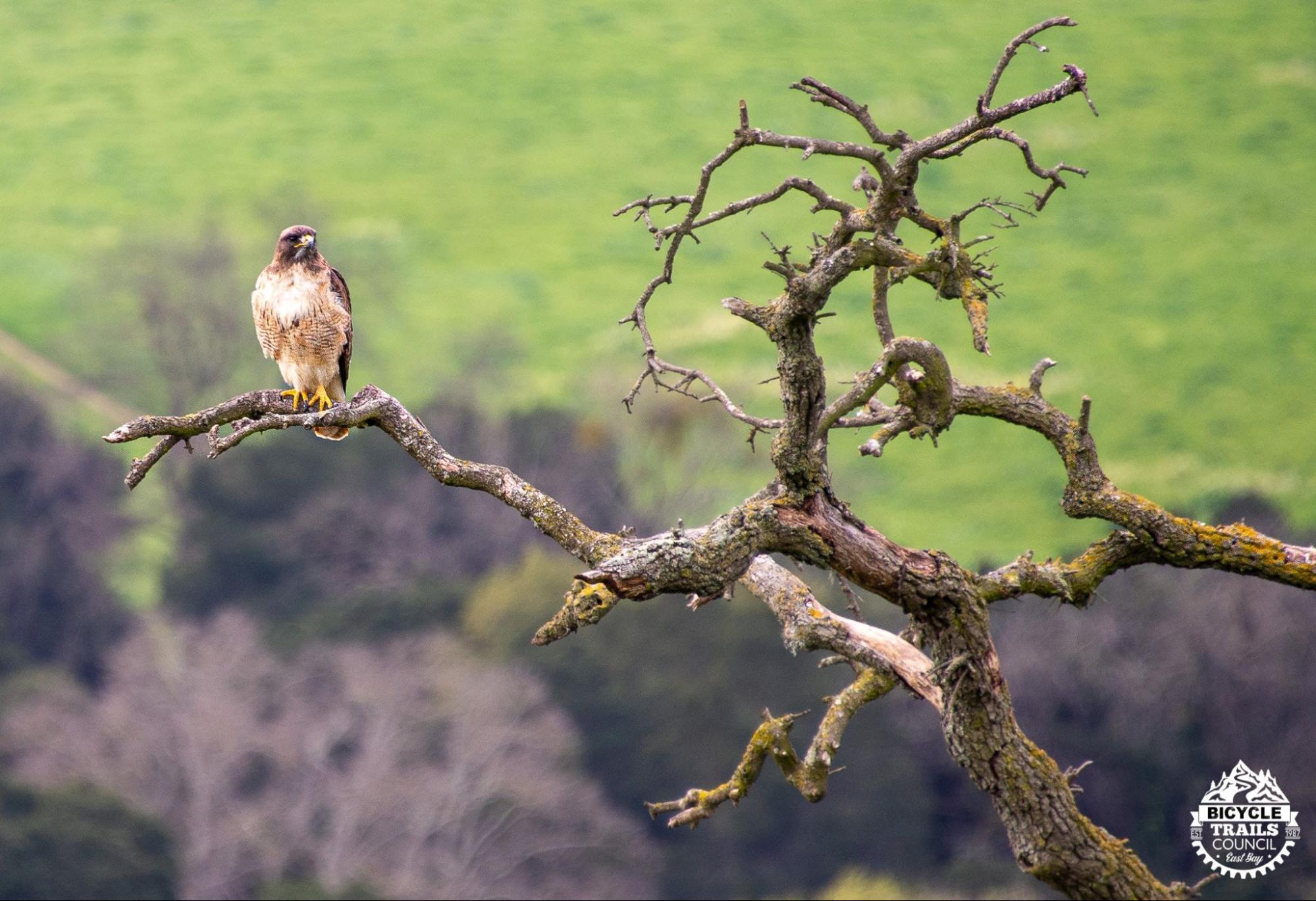
Two Peaks got a re-route to a friendlier, more gradual grade a few years later. Some of the awkward features have compacted or worn down and maintenance efforts are slowly restoring them with better feeling shapes. Goldfinch continues to be closed each year from February to September for nesting golden eagles. The good news is that you can count on an opportunity to see golden eagles. Goldfinch continues to be a seasonal offering that will likely always have a “raw” feel. The character of the features is unique compared to the other Crockett Hills trails and is worth checking out when it’s open. For a 10 year-old perspective of Crockett Hills when this phase opened check out this Bermstyle article.
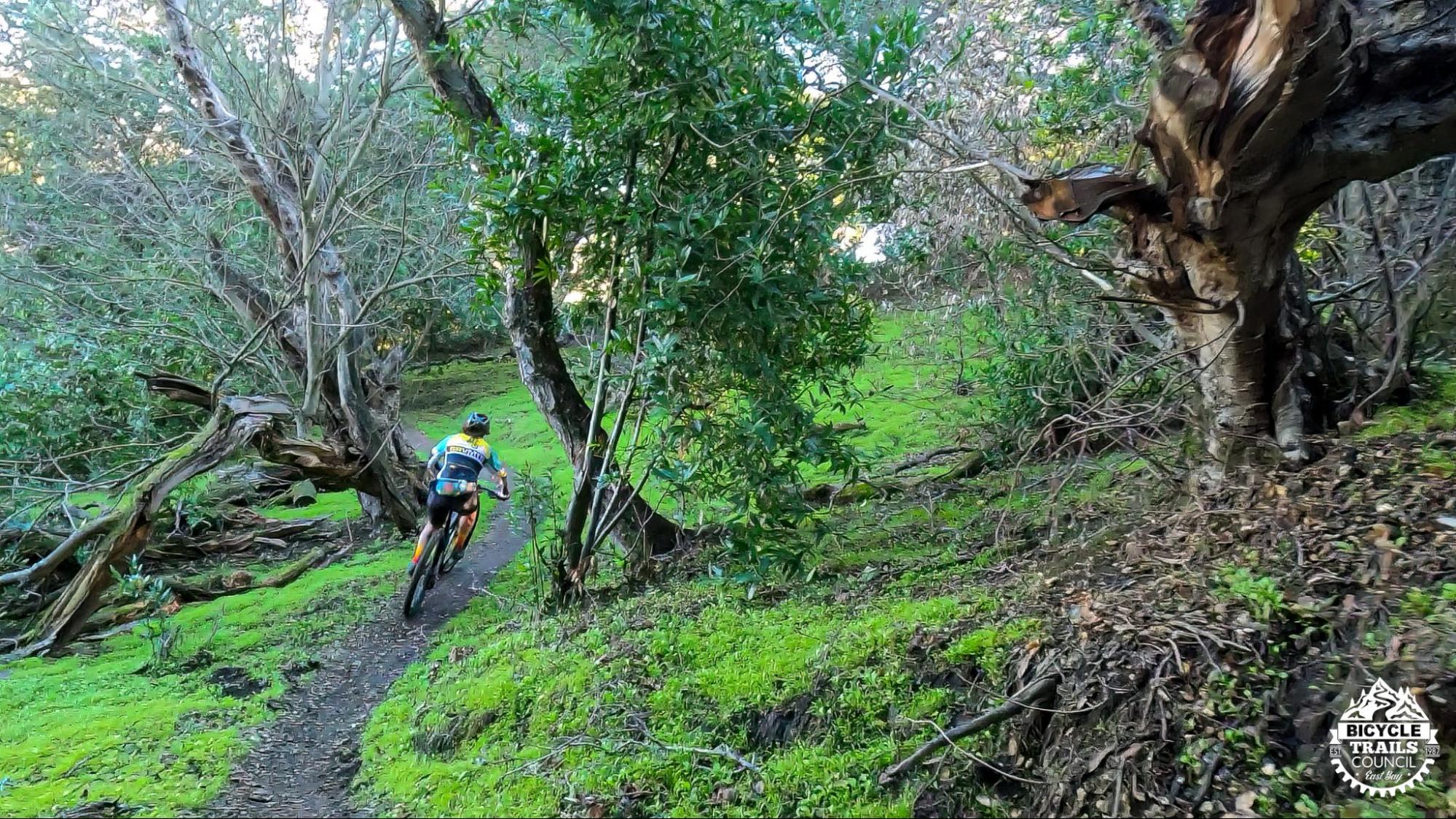
Crockett Hills has helped build the case that providing access can help reduce rogue or illegal trail building and there has been little of that activity seen at Crockett Hills. It certainly doesn’t provide the full range of MTB experiences that the community is looking for, and other parks have seen rogue trail building activity in response to that demand. It’s also shown that MTB riding can be compatible with hikers. The trail counter at the Cummings Skyway tunnel generally shows an even split of hikers and bikers. This doesn’t say that all hikers are comfortable hiking at Crockett Hills, but it certainly shows that many hikers find hiking with MTBs to be compatible. Reports of trail conflict are generally rare.
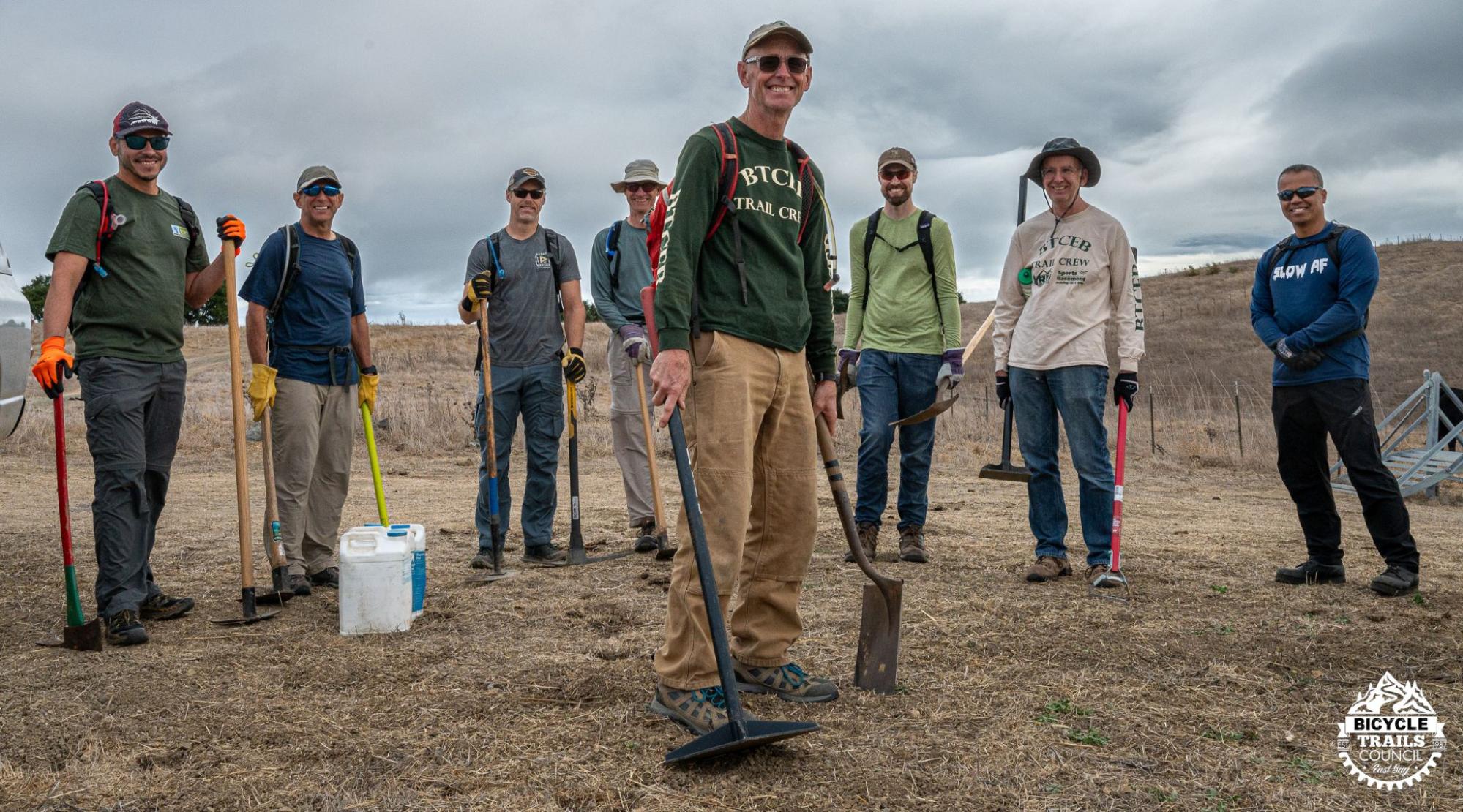
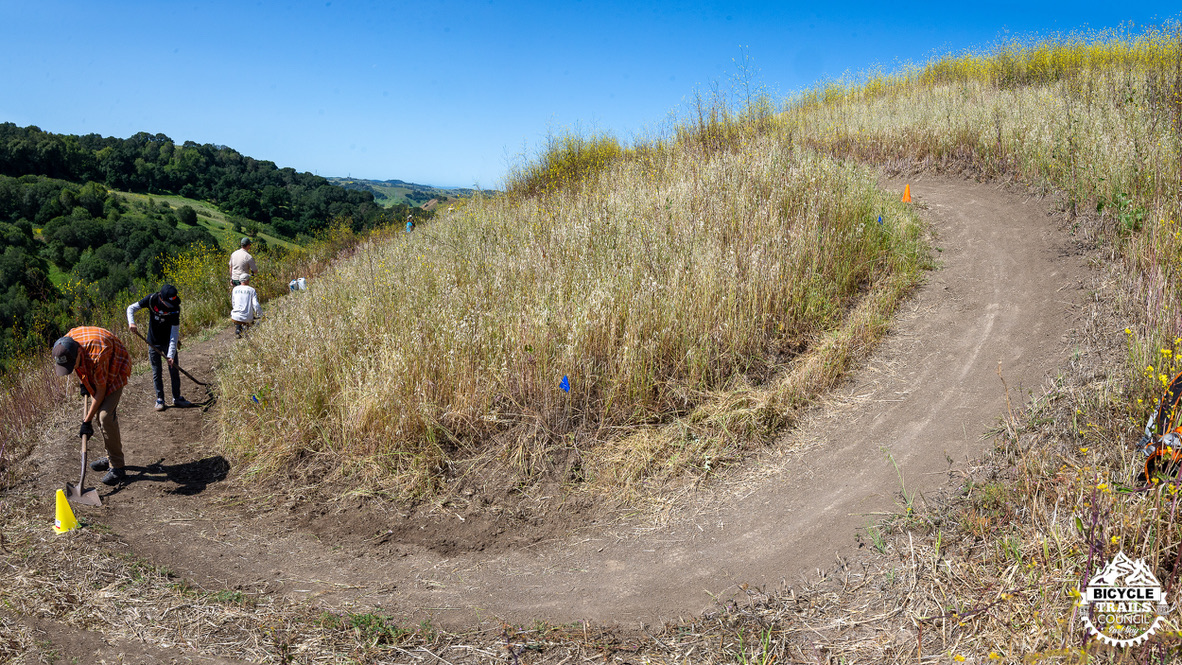
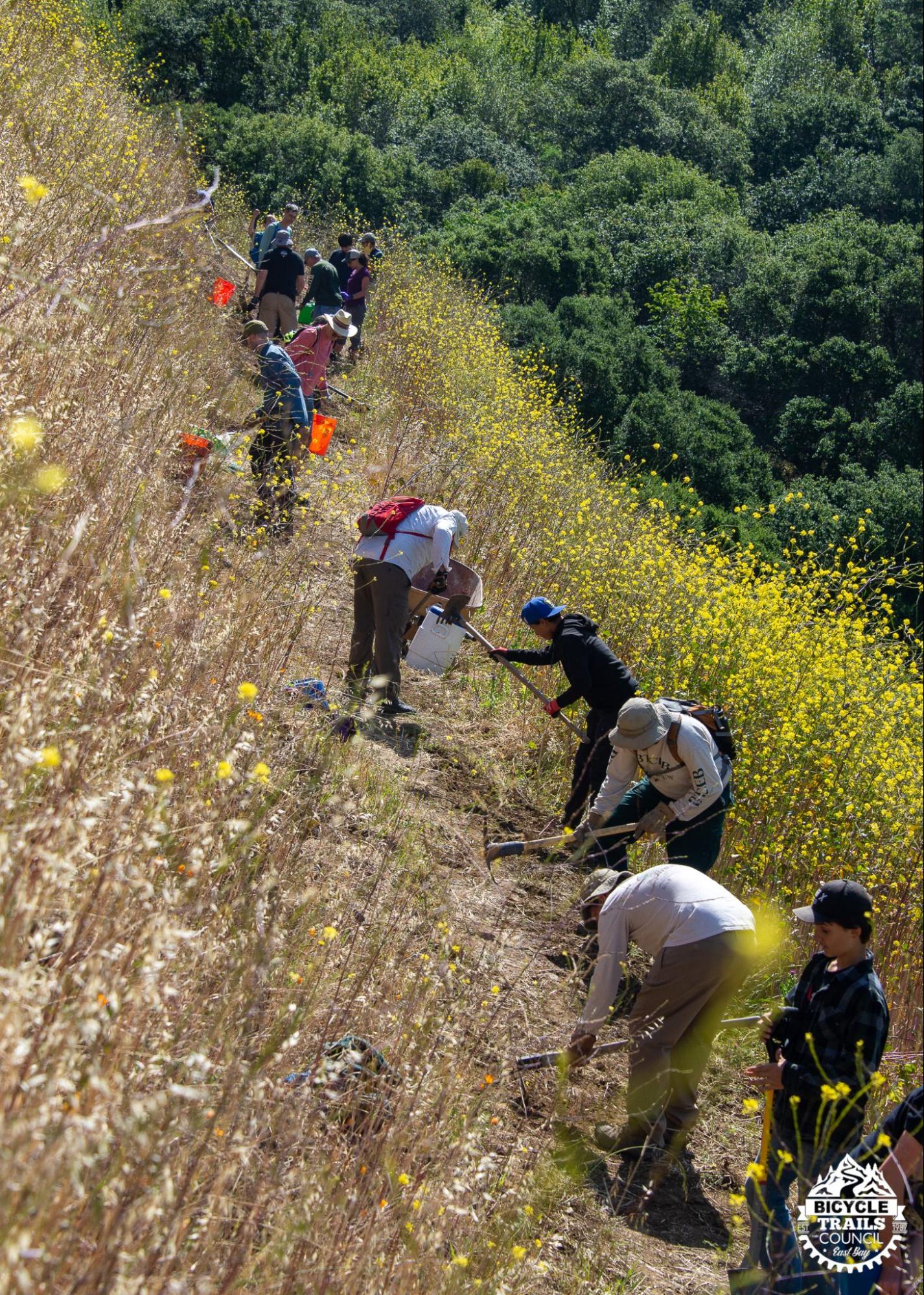
BTCEB has been the core of the trail stewardship effort at Crockett Hills. Henry Mitchell, Amy Arndt, and Jim Arth got the original working relationship started around 2015 with David Kendall, the park supervisor. Over time the BTCEB leads on this transitioned to Scott Bartlebaugh and Dave Sturgis. Around 2017 we’ve been keeping records on the volunteer hours and average around 500 hours per year so we’ve logged well over 5000 hours since Sugar City and the other trails were all built. As trust built with the park supervision they have provided increasing support for larger work days and more effective access for work groups. Work is done within a defined scope and the majority of the work is drainage maintenance and improvement, brushing, and hardening of problem areas. Any work that falls outside this basic scope is discussed and approved. Volunteers aren’t allowed to use power tools, so trees requiring power chain saws are handled by staff along with machine mowing and weed whacking. Staff continue to add equipment for mowing to make this task more efficient and effective, but the current resources still end up with overgrowth for extended periods. There’s always something to improve upon!
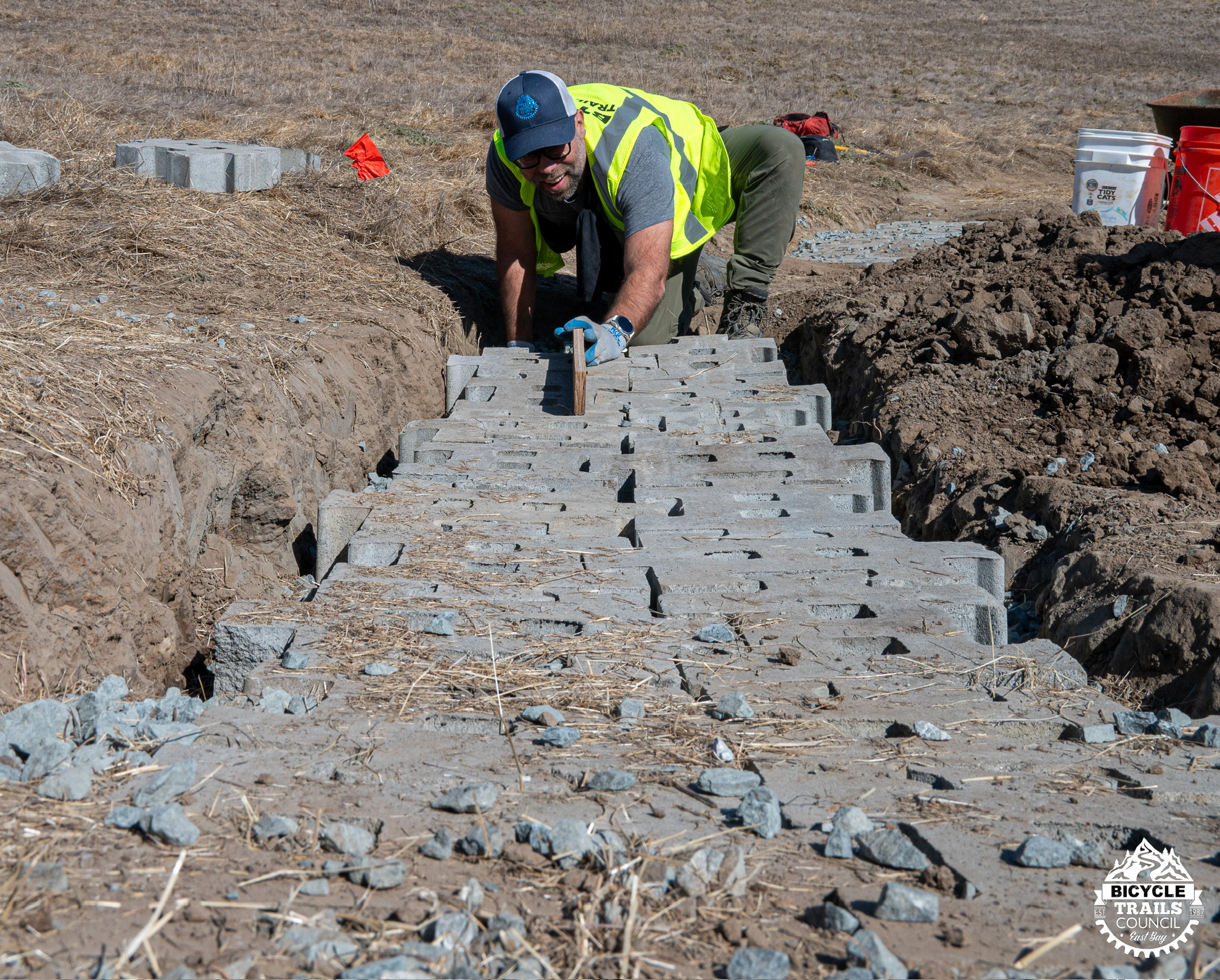
Trail One has been a strong supporter of BTCEB Trail Stewardship at Crockett Hills. As part of their Trail Treasury program they donate a portion of sales from every Crockett handlebar, and so far they have donated $5000 to BTCEB from that program. That support has helped us buy additional tools and fund volunteer work day lunches.
Reviews over time show that parts of the riding community are disappointed with Crockett Hills while many others appreciate it and have seen it steadily improve. Here’s one perspective from Trailforks:
Not sure why, but my original review from 4 years ago was deleted (I did use the S word). Changing my vote from 4 stars to 2. This trail was such a fantastic surprise when it suddenly appeared 10 years ago, now it’s like an old building from the 60’s that is slowly decaying.
Here is the old review:
I have such a love/hate relationship with this trail. Definitely the most fun when you aren’t trying to go balls to the wall. Even more fun when East Bay Regional Parks has cut back the brush and you don’t have to deal with picking 10 or 15 ticks off of your legs at the bottom. Cows leave plenty of poop and do all kinds of damage to the trail on a regular basis. The super steep and awkward rollers are finally getting beaten down after years of abuse and ride pretty fun now. It’s fun, it’s bad, it’s weird.
Here’s a positive review a year later from a different user:
Finally got a chance to ride at Crockett after checking off almost all the other MTB areas in the Bay. Had low expectations for this particular trail given all the negative comments here, but I thought it was pretty fun!
Trail was in totally fine shape (maybe there’s been work done since everyone else posted?) and you can pick up some nice speed. It had recently been mowed, but there’s still a fair number of blind corners given the tall grass in spring, so good to keep your speed in check. I would hope nobody would hike up this, but you never know.
There’s not many long non-technical flowy-ish descents like this to be found less than 40 min from SF. Grateful this is here and recommend it to any other Bay Area riders who enjoy this type of XC trail. The climb to get to the top from the north parking lot was totally enjoyable, too — not the usual hot grind up a 25% grade fire road LOL.
Tree Frog was my favorite trail at Crockett for its variety of terrain, scenery, and length, but this was a close second and a faster (but shorter) descent.
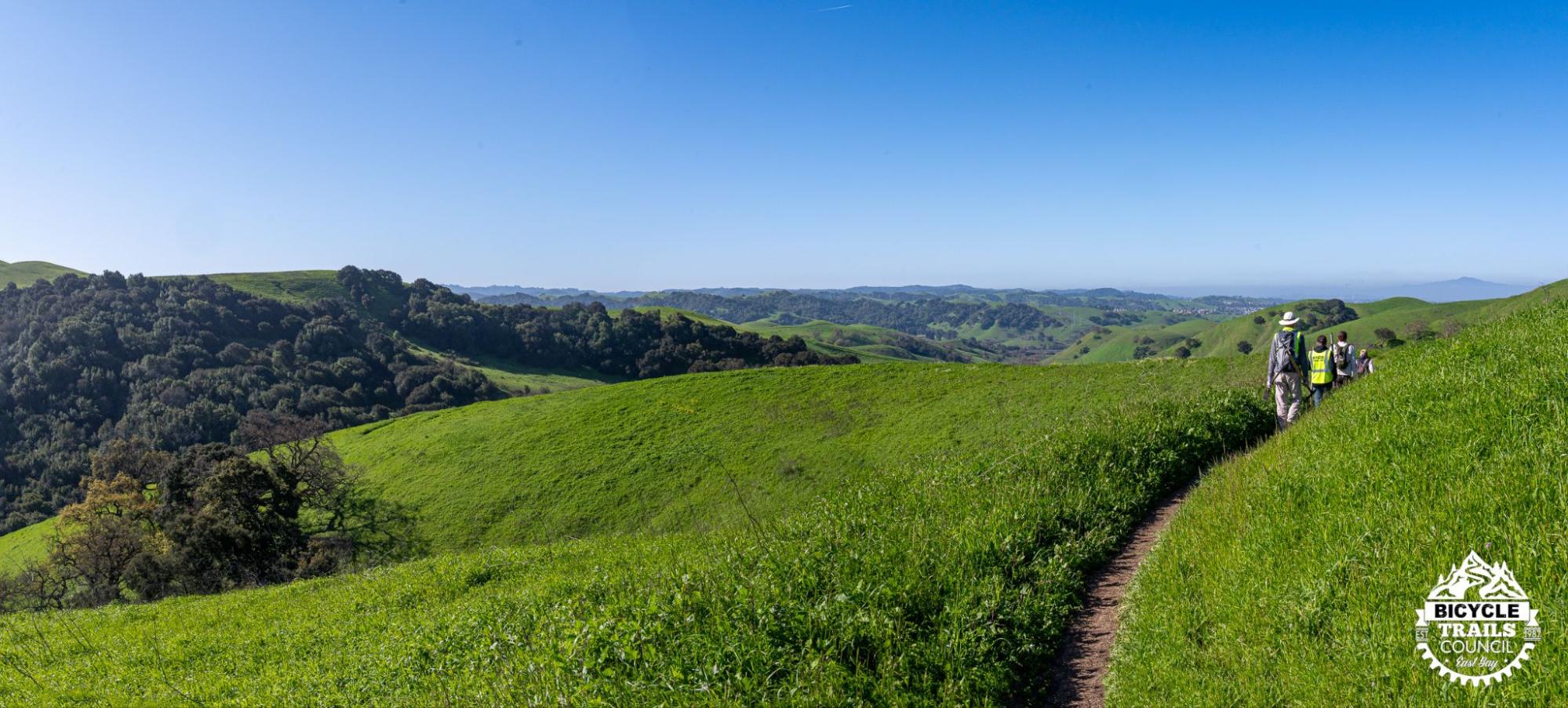
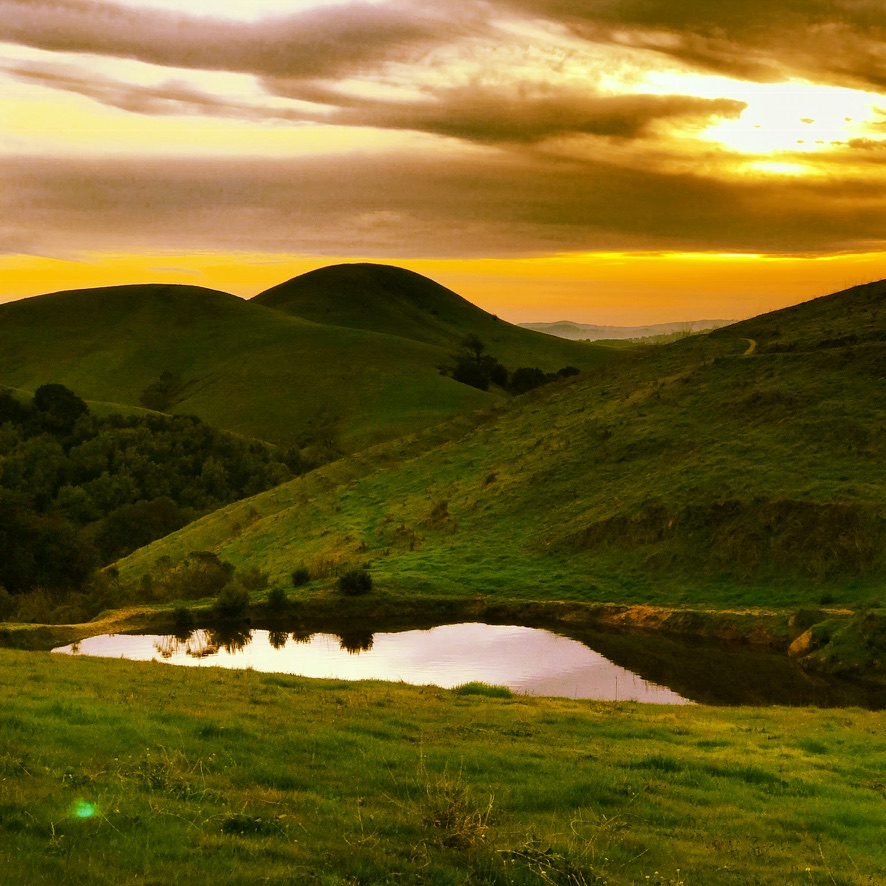
The entire MTB community is rarely going to love any single trail system. The range of desired experiences is broad and it’s unlikely that any system will ever include trails that provide for the entire range. Crockett Hills is good for the type of character it delivers. Could it use more love? Hell yeah! Is it getting better over time? It is … slowly, at this point. Some of the key problems — mainly cattle — have been significantly improved. Vegetation management has improved but there’s still a lot of room for improvement left. We continue to toil away on the advocacy front to work on these problems along with efforts on the trail stewardship front. If you haven’t checked Crockett Hills out in the last couple of years it’s probably worth another ride. And if you don’t like it when you do check it out, give it a month or two and ride it again, as the trail conditions will likely have changed. The ticks may be gone and the grass may have been mowed ….
Scott Bartlebaugh, Advocacy Director
We’ve Got Merch!
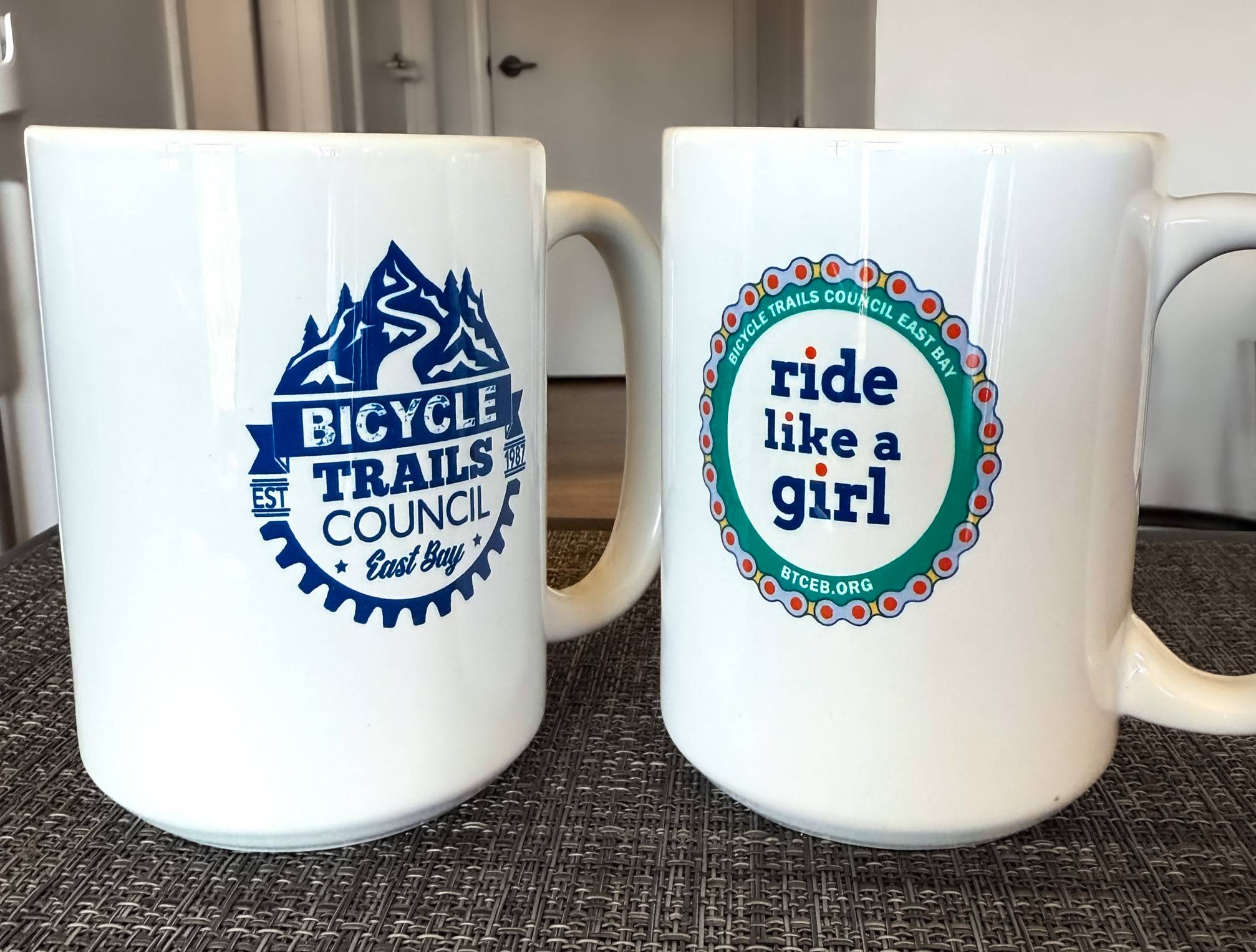
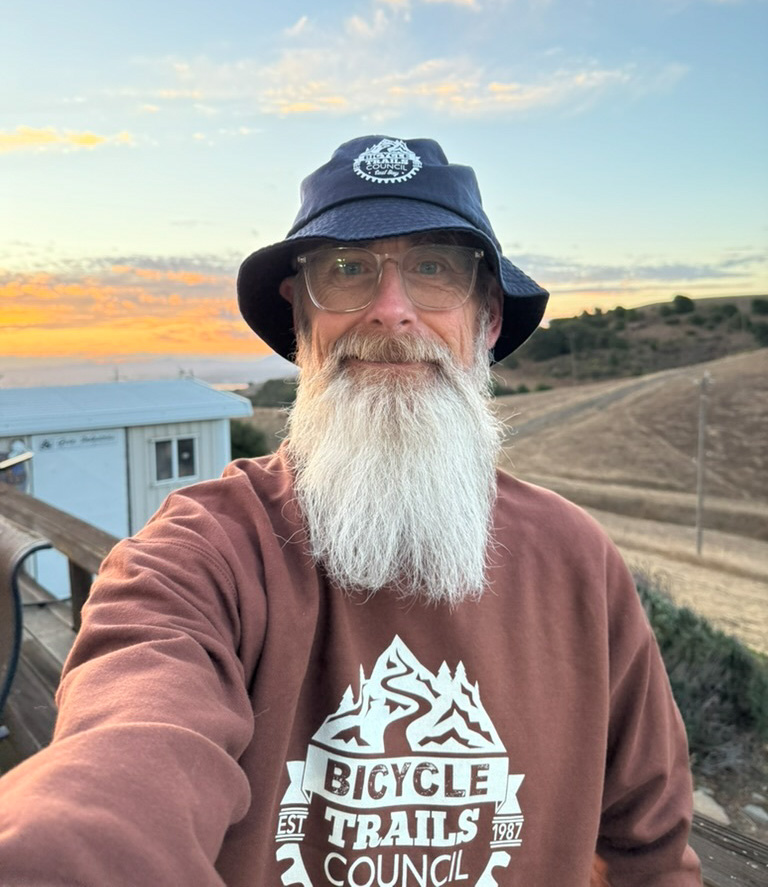
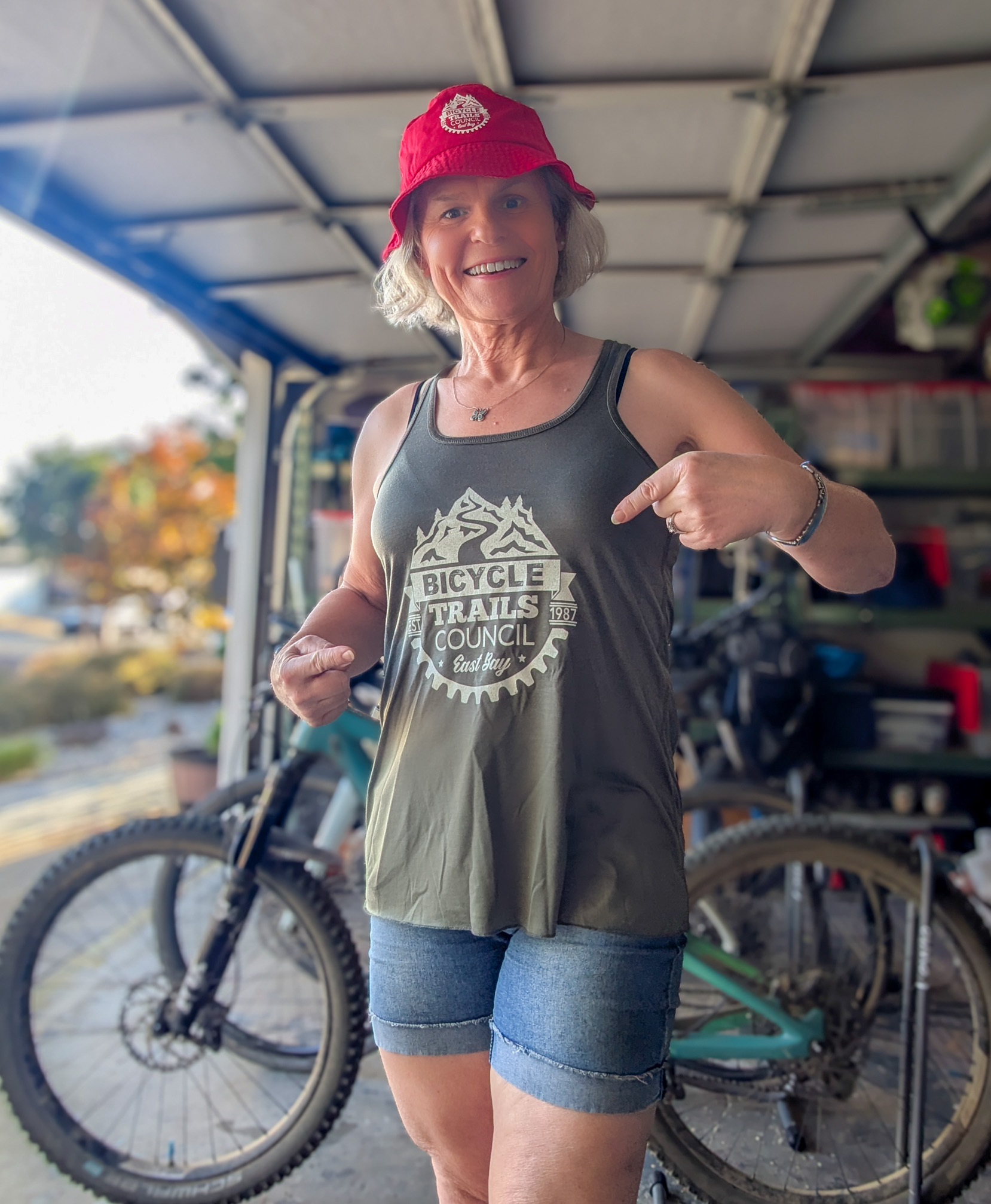
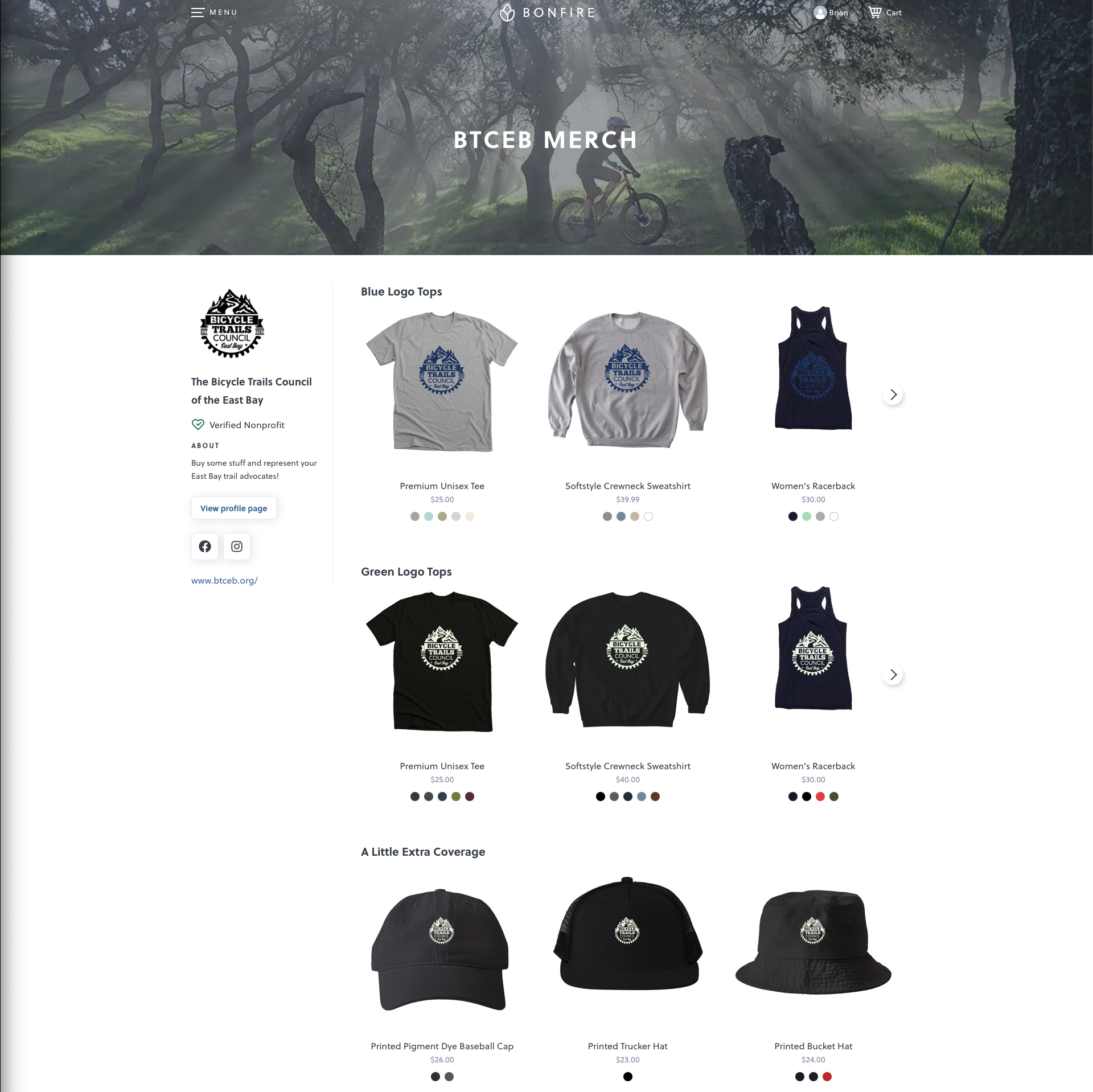
Finally, a mere 38 years after we were founded, we’ve got an official merchandise store! We’ve got tees, hoodies, tanks, hats, and even mugs in all kinds of colors and styles. So go crazy — buy some for yourself, and buy more for everyone you know.
For riders, volunteers, and supporters, this is more than gear — it’s a way to show your passion for mountain biking while fueling our mission to protect and expand access trails in the East Bay hills. Every tee, hat, or mug you choose carries more than a logo. When you shop BTCEB merch, you’re investing directly in trail stewardship, advocacy campaigns, and community events.
These revenues help secure grants, maintain miles of singletrack, and keep advocacy efforts rolling. Wearing our gear signals your commitment to preserving access, improving trail sustainability, and uniting the mountain biking community.
Ready to gear up? Click here to visit the BTCEB merch store for a seamless shopping experience and 90-day hassle-free returns. Want to share the stoke? Tag @btceb for a chance to be featured in our
monthly newsletter.
Your purchase is more than an accessory. It’s a vote for trails that
challenge us, landscapes that inspire us, and a community that supports
every rider. From maintaining singletrack to advocating for more access, BTCEB relies on supporters like you. Let’s ride forward together —
stronger, louder, and decked out in BTCEB pride.
Rebecca Lewington, Director-At-Large
Support BTCEB when you shop at Sports Basement
Are you a Basementeer at Sports Basement? Sports Basement’s membership program offers members 10% off of every item you buy, and they donate 10% of the profits from your purchases to the charity of your choice. BTCEB is a recipient of donations from this program, and it’s easy to update your designated charity.
While these donations don’t account for a large percentage of our funding, every little bit helps in our work to steward our trails and expand access for mountain bikes here in the East Bay.
David Wilcox, Events Director
Crockett Hills Trail Work Day (Soaring Eagle Trail)
Bay Area Ridge Trail Day of Service event – Saturday, November 8
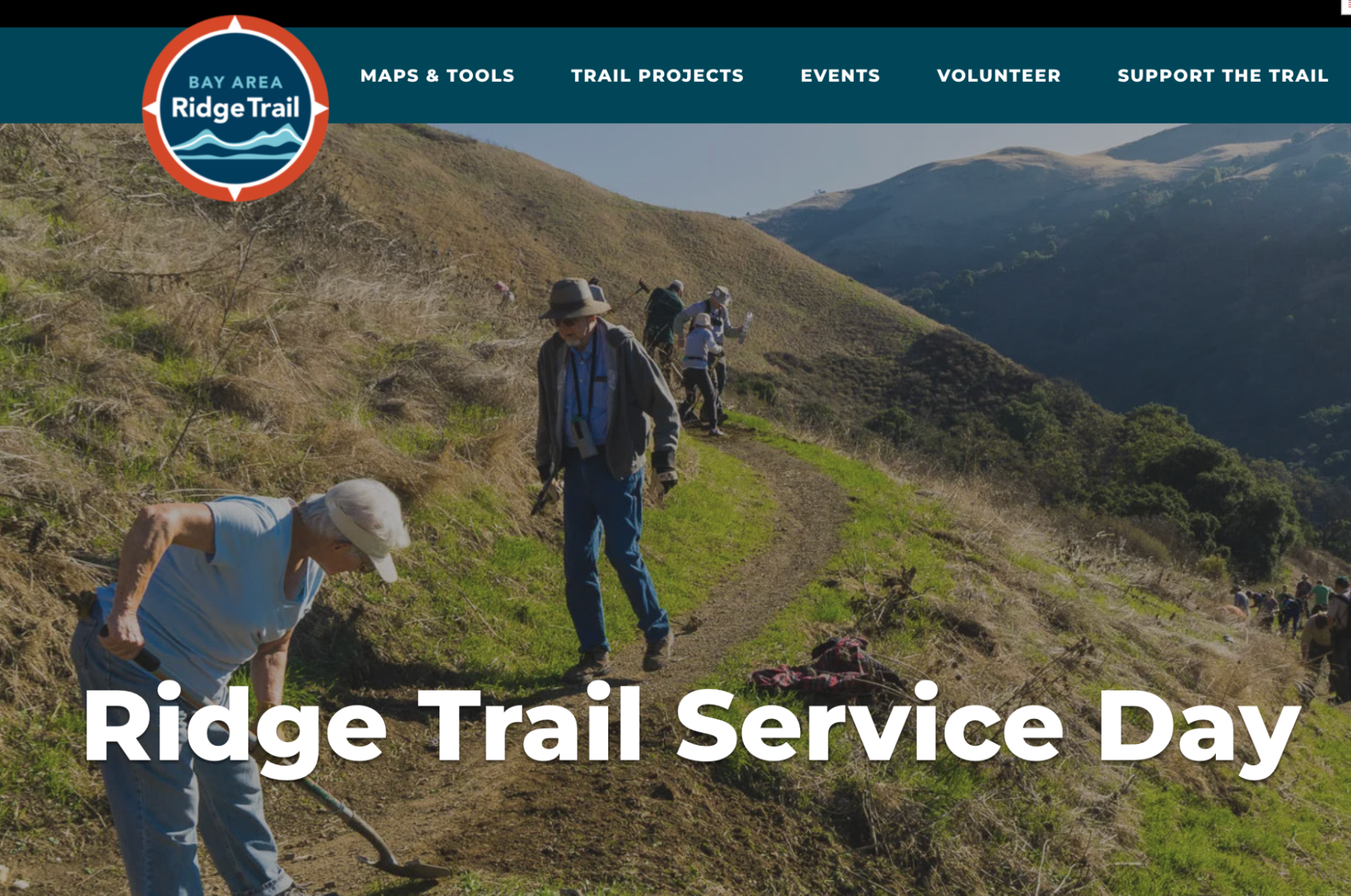
Join us for a trail work day at Crockett Hills on Saturday, November 8, from 9:00 AM to 12:00 PM. BTCEB is partnering with the Bay Area Ridge Trail and East Bay Regional Park District for this event, which is one of the events included in the Bay Area Ridge Trail Day of Service. The work scope for this event will be addressing cupping on Soaring Eagle Trail by removing the outer berm and re-establishing good drainage via outslopes, grade reversals, and knick drains. We may also be doing some brushing of shrubbery — bring your herring! — to improve sight lines so trail users can see each other sooner out there.
Sign up for this work day at the Bay Area Ridge Trail website.
If you see one of the other service day projects that looks more inviting, please go ahead and sign up for that one instead. Work on something that inspires you and gives back to our trails.
If you find that registration is full, please send an email to trails@btceb.org and we’ll see if it’s possible to open up some more spots.
Scott Bartlebaugh, Advocacy Director
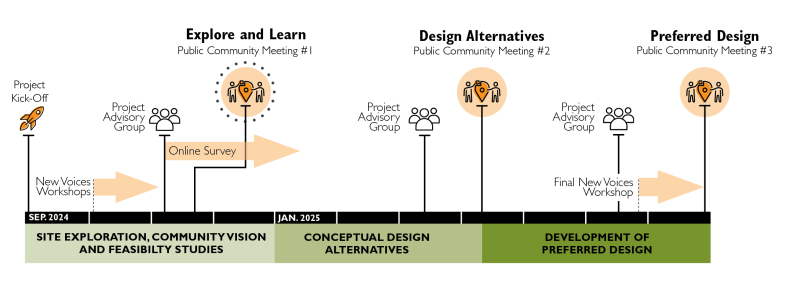
Attend Public Meeting on 11/19 for EBRPD North Basin Strip Improvement Project
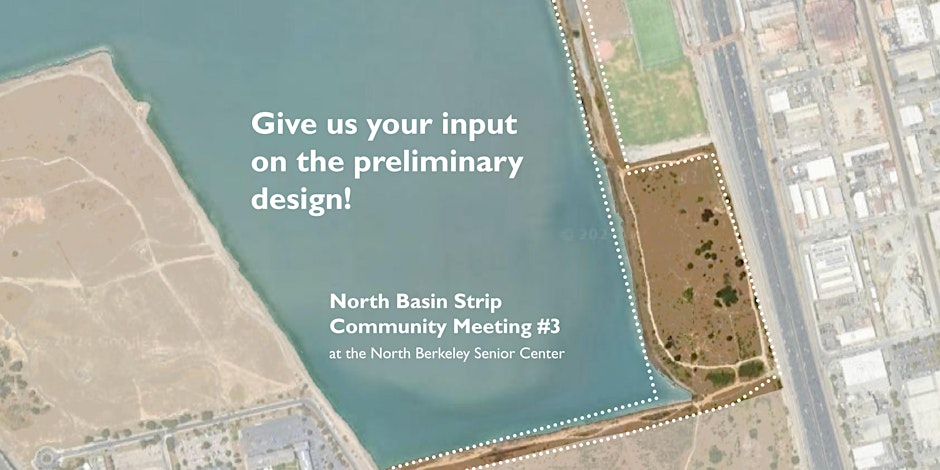
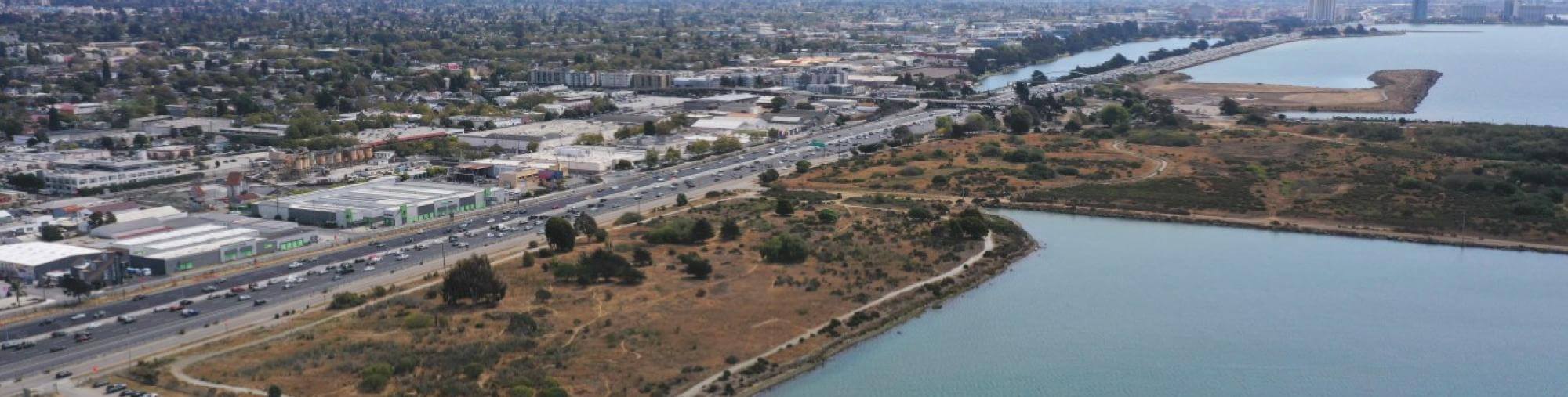
The North Basin Strip is the portion of the McLaughlin Eastshore State Park located south of the Gilman Sports Fields in Berkeley. This area is approximately 20 acres and includes 2,800 linear feet of shoreline. EBRPD is in the midst of a planning project to develop a preliminary design to improve this portion of the park. EBRPD held a community meeting on June 1 that was attended by BTCEB board members Scott Bartlebaugh, Jeff Royal and David Wilcox along with several coaches from the Berkeley High School MTB team.
Based on feedback from that community meeting, EBRPD and the consultant team of WRT/ESA will share the preliminary design for the North Basin Strip at another community meeting on Wednesday, 11/19, at 5:30 PM at the North Berkeley Senior Center, 1901 Hearst Avenue, Berkeley, 94709. Register here if you’re able to attend.
This is an opportunity for you to help shape the direction of this park if it’s local to you. A strong turnout by the bike community increases the chances that bike-specific considerations are included in the final plan. Responding to public input gives the elected board backup for decisions, and when you show up and speak up it makes it easier for them to make decisions that support increased bike access.
And if this isn’t a local park for you, then it’s still an opportunity to learn about how the planning process works so it’s familiar for you when it’s applied to a park closer to where you live. It’s also an opportunity to meet EBRPD staff and possibly the elected directors that will ultimately decide what happens for the North Basin Strip and in other EBRPD parks.
If you are local to this park, this is an opportunity for you to help shape its direction. A strong turnout by the bike community increases the chances that bike-specific considerations are included. Responding to public input gives the elected board backup for decisions. When you show up and speak up it makes it easier for them to make decisions supporting bike access.
Join Us for our November Gala Ride at Napa Skyline (Sat, 11/29)
Hey there riders! October may have been all trick but November is sure to be our TREAT!
Join us on Saturday, 11/29, at Napa Skyline Wilderness Park for our November Gala Ride. As always we’ll gather at the main parking entrance (not the college lot) at 9:00 AM and ride from 9:30 AM to about noon.
Please, oh please, due be sure to bring a well-tuned mountain bike — not to mention a relatively well tuned BODY! We’ll be immediately climbing from the trailhead towards Lake Marie. From there there’s MORE climbing — make sure you and your sled are ready for it. But it will be worth it, as there’s plenty of flowy singletrack, and some fun technical chunder as we loop the park.
We’d love to have you on the ride! Sign up here on Meetup.
What’s In Your Pack?
Or … now for something completely different …
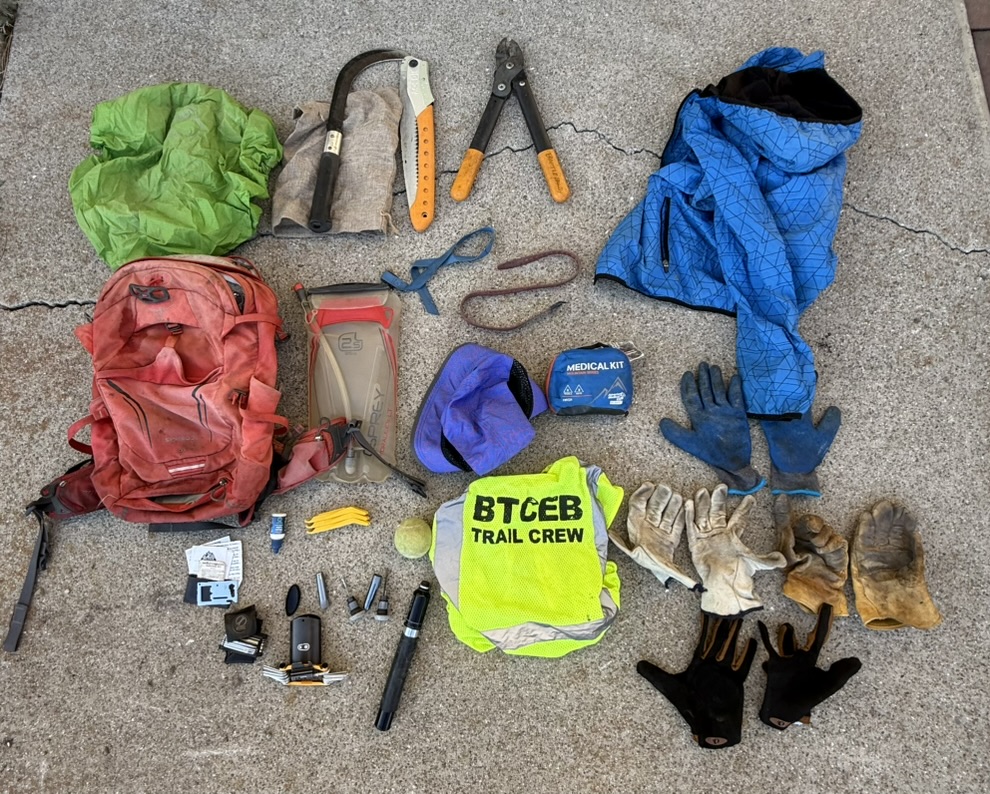
Here’s the second in what is probably going to be a series of “What’s In Your Pack?” articles. Okay, it’s not completely different than Rebecca’s pack contents but it’s got some noticeable differences and ventures where “normal” folks know better. (Normal is way overrated, by the way.) My pack still has the bits to fix your bike when it breaks, or when you break your bike, or to some extent you break yourself or you’re trying to prevent yourself from breaking. While not as in depth along those lines, it contains a fair amount of stuff for puttering around on the trail and dealing with a downed tree, cleaning up encroaching poison oak or other vegetation, and cleaning up sightlines.
Here we go, working our way down from the top left:
Pack cover: this stuffs into a purpose-built spot on the bottom of my pack. It can be used to keep your pack dry if things get wet or can be used as a seat to keep your bottom dry if you stop for some lunch or take a break during trail work.
Hand scythe: I also have some folding scythes, but this rigid scythe is my preference and holds up better. It works well on poison oak, grasses, and green or woody mustard, hemlock and the like.
Fiskers loppers: the right tool for cutting branches with diameters up to the size of your thumb or for slower but more precise poison oak work when slashing at it just doesn’t fit. These are lightweight but take a fair amount of abuse. And when you abuse them too much and a blade or something else breaks, Fisker has sent me replacement parts for free. Thanks again to Ben Chang and Kevin Smallman for turning me onto these loppers.
Burlap sack (size small): provides some mechanical protection from the scythe or lopper bad pocking through the pack, and also used to try to contain any urushiol (the oil from poison oak) and reduce its spread inside the pack. Luckily I’m not super sensitive but my luck will run out someday.
Silky Big Boy folding saw: limbs and trees come down and it’s nice to be able to address them right away to keep a trail open and people on the trail. It’s also nice to take that load off park staff (if you have park staff!) so they can focus on tougher problems. It’s a pricey saw but well worth it in my book for the quality, reliability, capability, compact size, and light weight.
Lightweight wind shell: the weather changes and sometimes you need more than you started out with. Having it ready all the time is nice.
Osprey Synchro 20 Pack: I’ve had a series of Camelbak and now Osprey packs, and I’ve slowly been selecting larger packs when I replace one that’s worn out. Tool-carrying capacity, a nicely sized water bladder, and general kitchen sink capacity are my current desires. For just a trail work-oriented day with more capacity to carry tools, I switch to a purpose-build Dakine Trailbuilder pack. The Synchro 20 has been the reliable daily driver for a few years and to the point that several of the buckles have failed. Osprey stands behind their gear and has quickly sent me replacement buckle parts sewn into a replacement strap. The fabric is sunbleached but it’s still holding up and the replacement buckles will probably keep this one going for a few more years. I was impressed by Osprey’s customer service and will likely keep using their stuff for quite a while.
2.5L bladder: As the Camelbak folks used to say, “Hydrate or Die.” 2.5L of dihydrogen monoxide can getcha through most days. There are a couple of open side pouches that will fit a water bottle for times when 2.5L won’t cut it and you can’t refill. One of mine typically has a tennis ball in it. (Keep reading if you don’t know what it’s for!)
A couple of straps: every so often you might need to lash something to your pack like a long handled tool or a cowskull or thigh bone just for funsies.
Bucket hat: I expect that UV radiation is gonna get me some skin cancer problems someday. Covering up when doing trail work isn’t a bad idea to put that off for a little longer.
First Aid Kit: sometimes you or somebody else gets sliced or diced and it can be helpful to do something about it.
Gloves, gloves, and some more gloves: they’re kind of a wear item, so when they start wearing through they’re okay for some tasks but not so much for others. Cheap bastards like me try to stretch them further than we ought to, so a new pair sometimes gets added but that holey worn pair sticks around so some more blood can be squeezed outta that turnip.
Safety vest: safety third! … and sometimes first and second! The vest is often worn although sometimes it’s just along for the ride. Sometimes I’ll put it out uphill as an indicator that something’s going on up ahead on the trail, but it seems like there’s a less than 50% chance that the message will be received as intended, though. It’s that that BTCEB logo for some more oh-so-effective advertising: “BTCE … B? Never heard of them ….”
Tire pump: sometimes there’s one on the bike and sometimes there isn’t. This one is usually buried in the pack and I forget that it’s even there. Tubeless tires with sealant have spoiled me … and now I can expect a flurry of flats!
Tennis ball: a tool to simulate water flow and see if it looks like your drain is likely to work or not. (Actually performance may vary.)
Tubeless tire plug kit: nice to have when you need it. All my bikes have a spare tube on them somewhere, so I don’t usually carry a tube in my pack.
Multitool, and maybe a second multitool: it’s good to have at least one with a chain tool, although you don’t need a chain tool as often as you did before quick links, but it can still get you out of a jam. New quick links would be a good item but they haven’t made it into my standard supply of staples yet.
Tire levers: good to have. They can probably work as a wedge to avoid a pinch when sawing a downed limb or tree. Sometimes there is an actual wedge in my pack, but not on this day.
Lube: never a bad idea to overcome undue friction …
Some weird credit card size survival tool: it’s always a good idea to review the crap you may have put in the pack and just keep carrying around but never use. This seemed like it might be a good idea at the time, and at least it does have a bottle opening built in.
BTCEB cards: always a good follow up to “Have you heard of BTCEB?” “Well, no, I haven’t …”
Items not shown that make it in there sometimes are some fig bars, gels, or chews to refuel. The Trail Boss breakdown tool when the work scope includes digging or a Henry Mitchell custom breakdown tool with a Rogue hoe or flat shovel head. The brushing tools get a break when the tread tools go in but the brushing tools are the daily drivers. A hand powered chainsaw is there every now and then. Sometimes a pair of compact binoculars or monocular will make it when I’m trying to spot the golden eagles.
Compared to Rebecca I don’t pay a lot of attention to weight per se. On my normal rides — okay, none of my rides! — I’m just not moving that fast and it ends up being more training weight, I suppose. I’m so used to it on my back that I kind of feel nekkid when I ride without a pack, but the extra mobility in that case is awesome!
Scott Bartlebaugh, Advocacy Director
P.S. And, for those who were wondering, my pack weighs a mere 14.4 pounds. It’s approaching the weight differential of a superlight bike, less the assist.
Singletrack Summit Central Coast Recap
Advocacy and Trail Stewardship Leaders Meet
The first Singletrack Summit Central Coast was held October 10 – 12 in Fairfax. The Eureka to Redding trail stewardship/advocacy organizations have been holding Singletrack Summits for four years now. CAMTB has visited those events for the last couple of years and BTCEB’s Scott Bartlebaugh headed to Weaverville last year. CAMTB has also held CAMTB Connected, their fall strategic planning kick-off meeting, for the last three years at Downieville and Santa Cruz. This year, CAMTB shifted to regional Singletrack Summits instead of the single CAMTB Connected event, which reduced travel for member organizations in a single region, allowed more locally focused sessions, and still provided for state-level discussions and information sharing. Four Singletrack Summits were held this year at Big Bear in SoCal, Redding for NorCal, Quincy for the Sierra, and Fairfax for the Central Coast. You might argue that we’re not really the true Central Coast, but in this geographic breakout it’s close enough.
This year’s Singletrack Summit Central Coast featured:
- a trail work day on the soon-to-be-completed Caballo Rojo trail at Tamarancho
- a screening of the most recent Freeride Film Festival movies
- a full day of presentations, discussions and exercises on Saturday
- group rides every day
- camping on Friday and Saturday nights
- dinner and camaraderie at Camp Ghilloti on Saturday night.
Participating local organizations included Access 4 Bikes, Marin County Bicycle Coalition, Monterey Off Road Cycling Association, Stewards of Briones, Bay Area Mountain Biking, Santa Cruz Mountain Trail Stewardship, Mount Diablo Trails Alliance, Silicon Valley Mountain Bikers, SF Urban Riders, Coastside on Bikes, and BTCEB. Out-of-region organizations included Redding Trails Alliance, Tahoe Area Mountain Bike Association, Concerned Off Road Bicyclists Association, San Diego Mountain Bike Association, Lowelifes, Motherlode Trail Stewardship, and Orogenisis Collective. In total there were 18 of the 41 CAMTB member organizations participating along with IMBA, a CAMTB partner. Additionally there were land manager staff or elected officials from East Bay Regional Park District (4 staff members), CA State Parks, Marin Parks and Open Space, Marin Municipal Water District (1 staff member and 3 elected directors), CA Assembly Member Damon Connolly, and the mayor of San Anselmo. BTCEB Board members Jamuel Starkey, Jon Adams, David Wilcox, and Scott Bartlebaugh attended, and we partnered with the Stewards of Briones and East Bay Regional Park District for a session on adoption of non-system trails discussing the Briones Pilot Project.
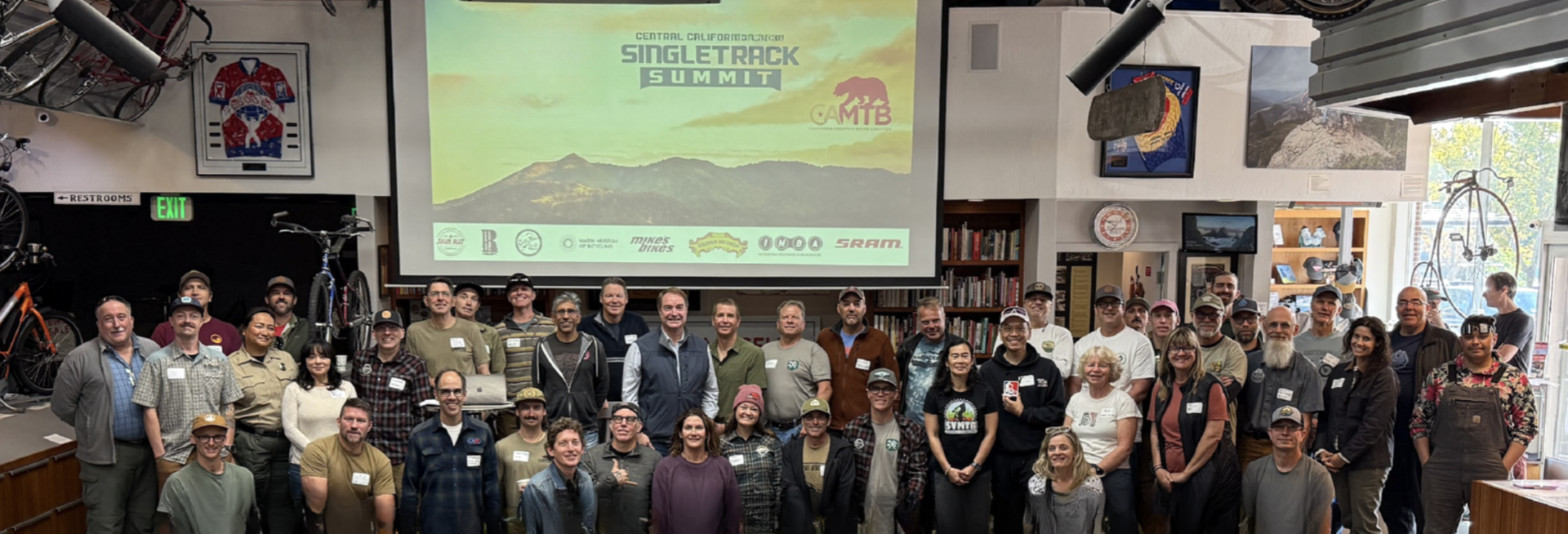
Topics for the Saturday sessions included:
- adoption of non-system trails
- state of the region
- IMBA update
- agency partnerships
- fire hardened trails
- EMTB past, present and future
- organization names (e.g., do you include MTB or not?)
- long distance trails.
In many cases, the Saturday sessions only had time to scratch the surface, but they primed discussions later that day and evening and provided contacts from other organizations to reach out and learn from and share ideas with.
This first Singletrack Summit for our region was definitely a success and built on the CAMTB Connected Retreats. It marks another step up for stewardship and advocacy organizations in our region. We look forward to next year and the years beyond along with the collaboration between organizations that continues to grow.
Scott Bartlebaugh, Advocacy Director
October/November 2025 Advocacy Call to Action
Alameda-Tesla Classification & General Plan
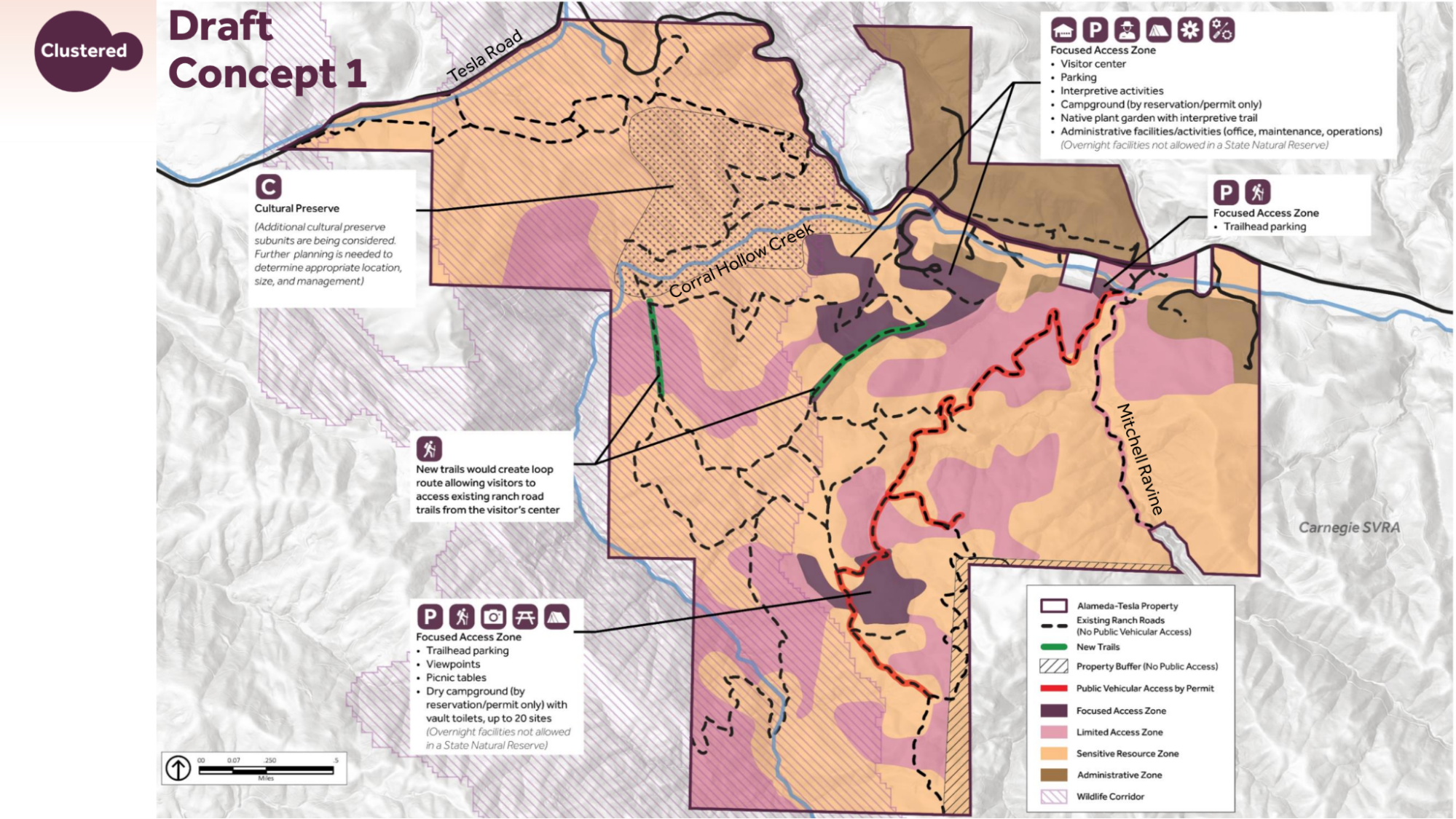
In case you haven’t heard of it yet, Alameda-Tesla is a California State Parks property in eastern Alameda Country directly adjacent to Carnegie OHV SRA, and it’s currently going through the Classification and General Plan creation process. As part of that process, California State Parks has an online survey open for public feedback until 10/31/2025 that has been extended through 11/30/2025.
Our call to action is for you to complete two tasks that will only take you a few minutes to complete, but both of them are key to mountain biking being represented in the planning process and making sure our elected officials understand that you want more mountain bike opportunities and that you want the Alameda-Tesla property to be classified as a State Park.
First provide feedback via the State Parks Concept Alternatives Survey. Currently the two draft concepts have NO singletrack access for mountain bikes. Let them know you want to see singletrack mountain bike trails in addition to fire road access. You can find more information at the Alameda-Tesla project page. The CAMTB website provides a concise description of strong talking points if you need some help with that.
Second, go to the CAMTB website and use their tool to send letters to your elected or appointed officials to let them know quality mountain bike access and sustainable recreation access are a priority for you. The tool takes just a few clicks, allows you to customize your message, and then sends letters to your officials based on your address. This is also an important step to participation in this planning process.
You can find all the information provided by California State Parks at their Alameda-Tesla project page.
Both of these actions are important and they will only take a few moments of your time. Thank you for advocating for better mountain bike access in the Bay Area. Reach out to advocacy@btceb.org if you have any questions.
Scott Bartlebaugh, Advocacy Director
About BTCEB
Bicycle Trails Council is a 501(c)(3) non-profit organization that was founded in 1987 by a dedicated group of volunteers who fought the impending closure of almost all bike trails in the East Bay. Today we are active with programs that educate trail stewards, promote responsible riding, and advocate for equitable trail access. We work to improve and maintain trails in our local parks, and our members and partners have volunteered countless hours to build new trails and improve existing ones. Our marquee group rides are the monthly Gala Ride and our women-specific Ride Like A Girl. Both are led by experienced local riders who know the trails and offer groups for all skill and fitness levels.
Join BTCEB today to support your local trails and MTB community and help free the singletrack!
Contact Us
Do you have a good ride story, trail work report, or other bike trail news? Tell us about it. Please send a paragraph or two, ideally with 150 words or less with a pic (under 10MB please) and/or link telling us about trail work, rides, events, or any good mountain bike effort to bring our community together, etc. Please send via email to our editor Brian Glueck (with pictures if possible) to buzz@btceb.org
To reach the entire board, email: board@btceb.org
BTCEB Board Members
- Jamuel Starkey, President, jamuel@btceb.org
- Jeff Royal, Vice President
- KC Chaudry, Secretary, info@btceb.org
- Alan Enrici, Treasurer, treasurer@btceb.org
- Scott Bartlebaugh, Advocacy Director, advocacy@btceb.org
- Tom Gandesbery, Trail Director, trails@btceb.org
- Brian Glueck, Communications Director, buzz@btceb.org
- David Wilcox, Events and Promotions Director
- MTB Rider (vacant), Membership Director, membership@btceb.org
- Rebecca Lewington, Director-at-Large
- Jon Adams, Director-at-Large
- Mike Telang, Director-at-Large
BTCEB is grateful to our sponsors.