February 2026
The “Shortest Month” Edition . . .
Freehub PRESENTS: A Mountain Bike Film Festival
Join BTCEB in celebrating community, culture and cinema
Freehub PRESENTS, brought to you by Arkansas Tourism, is a collection of films from not only some of the best filmmakers and riders but also new up-and-comers, all given the proper big screen experience. The multi-stop film festival honors top and emerging filmmakers, riders, leaders, and storytellers who will shape the sport for generations to come. Cinematic events and coast-to-coast independent events celebrate community, culture, and cinema while benefiting nonprofit trail advocacy organizations like BTCEB!
BTCEB will host a viewing of the MTB film festival at Community Hub in downtown Oakland on Thursday, March 5, 2026, from 6:00 PM to 8:00 PM. Ticket sales benefit BTCEB.
Do you believe in bike access on East Bay trails and want to be part of our trail advocacy and stewardship work? We’d love to have you join us as a member.
To Reroute or Not to Reroute
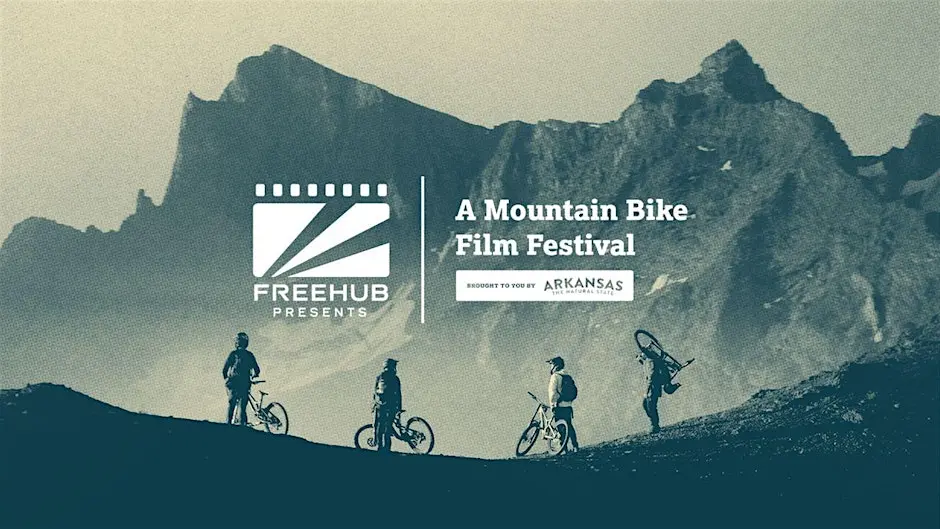
Trail work in Joaquin Miller Park: Castle Park Trail
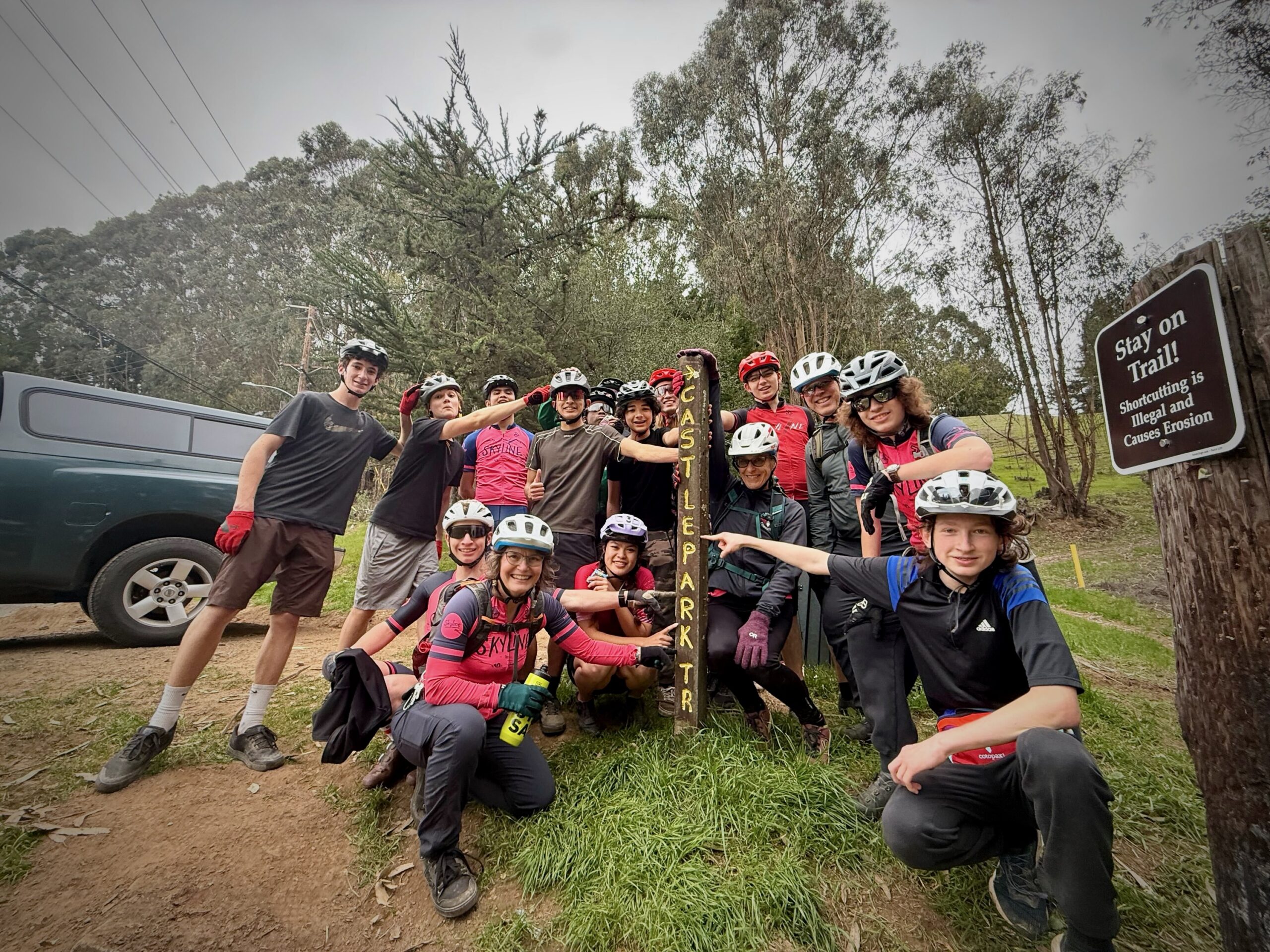
If you have ever ridden in Joaquin Miller Park you have probably pedaled over a trail that BTCEB helped to reroute. There have been at least three such reroute projects, and we are about to complete a fourth. Rerouting is a major commitment. The trail alignments we have in our parks have been there for decades, decided many decades ago following direction and reason that is lost to time. Some could have been built as roads to manage the land (timber, firefighting, or ranching), and others were no doubt built by equestrian groups and hiking clubs that were active in the Oakland “heights” from the 1920s through the 1960s. And while there are many unmapped paths and and jump lines popping up like weeds in JMP (and other public lands), rarely do we sponsor the rerouting of a trail as an improvement for all park users.
My Growing Commitment
A search of the BTCEB archives and interviews with long-time members revealed a history of trail reroutes on parts of Big Trees and the lower portion of Cinderella. The latter happened in 2011, facilitated by Volunteers for Outdoor California. If you have ever ridden down Cinderella past the rock garden and then stayed to the right at the fork (going uphill), then you have ridden the “new” part of the trail that V-O-Cal built. V-O-Cal is an interesting volunteer group: they organize trail work projects throughout the Bay Area and each project is carried out over a weekend with crew members camping out near the worksite. This spring, V-O-Cal is scheduled to come back to JMP to work on Fern Ravine, which is one of JMP’s hiking-only trails.
My first involvement with a BTCEB trail crew was sometime in 2013: I showed up one Saturday morning planning to swing a hoe and our trail crew ended up building a vastly superior switchback around the infamous “Two Dollar Hill” on upper Sunset. That “hill” was just the final bit of the trail that shot straight up the drainage swale that is the headwaters of Palo Seco Creek but was named for the bet that was made for whether you could get all the way to the top without putting a foot down. Brent England, who was a past president of BTCEB, led our enthusiastic work force that day. I’ve heard that Brent went to many meetings with City of Oakland staff to make that project happen. To my ignorant eyes, the reroute work went incredibly fast and was a huge improvement: just show up with work gloves and good things will happen. I’ve been hooked on trail work ever since!
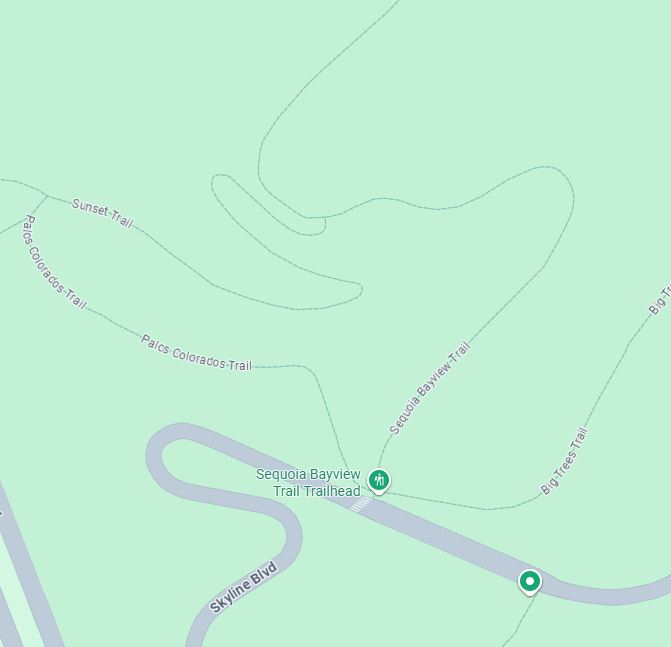
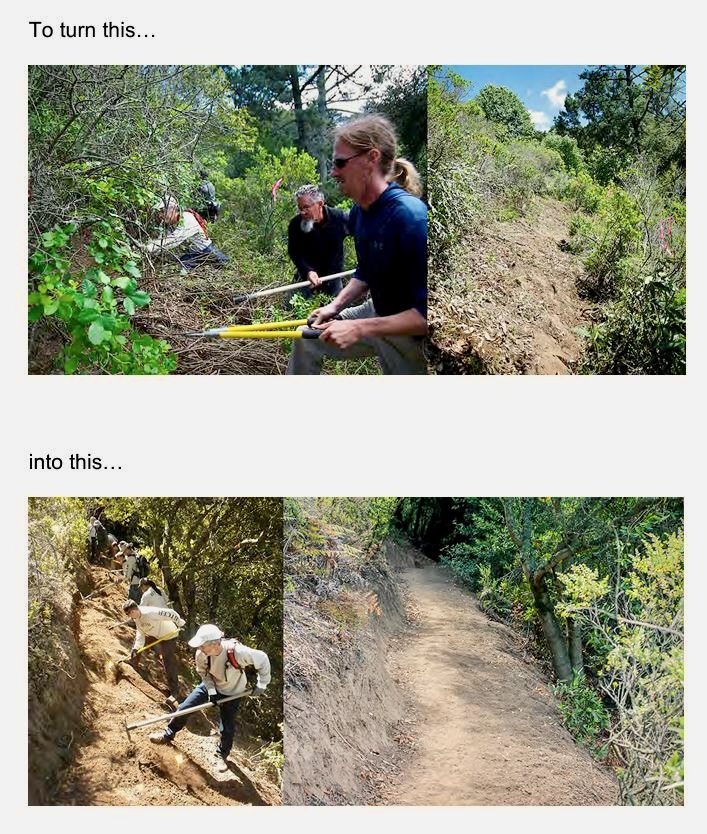
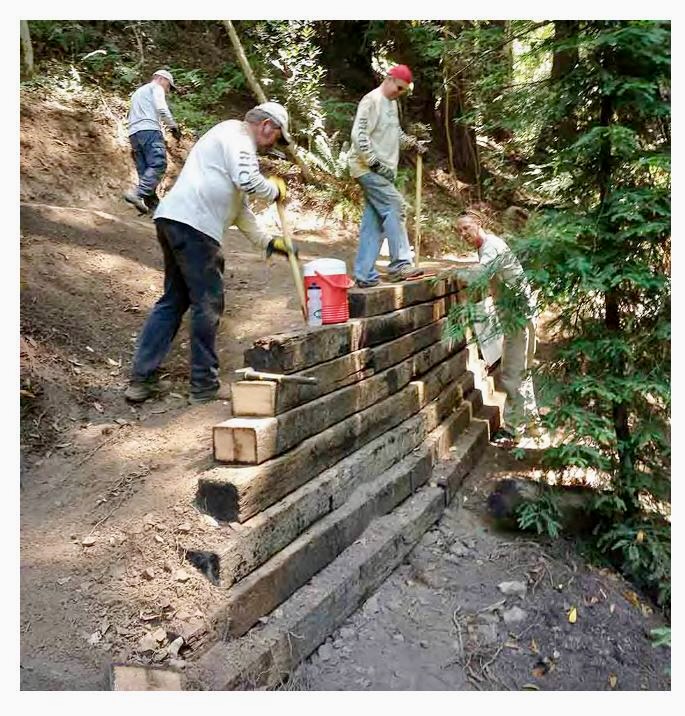
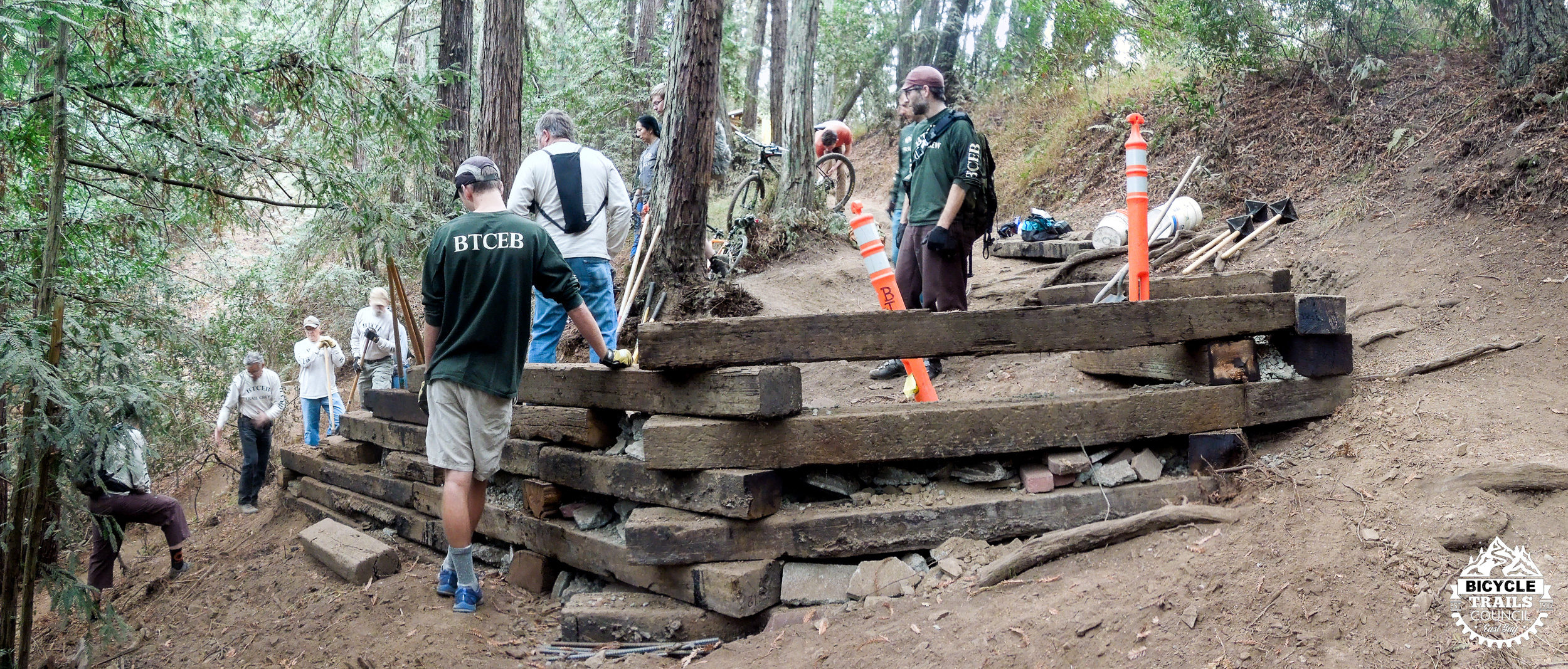
Not long after that, in 2014, BTCEB trail coordinator Henry Mitchell led a reroute of the upper portion of the Palos Colorados Trail. Again, the turnout and organization of the project was impressive. The work called for two switchbacks where railroad ties were used to build retaining walls. Building the retaining walls was more complex and time-consuming than cutting new trail across the slope. Lugging railroad ties down from Skyline Blvd called for some strong back muscles and I only recall watching others partake in that! Also memorable was then-board President Mike Udkow’s pastry runs to La Farine Bakery, which donated the much-loved calories and may have been our all-time favorite sponsor.
Getting Expert Opinions
The improvement of those two trails led me to think about some of our other trails in the park. In 2023, as we all emerged from the weird days of the COVID pandemic, BTCEB funded a study of the three “downhill” trails in the park: Cinderella, Chaparral, and Castle Park. These trails are almost always ridden in a downhill (westerly) direction due to the steepness of several sections. Seeking an expert opinion about how to approach making these trails a bit more “friendly” and sustainable, we enlisted trail builders from the epicenter of California mountain biking: Santa Cruz. We asked the Santa Cruz Mountains Trails Stewardship to come take a look at our three well-worn trails and suggest some management approaches. The study was led by Drew Perkins, who is the lead trail designer for that organization — and if you don’t know SCMTS and their amazing work on the Santa Cruz Coast, do check them out. They have an amazing volunteer trail program and are always looking for more volunteers.
The goal of the trail assessment was to look at opportunities to improve the trails, particularly steep areas, to provide a better route to climb up to higher existing trails, and to make the trails safer and more sustainable. Safety improves with better sightlines, gentler grades, and more variety, which leads to slower speeds. Sustainability improves with lower gradient trails, which generally wear better — especially when combined with better drainage.
The conclusion was that improving Cinderella would be a big job: further rerouting the trail was deemed not feasible. For the existing alignment, the recommended improvement was “hardening”, which means bringing in many tons of rock or waste concrete to build an erosion-resistant trail bed. Hardening is hard! (But not impossible.)
Then there is Chaparral, which some folks are convinced is the remnants of a skid trail from the old logging days. Regardless of the actual history, the trail sees plenty of skidding! We concluded that about the lower third could be rerouted to run in switchbacks across the hillside and then climb up a ridgeline south of the trail and intersect with Sequoia Bayview trail. That would also be a big project, requiring vegetation clearing, mechanized equipment permits from the City, and major funding.
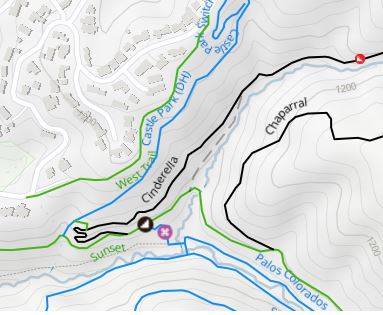
And that brings us to Castle Park, which generally has pretty gentle grades with the exception of two portions: right smack in the middle where the trail daylights to Castle Drive and at the very bottom (westerly) where it meets the Sunset trail. The very bottom can be avoided by taking the connector over to the switchbacks at the bottom Cinderella, but the middle steep section requires either carefully walking the bike down the very badly eroded trail or, at the very least, a dropper post, nerves of steel, and/or blind faith!
Castle Park: a Good Candidate
Of the three “downhill” trails, it seemed like Castle Park was one we could make better using our volunteer crews and hand tools. We considered hardening the existing trail, but trying to improve the telephone poles and deal with the erosion and runoff from the road above seemed like a band-aid solution at best. Rather, we began by scouting out a different alignment to take hikers and cyclists around the steep, unsustainable section. We followed animal tracks across the hillside — the hillside is grazed by goats for fire suppression, after all — so part of our job was already done. That led us to an old road cut obscured by Eucalyptus bark that we thought might be useful. We debated about how to drop down the old road cut and were fortunate to gain the assistance of Kevin Smallman, a local and well-regarded trail builder, who looked at various alignments and building considerations. Our proposed alignment traveled across the hillside back toward the existing trail to avoid building more switchbacks. Switchback turns add spice to trail riding but can be tricky to construct well, and having too many switchbacks in a small area can lead to hikers and riders shortcutting the trail.
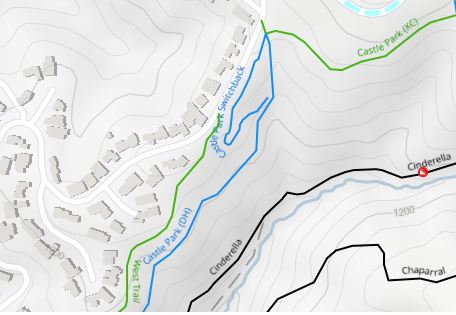
In the end, the alignment called for only two turns: one midway and one at the very bottom where the new section joined up with the existing trail. Both turns would be tight, but we could build up berms to help cyclists carry speed through the turns and prevent them having to put down the dreaded “dab foot”. And because the trail at the lower turn was already on a steep hillside, we decided to install a small timber retaining wall composed of 4×4 posts and 2×8 planks. The posts were installed into the soil and secured from above with steel rods pounded into the soil and webbing “tie-backs” cleverly hidden inside the berm. We started work on the City’s Day of Service on Martin Luther King, Jr., Day (January 19) with a large turnout of about 30 volunteers including members of several local high school mountain bike teams. Subsequent weekends saw smaller but still adequate crews of about 10 volunteers. While the new section is open and useful for riders and hikers, we hope to finish work on the berms and call it complete after our next workday on Sunday, March 8.
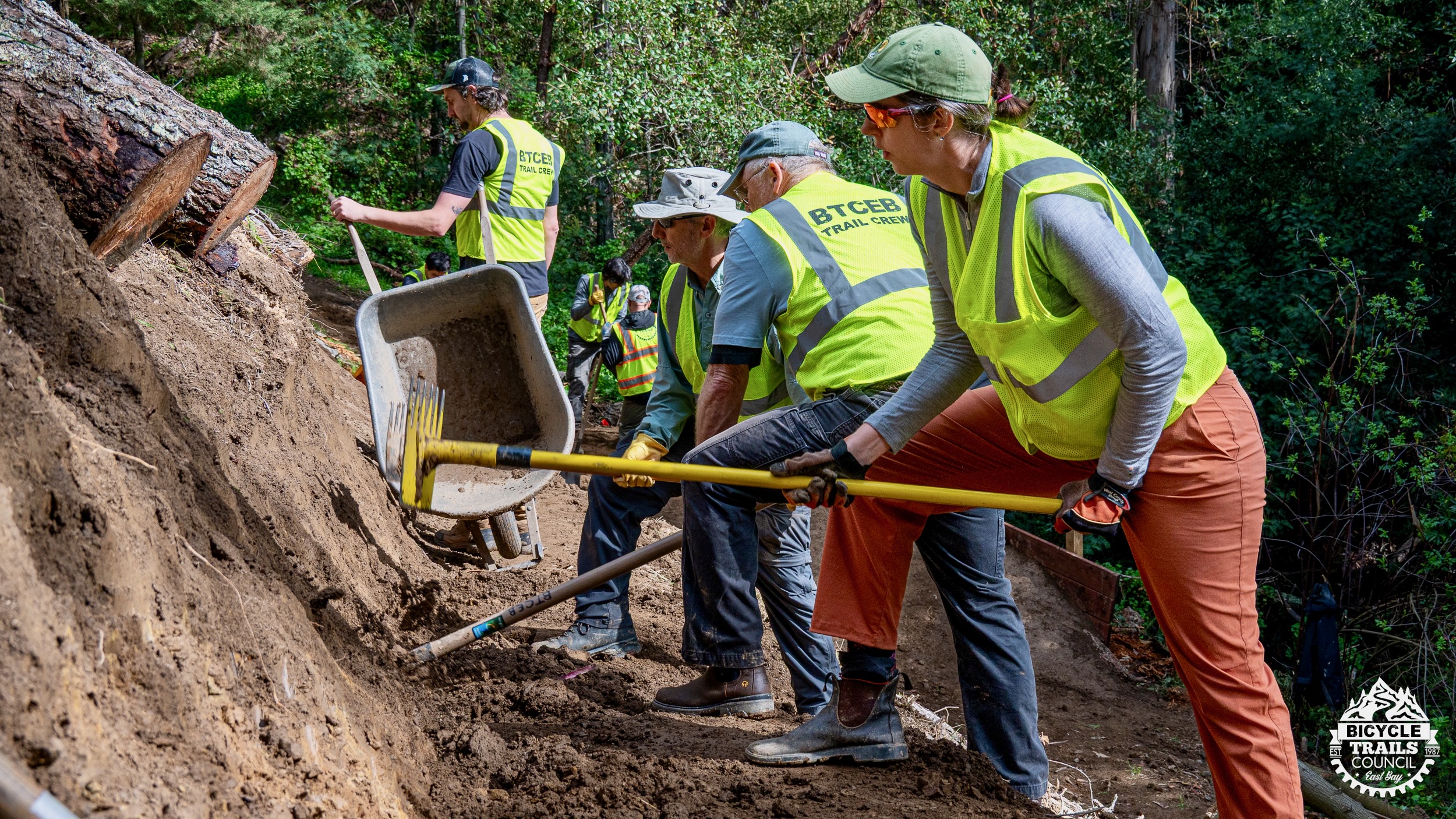
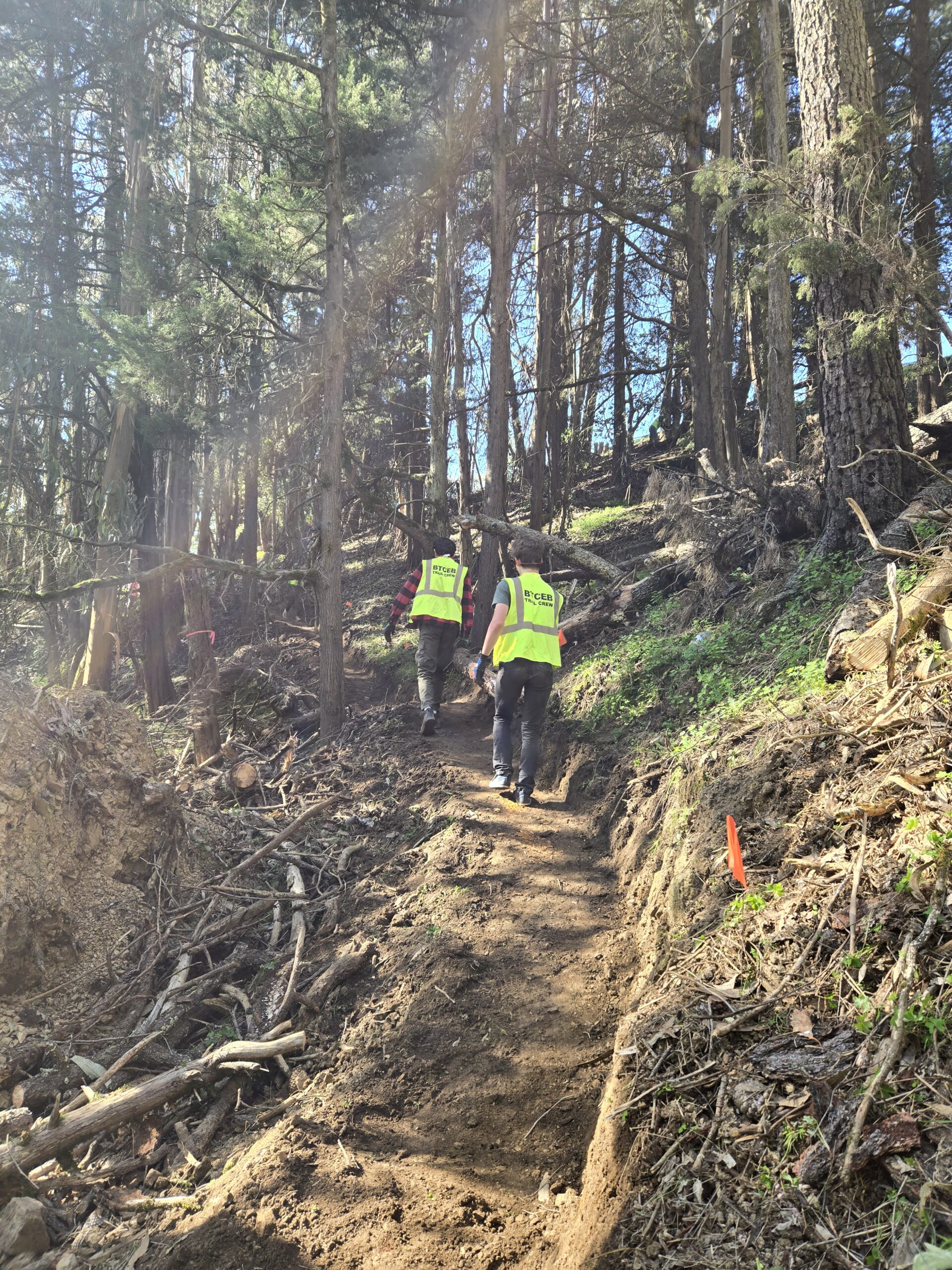
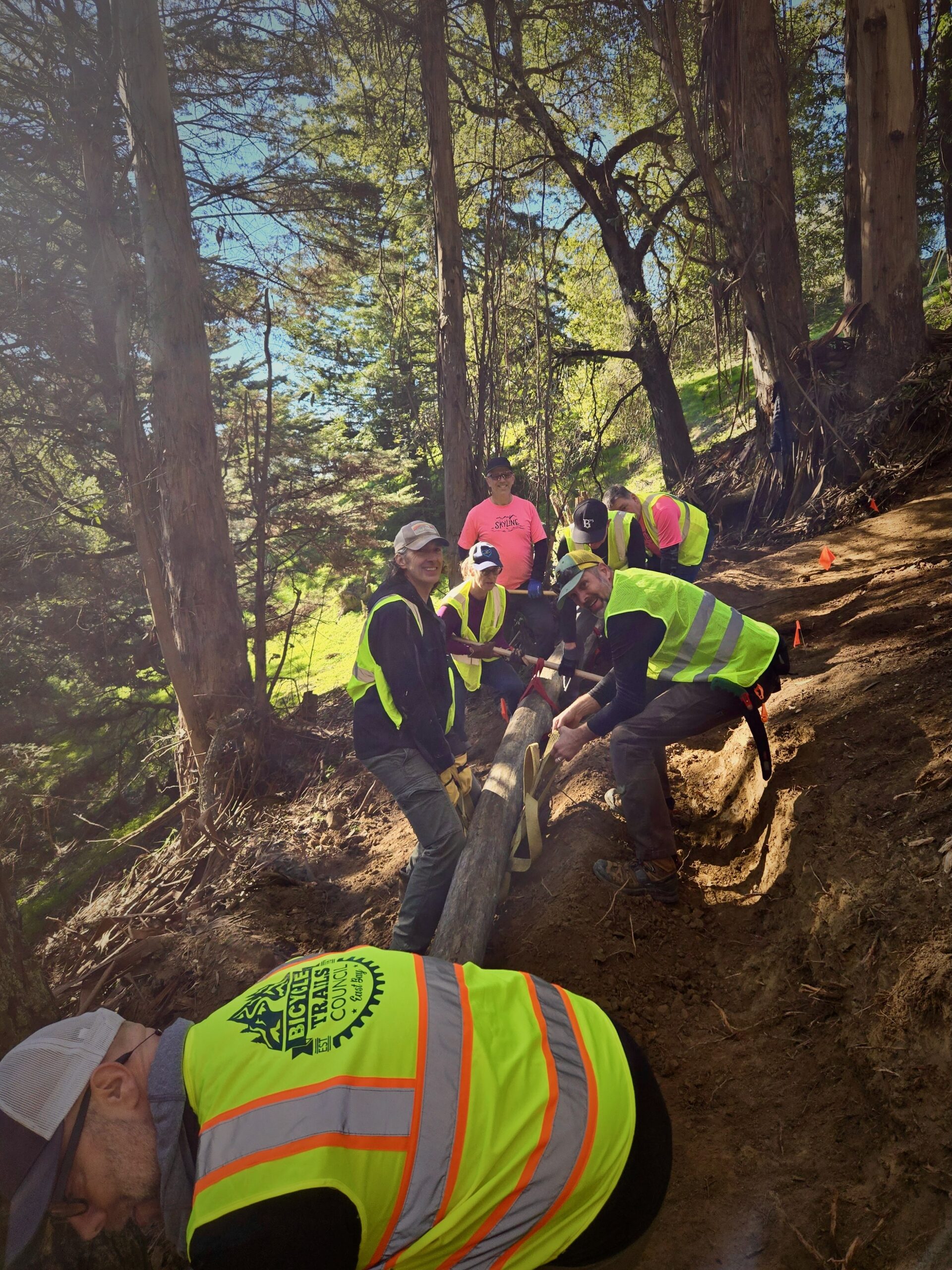
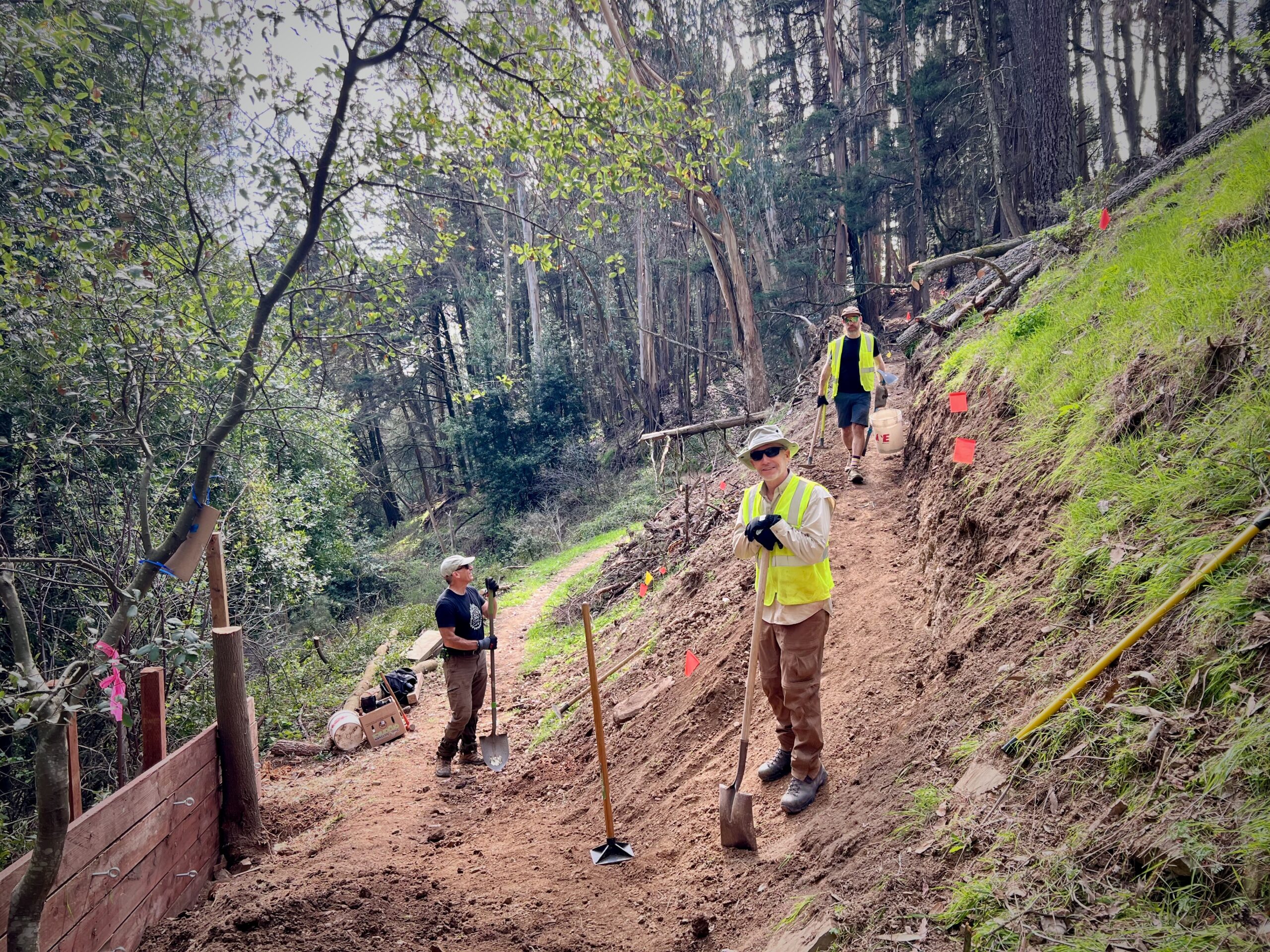
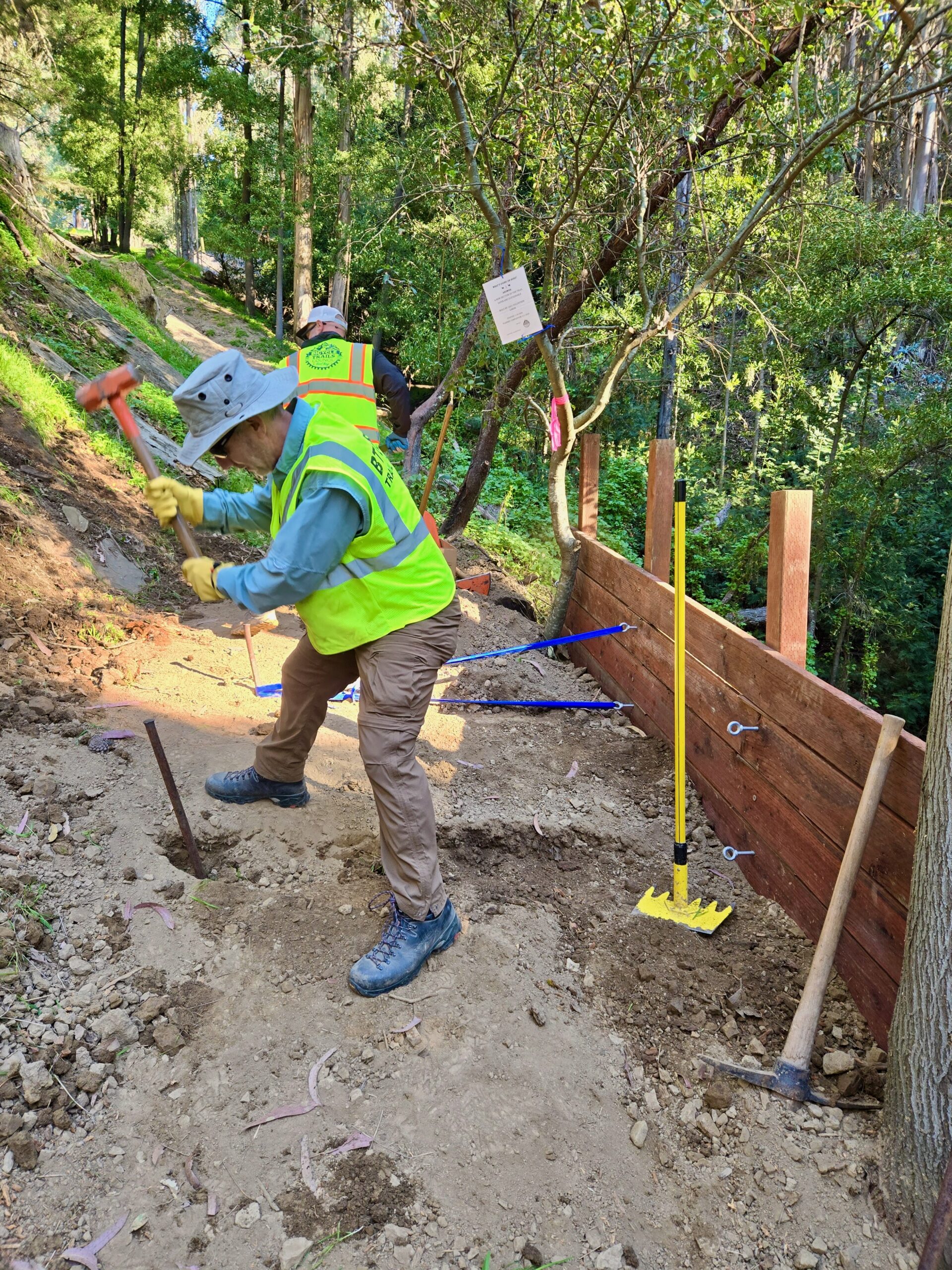
So far, the trail improvement has been a 100% volunteer effort with donated lumber and just a few hundred dollars for materials, food, and cold beverages. This project illustrates the power of volunteer labor and dedication. Maintaining our trails is not nearly as rewarding as building a new section, but it’s just as important — so, for that reason, we’ll soon be back to work on our other trails this spring, fixing up the things we love. Check us out on Meetup if you want to help out: we’d love to have you join us!
Tom Gandesbery, Trails Director
25 Years of the Oakland Bike Patrol
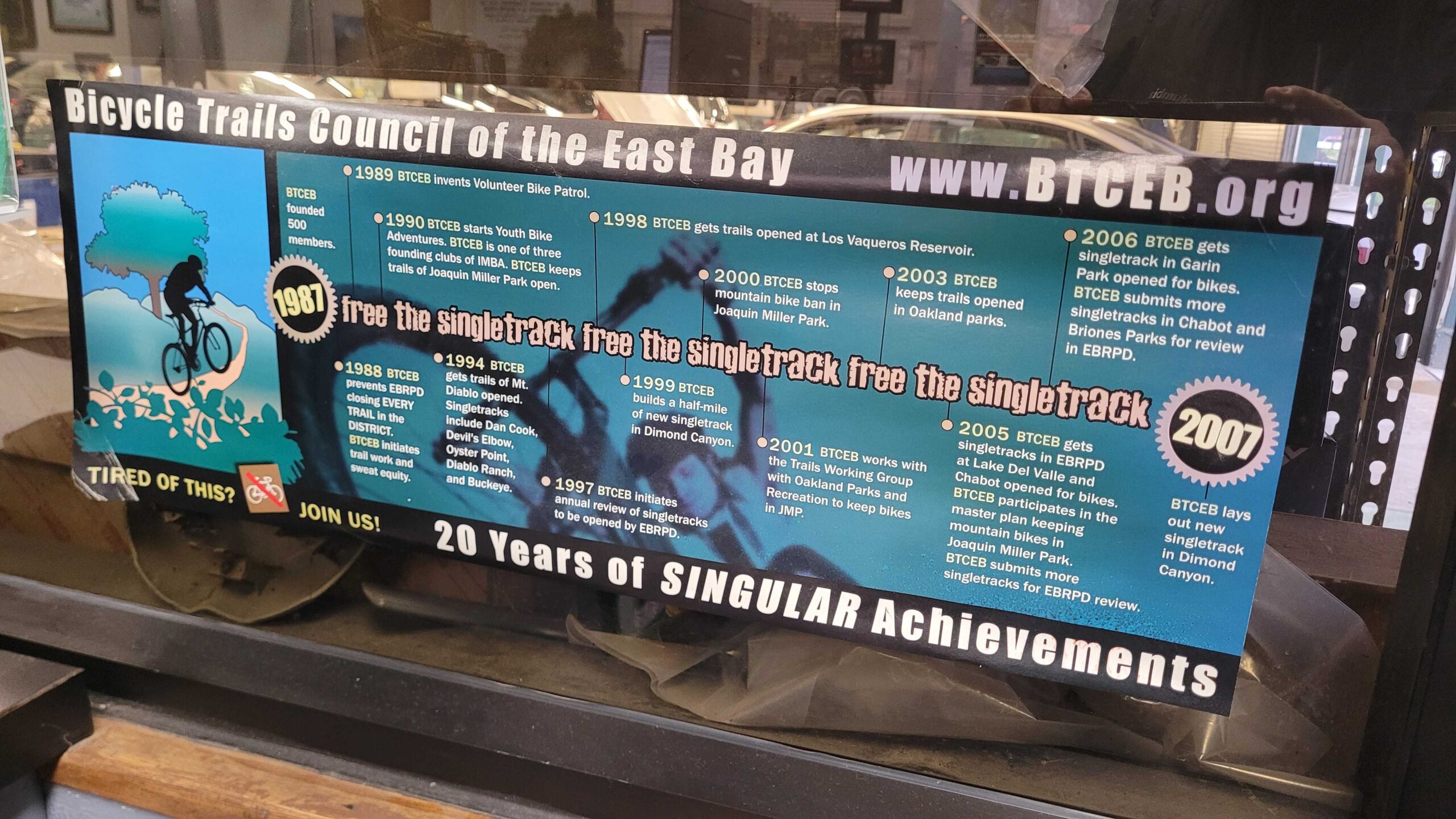
BTCEB led a successful effort to stop a ban on mountain biking in Joaquin Miller Park — our beloved JMP — in 2000. The following year, in 2001, BTCEB and the Oakland Police Department established the Oakland Bike Patrol (OBP) to address community concerns and promote better relations amongst all users of the park. OBP was given the mission to Educate, Assist, and Inform:
Educate: Bike Patrollers help all trail users, speak with park users about trail etiquette, park rules, and supply directions as they are familiar with all of the trails in the park.
Assist: Bike Patrollers are trained in first aid and CPR, carry some first aid equipment, and — when called upon — can provide first aid and help direct Oakland first responders.
Inform: Bike Patrollers report trail issues and maintenance needs in the park to the city and the BTCEB trail stewards of JMP, and also tackle smaller issues as needed, clearing trails throughout the year of countless fallen trees and branches.
25 years later the Oakland Bike Patrol is still going strong. In 2025 the group:
- contributed nearly 300 volunteer hours of time spent patrolling the trails in Joaquin Miller Park and Dimond Canyon
- assisted and helped to direct first responders — in this case, the Oakland Fire Department and an ambulance — to the site of an injured rider on Orchard trail
- cleared multiple large and broken deadfalls of Monterey Pines off Sequoia-Bayview trail.
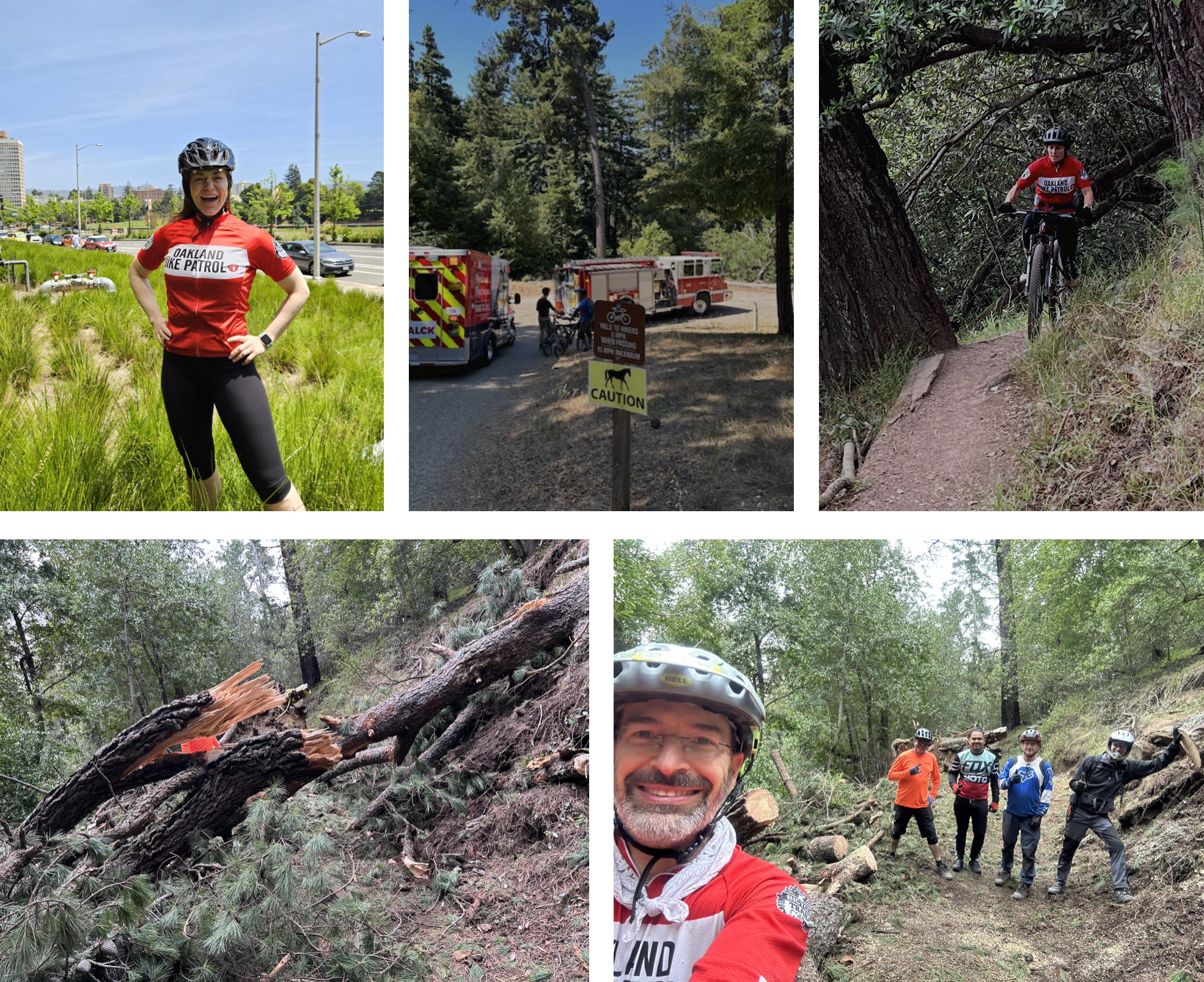
If you’d like to learn more about OBP or join our crew of on-trail volunteers and MTB advocates, check out oaklandbikepatrol.com or give OBP a shout at info@oaklandbikepatrol.com.
Michael Kowalewski, Oakland Bike Patrol
Jon Adams, Director-at-Large
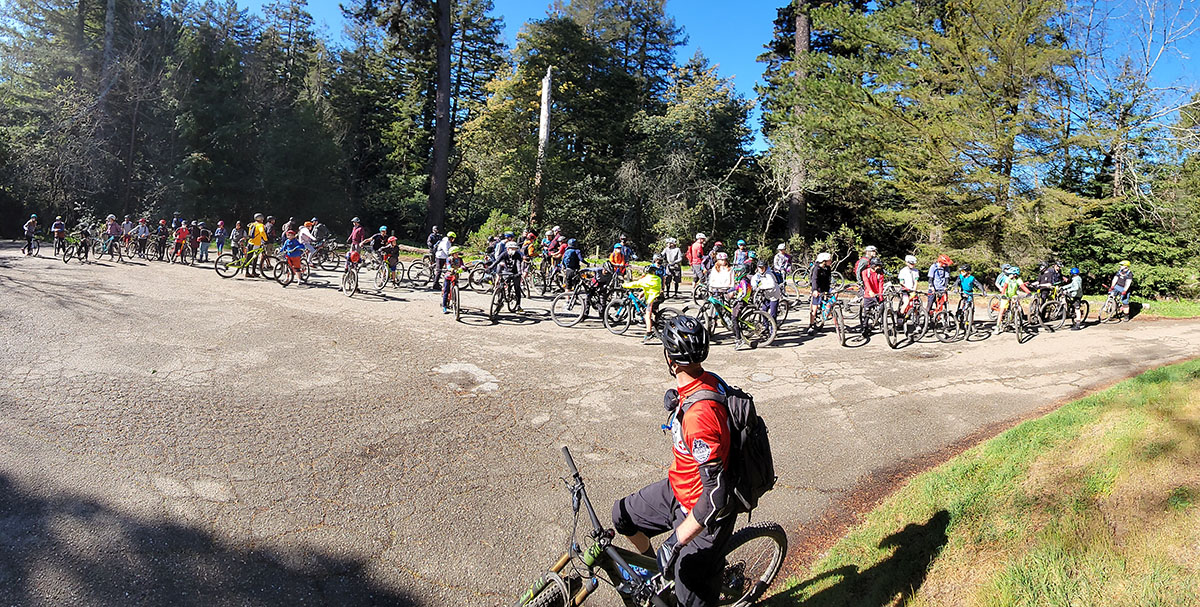
What is that? Or How About Some Citizen Science?
Madrone? Manzanita? Marsupial?
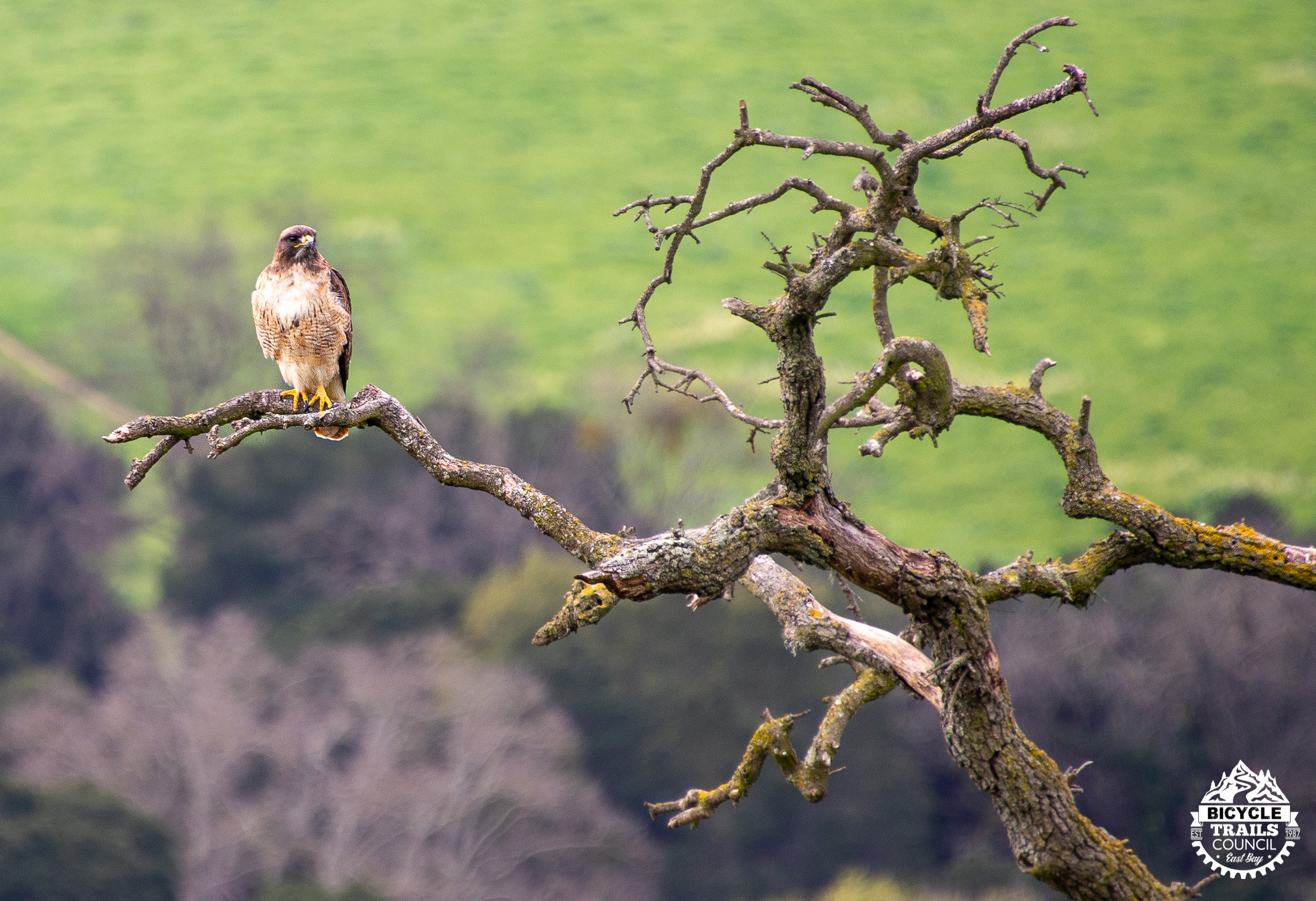
Have you ever been out on a ride or a hike, seen a plant, bug, bird or animal, and wondered what it was? Okay, for the sake of argument, let’s just say that you have …. Well, in today’s modern world there are some apps out there that can help you identify the flora and fauna around you, and they can even provide some conservation benefits at the same time. These conservation benefits can help us collect data around the impact of trails on nearby species. Logging observations can help to show whether or not plants and animals are increasing or decreasing around trails and with mountain bike activity. This data certainly wouldn’t be mistaken for a controlled study, but observations that happen to show plants or animals of concern appearing to be doing well over time can help to build a case for fewer restrictions on where trails go or what uses may be allowed. Conversely, there is a potential to indicate needs for more structured scientific study to determine actual causes for a decrease in a species. Of course, there are many factors at work and observations of existence alone don’t tell the whole story whenever there is an increase or decrease in a species. Structured scientific studies are likely needed for a more complete picture, but these basic observations can still provide worthwhile learning.
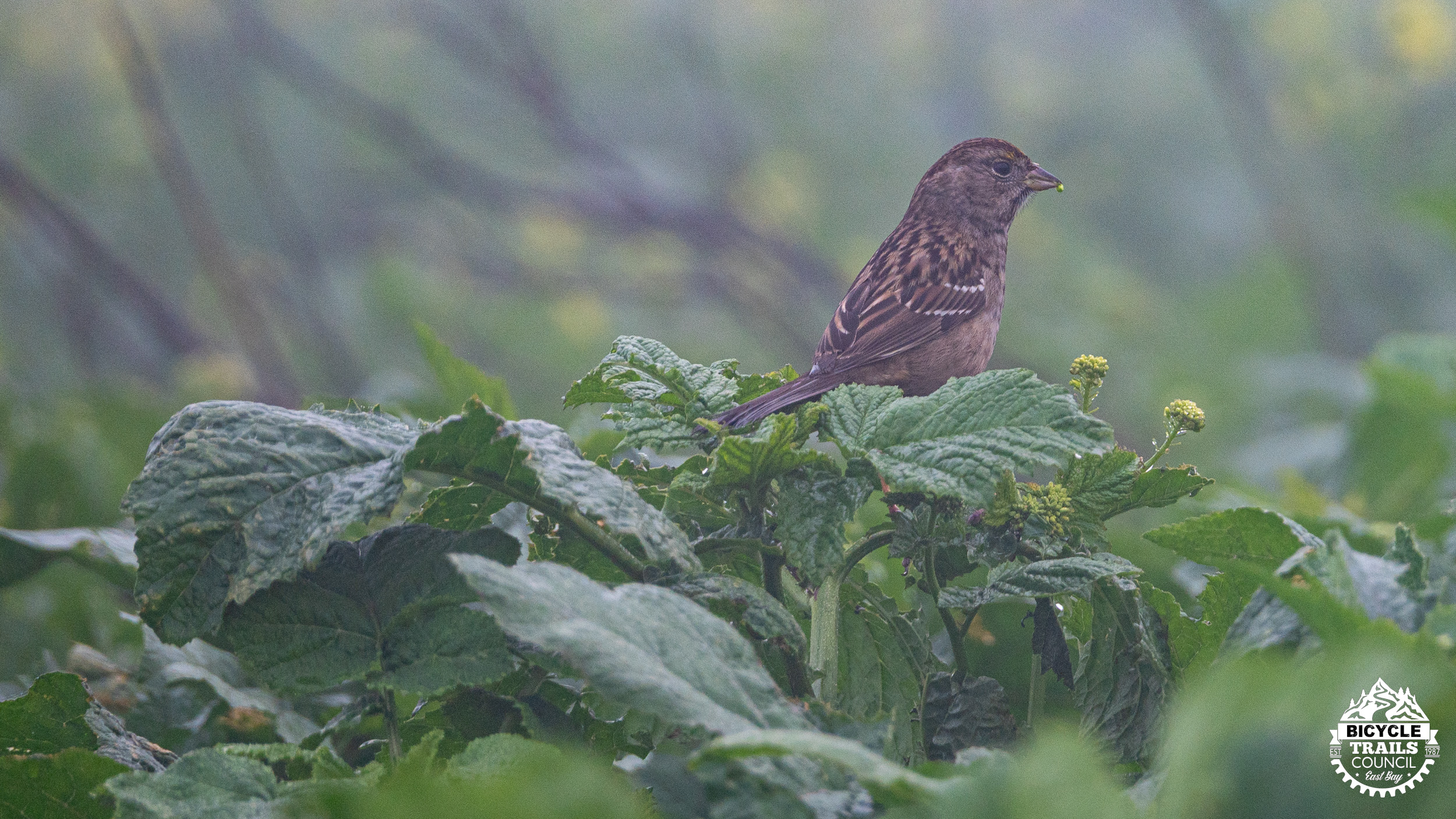
iNaturalist is an app you can use to identify a variety of plants or animals via photos: you snap a photo, upload it, and the app will suggest an identification. Additionally, other users can review the app’s identifications and make their own suggestions. Along the way, you can start to learn more about the flora and fauna along the trails you enjoy.
Merlin is a bird-focused app that provides identifications based on either images or sound recordings. Both iNaturalist and Merlin are fairly straightforward apps to use and are free to download and use.
Here’s an example: at Crockett Hills, we are interested in re-routing a trail to avoid a steep section of fire road. Park district staff are concerned about a specific plant, the Western Leatherwood. It turns out that iNaturalist has several observations over time of Western Leatherwood with images that show Western Leatherwood plants thriving over time right next to existing trails. They are so close to the trail that, if they were poison oak, most of us would be breaking out in a rash! So we’re looking to share these observations with park district staff to have a discussion about their concerns about re-routing this trail in light of this real-world history. We’ll see how that goes.
We’re also using it to add documentation of the Golden Eagles that nest in Crockett Hills. The park district watches this much closer than these observations but it doesn’t hurt to back them up, and it’s also an opportunity to make more observations than park staff or contractors can make since trail users are, in most cases, out there a lot more frequently than park staff.
So consider giving this type of app a whirl. There are more of them out than just iNaturalist and Merlin, too. At the very least, you’ll find out the name for that plant or animal you were wondering about, and you just might contribute data that supports more trails and access for bikes. CAUTION: flora and fauna identification can be habit forming — and even addictive — to some of us. Check out the documentary Listers for an educational and entertaining look into extreme birding. Then again, maybe that’s exactly how you want to spend 2026 ….
Scott Bartlebaugh, Advocacy Director
Photos by Rebecca Lewington
Trail One Components: Thank You Yet Again!
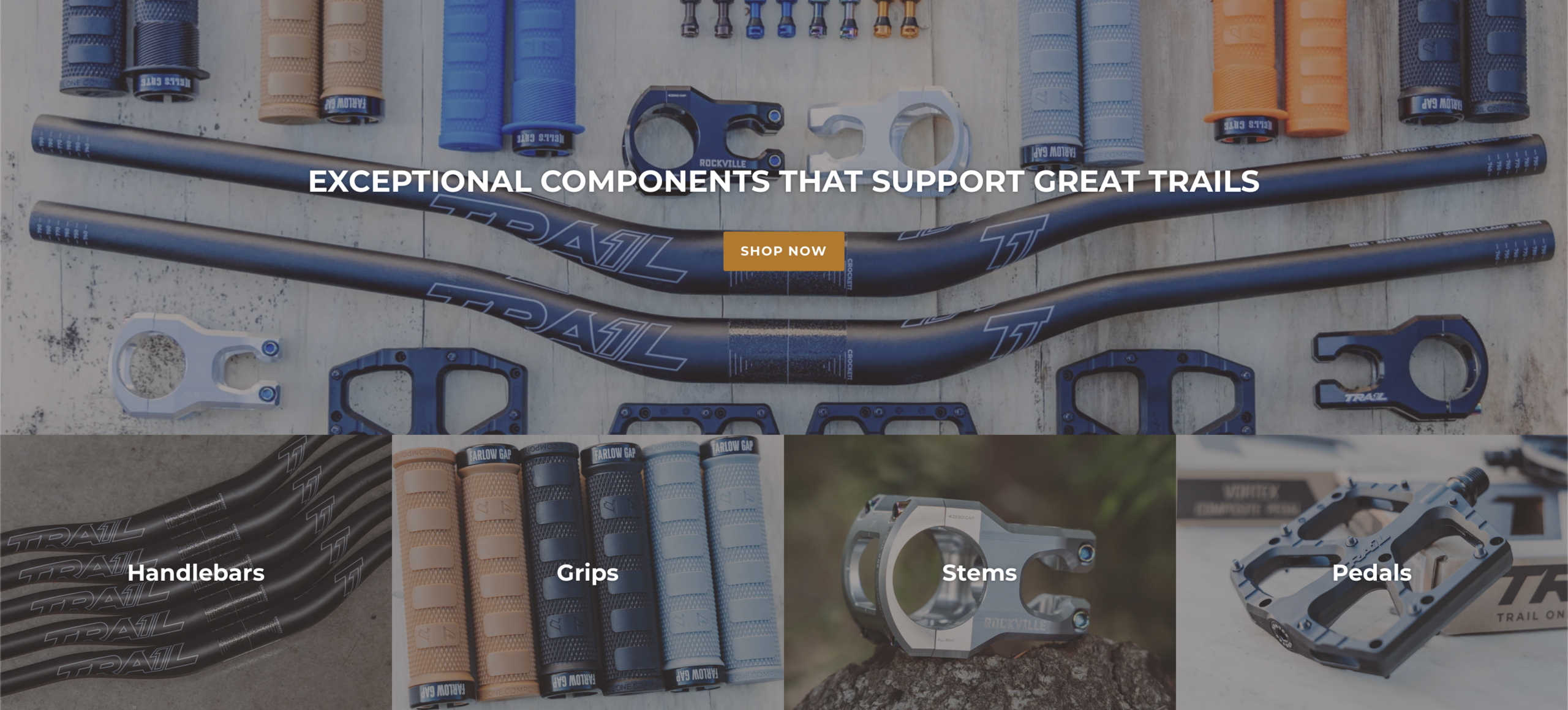
Trail One Components has made another Trail Treasury donation to BTCEB to support our trail stewardship efforts. This $1000 donation increases the total of their donations to BTCEB to $6000 since they started their Trail Treasury program. The Trail Treasury program supports a variety of trail systems and stewardship organizations — small and large — around the world. Consider Trail One Components the next time you replace or upgrade your bars, grips, stem, or other components.
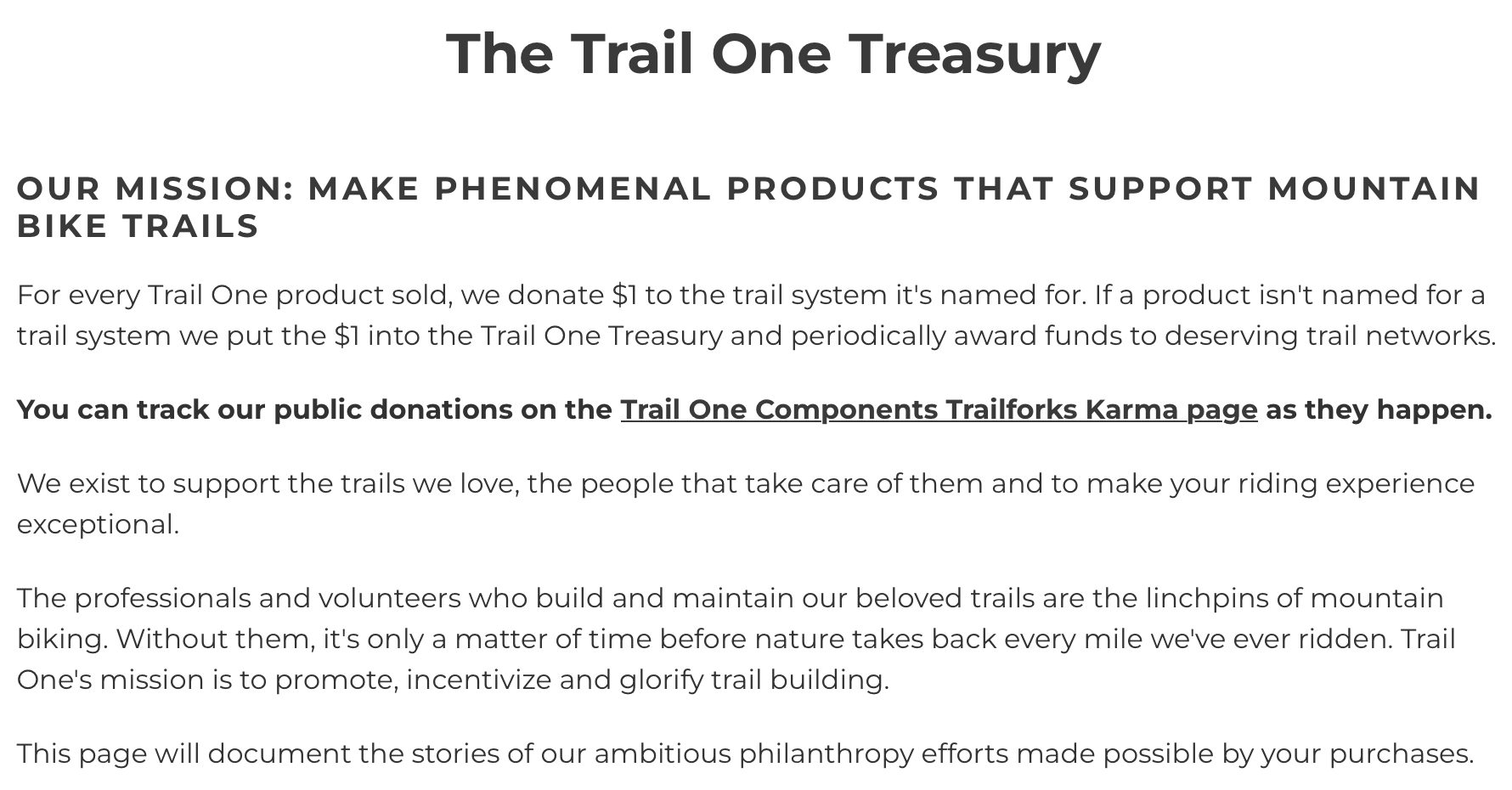
Trail One Components describe the program best on their website:
“Why Crockett?” you might ask. Trail One’s handlebars are the Crockett Carbon and Crockett Alloy handlebars. Brian Kennedy, one of the founders of Trail One Components, began mountain biking with his Uncle Dennis, and Crockett Hills was where they rode early on, before much of the current trail system was there. That rare relationship with “pain and pleasure” — well, at least with pain, perhaps — was nurtured here. And thus “the Crockett Hills” and BTCEB’s trail stewardship efforts are thankful for Brian’s origin story and the generosity of both Brian and Trail One Components. Thank you, Brian, for starting this donation program and thank you, Trail One Components, for continuing your support of BTCEB and other trail stewardship organizations and volunteers across the world.
BTCEB has used these donations to keep our tools stocked, buy a bike trailer to haul tools to our work sites, and provide lunch for volunteers on trail work days. That support has helped provide a means to slowly increase our Crockett Hills volunteer hours each year. We logged our all-time high of 708 volunteer hours in 2025 and have averaged over 500 hours per year since we began tracking them in 2018.
Scott Bartlebaugh, Advocacy Director
About BTCEB
Bicycle Trails Council is a 501(c)(3) non-profit organization that was founded in 1987 by a dedicated group of volunteers who fought the impending closure of almost all bike trails in the East Bay. Today we are active with programs that educate trail stewards, promote responsible riding, and advocate for equitable trail access. We work to improve and maintain trails in our local parks, and our members and partners have volunteered countless hours to build new trails and improve existing ones. Our marquee group rides are the monthly Gala Ride and our women-specific Ride Like A Girl. Both are led by experienced local riders who know the trails and offer groups for all skill and fitness levels.
Join BTCEB today to support your local trails and MTB community and help free the singletrack!
Contact Us
Do you have a good ride story, trail work report, or other bike trail news? Tell us about it. Please send a paragraph or two, ideally with 150 words or less with a pic (under 10MB please) and/or link telling us about trail work, rides, events, or any good mountain bike effort to bring our community together, etc. Please send via email to our editor Brian Glueck (with pictures if possible) to buzz@btceb.org
To reach the entire board, email: board@btceb.org
BTCEB Board Members
- Jamuel Starkey, President, jamuel@btceb.org
- Jeff Royal, Vice President
- KC Chaudry, Secretary, info@btceb.org
- Alan Enrici, Treasurer, treasurer@btceb.org
- Scott Bartlebaugh, Advocacy Director, advocacy@btceb.org
- Tom Gandesbery, Trails Director, trails@btceb.org
- Brian Glueck, Communications Director, buzz@btceb.org
- David Wilcox, Events and Promotions Director
- MTB Rider (vacant), Membership Director, membership@btceb.org
- Armando Chavez, Director-at-Large
- Gordon Bloom, Director-at-Large
- Jon Adams, Director-at-Large
- Rebecca Lewington, Director-at-Large
BTCEB is grateful to our sponsors.