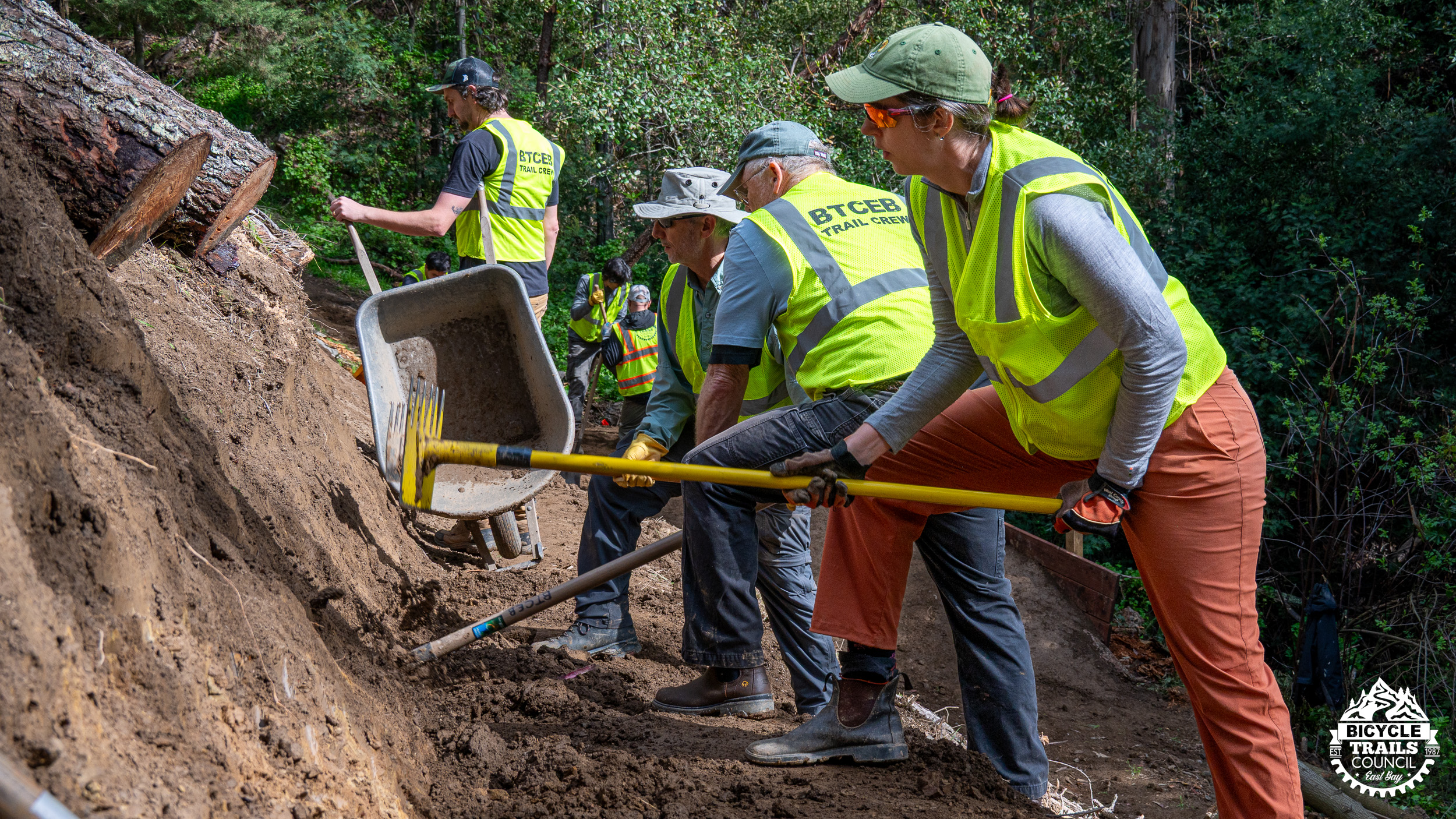
So that’s what “Backslope” is all about …
Passed along from Backslope Tools
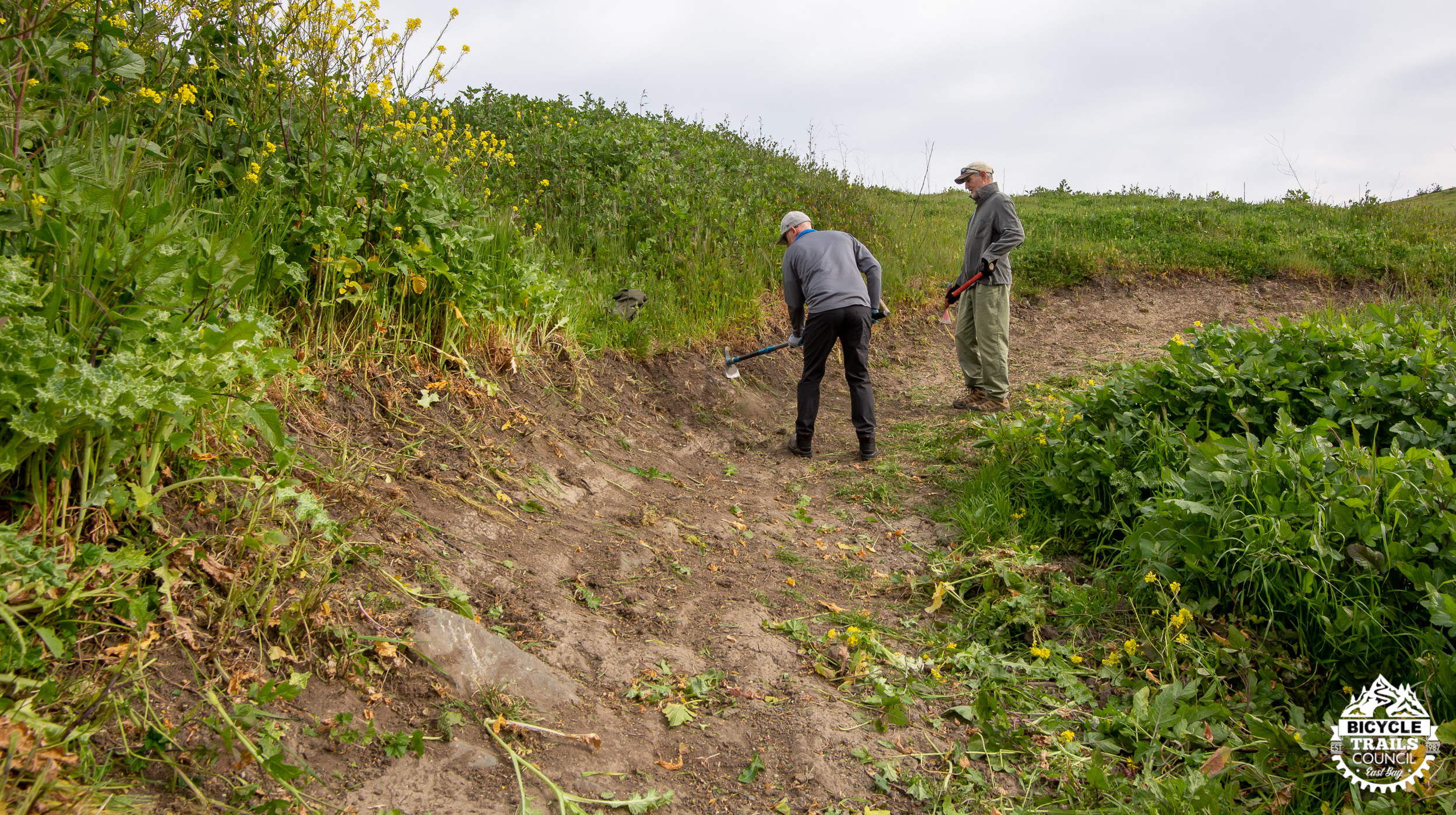
You may have heard the term “backslope” at one of our workdays and might not have figured out what specific part of the trail it refers to. Backslope Tools does a good job of explaining not only what it is, but also what makes for a lasting backslope. In our region, backslopes are often on the steep side for our expansive clay soil, and come July, August, and September — when it’s bone dry — they’ve contracted, fractured, and chunks tumble down onto the tread. On top of that we often have cattle taking the direct route to the water trough knocking down even a good backslope onto the tread.
Here’s how Backslope Tools describes it:
It’s the part of the trail nobody looks at. It decides whether everything else lasts.
Hey there,
People ask about the name a lot. Backslope. It sounds like a ski run or a bad day on a bike. It’s neither.
When you build trail across a hillside, you cut into the slope to make a flat place to walk or ride. Picture the cross section. On the downhill side, you’ve got the tread and whatever fill you pushed out. On the uphill side, you’ve got the wall of dirt you just cut. That wall is the backslope.
Nobody photographs it. Nobody rides it. But it decides whether the tread in front of it lasts five years or five storms.
Here’s what goes wrong. When a backslope is cut too steep, or left with an overhanging lip at the top, it doesn’t stay put. Rain, roots, and gravity all work on it. Dirt sloughs off the face and lands on the inside edge of the tread. The tread gets narrower. The inside edge starts holding water instead of shedding it. Riders and hikers drift toward the outside edge to avoid the mess, and the outside edge starts to crumble. Now you’ve got a trail getting squeezed from both sides.
Getting it right isn’t complicated. It’s just work most people skip.
Lay it back. Cut the backslope at an angle the soil can actually hold. Loose, sandy soil needs a gentler angle. Hard, rocky soil can stand steeper. If the face is already slumping, that’s the soil telling you the angle it wants.
Round the top. Where the backslope meets the natural ground above it, shape it into a soft curve instead of a sharp edge. A sharp lip undercuts itself and collapses. A rounded one sheds water and holds.
Clear the slough. On existing trail, check the inside edge of the tread. If there’s a wedge of dirt and rock piling up against the backslope, pull it off and scatter it downhill, well away from the tread. Then reshape the backslope above it so the problem doesn’t come right back.
Build on mineral soil. If you dig through the dark organic layer and you’re still not on solid mineral soil, keep going. Duff and roots compress and rot, and the tread you build on them won’t last.
We like the name because the backslope is the honest part of a trail. You can’t fake it. It’s either cut right or it starts coming down. That’s how we think about tools, too.
If you’ve got a section where the backslope keeps coming down no matter what you do, reply and send us a photo. We’d like to see it.
Team Backslope Tools
Scott Bartlebaugh, Advocacy Director
Photos by Rebecca Lewington